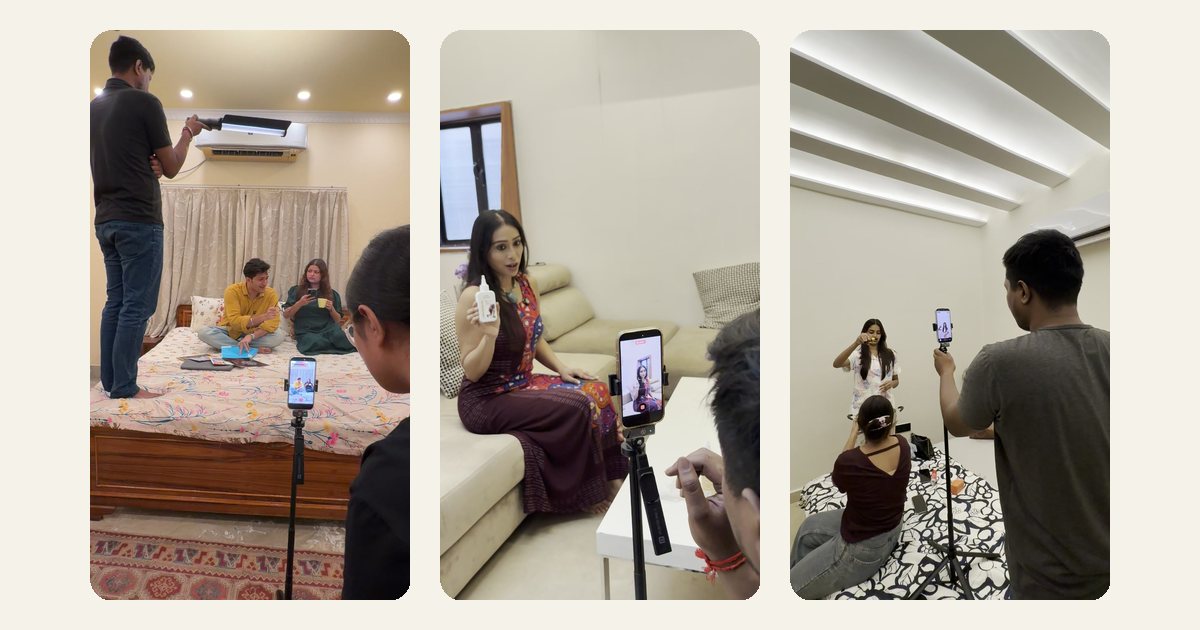
A jewelry brand sends a creator a package of gold-plated earrings, a one-paragraph brief that says "show the product and talk about how beautiful it is," and then wonders why the resulting Instagram Reel looks like every other unboxing video from 2019. The brief, not the creator, not the product, is what failed here. And in our experience working with Indian jewelry brands, this is the most common and most fixable problem in UGC jewelry campaigns.
Jewelry occupies a specific emotional and cultural territory in India that generic creative briefs simply cannot navigate. A brief that works for a fitness supplement or a skincare serum will actively mislead a creator shooting a mangalsutra, a temple-design necklace, or a lab-grown diamond solitaire. The category demands context, precision, and an understanding of who is actually buying, and why. Here is where most brands go wrong, and what to do instead.
Mistake #1: Writing a Brief for the Product Instead of the Occasion
Indian jewelry purchases are almost always occasion-anchored. A woman buying a polki set ahead of her sister's wedding in Jaipur is not in the same mental state as someone buying everyday silver studs on a Tuesday because a payday Instagram ad caught her eye. Both are valid buyers. Both require entirely different creative briefs.
Briefs that describe the product in isolation, "18k gold, lightweight, handcrafted", give creators nothing to anchor the emotion to. The creator then invents their own context, which is often generic. Instead, your brief should specify:
- Occasion segment: Wedding shopping, gifting (birthday/anniversary/Mother's Day), daily wear, first jewellery purchase, festival (Dhanteras, Akshaya Tritiya, Navratri)
- Buyer state: Gifting for someone else vs. self-treating vs. trousseau-building changes the entire tone
- Platform context: A festive Instagram Reel has different pacing than a Pinterest-style try-on for Meta Advantage+ placements or a YouTube Shorts how-to-style video
When we brief creators on jewelry campaigns, the single most useful line in any brief is not a product description, it is a one-sentence occasion. "You just found the perfect pair of jhumkas for your best friend's mehendi, and you ordered them three days before the event." That sentence does more creative work than three paragraphs of product specs.
Mistake #2: Ignoring the Visual Constraints of Jewelry on Camera
Jewelry is the hardest product category to shoot on a smartphone without proper direction. The common brief mistake is treating jewelry like apparel: "hold the camera, wear the piece, say something nice." This produces dark, blurry close-ups where the detail work, the kundan setting, the meenakari enamel, the chain texture, is completely invisible.
A good brief for jewelry UGC must include visual direction. This does not mean cinematography instructions; it means telling creators what specifically needs to be visible and why it matters. Required elements to specify:
- Lighting setup: Natural window light at a 45-degree angle is the minimum for most pieces; for oxidised silver or matte finishes, direct ring light washes out texture, say this explicitly
- What to show in close-up: Name the specific detail (the clasp mechanism, the stone colour, the engraving) rather than saying "show the product clearly"
- Contrast backgrounds: A white kurta and a dark background will show gold differently than a pastel dupatta, specify based on your product palette
- Wrist-to-face transitions for reels: A specific framing move that performs well on Instagram jewelry content; if you want this, brief it
For brands running campaigns on Meesho or Myntra's social-adjacent placements, where the conversion click sits 1-2 seconds after the visual hook, this visual precision in the brief is not optional.
Mistake #3: Vague ASCI Compliance Direction
The Advertising Standards Council of India's guidelines apply to social media content created in exchange for payment or free product, this includes UGC creator content. Jewelry advertising in particular has ASCI-relevant obligations: claims about gold purity (BIS hallmarking), diamond certifications (IGI, GIA), and gemstone treatments must be accurate and not misleading.
Most brands write briefs that either ignore this entirely or add a footnote that says "make sure you're compliant." Neither is useful to a creator. What your brief should include:
- The exact disclosure language for #Ad or #Sponsored, and where it must appear (first three lines of caption, not buried in hashtags)
- Any claims the creator may not make, "100% natural diamonds," "gold-certified" without qualification, "best price guaranteed", because these create liability for the brand even if the creator improvises them
- If the product is silver-plated and not sterling, say this and say the creator should not describe it as silver without qualification
- For brands working in the lab-grown diamond segment (growing rapidly in Surat-based brands selling D2C in metros), the FTC-equivalent ASCI expectation is that "lab-grown" is disclosed, brief creators on this
Mistake #4: Briefing One Creator Voice for the Entire Campaign
Jewelry is deeply regional and community-specific in India. A creator from Chennai speaking about a temple jewellery necklace in Tamil with the appropriate cultural framing will outperform the same product being demonstrated by a Delhi-based creator in English who calls it "boho-ethnic." This is not a casting note, it is a briefing failure. If your brief does not acknowledge the intended audience's cultural context, casting the right creator will not save you.
Brands that run UGC at scale across India, targeting say, Bengali brides for gold-heavy trousseau pieces, Gujarati buyers around Dhanteras, or Tamil Nadu temple town audiences, need layered briefs. Practically, this means:
- A core brief with the product details, occasion, visual requirements, and compliance notes
- A regional/language module: specific phrases, references, or occasions relevant to that audience (e.g., for a Dhanteras campaign targeting a Hindi-belt audience, the "first gold buy of the year" angle is culturally loaded in a way that "new addition to your jewellery box" simply is not)
- Language specification: creators briefed to speak in their native language consistently outperform those asked to speak in English about a regional jewellery tradition
Mistake #5: No Hook Direction for the First 3 Seconds
Meta's own ad research consistently shows that for jewelry content, scroll-stop on Instagram and Facebook Reels happens when there is movement or surprise in the first two seconds. Yet briefs routinely tell creators to "start by introducing yourself and the product." This opener kills performance before the algorithm has a chance to show the ad to a second viewer.
The brief should specify the opening behaviour. Some openers that actually work for Indian jewelry UGC:
- Mid-action shot: creator is putting on the earring, not about to put it on, starting after the action is already underway
- The reveal format: product is partially visible behind fabric or a hand, pulled into frame, works especially well for occasion gifting content
- Reaction-first: creator has just opened the package; genuine reaction in the first frame, product visible within two seconds
- Comparison hook: "I wore this to three weddings and this is the one everyone asked about", spoken while wearing the product, no build-up
Include two or three suggested openers in the brief. This is not over-directing; it is removing the single biggest point of failure in creator-generated jewelry content.
Mistake #6: Treating the Caption as an Afterthought
For jewelry brands running performance ads on Meta, which is the primary paid channel for most D2C jewelry brands currently spending between Rs.1.5 lakh and Rs.6 lakh per month on Meta, the caption copy matters for both the ad and organic discovery. Briefs that say "write a nice caption" produce captions that do nothing for the ad.
A complete jewelry UGC brief includes a caption framework:
- First line (visible before "more"): should name the occasion or the feeling, not the product feature. "Found these for my best friend's anniversary and they were delivered in two days" beats "Beautiful gold-plated jhumkas available now."
- Middle body: one line of product context (the material, the occasion use), one line of brand trust signal (BIS hallmarked, free shipping over Rs.999, easy returns)
- CTA line: specific action ("Link in bio to shop" or "DM us SIZE to get a catalogue") aligned with what you are actually running, do not ask for a bio link if you are running a traffic ad with a direct URL
- Hashtags: specify three to five relevant, non-banned hashtags; do not leave this to the creator, as jewelry hashtag misuse (over-broad tags like #jewelry that trigger shadow restrictions on certain accounts) is a real issue
Building jewelry UGC briefs at this level of specificity takes more time upfront. It also cuts revision rounds by half, reduces creator confusion, and produces content that actually performs in paid placements rather than simply looking good in a WhatsApp preview. If you want a structured audit of how your current briefs compare to what actually converts for Indian jewelry audiences, book a consultation and we can walk through your existing creative assets together.