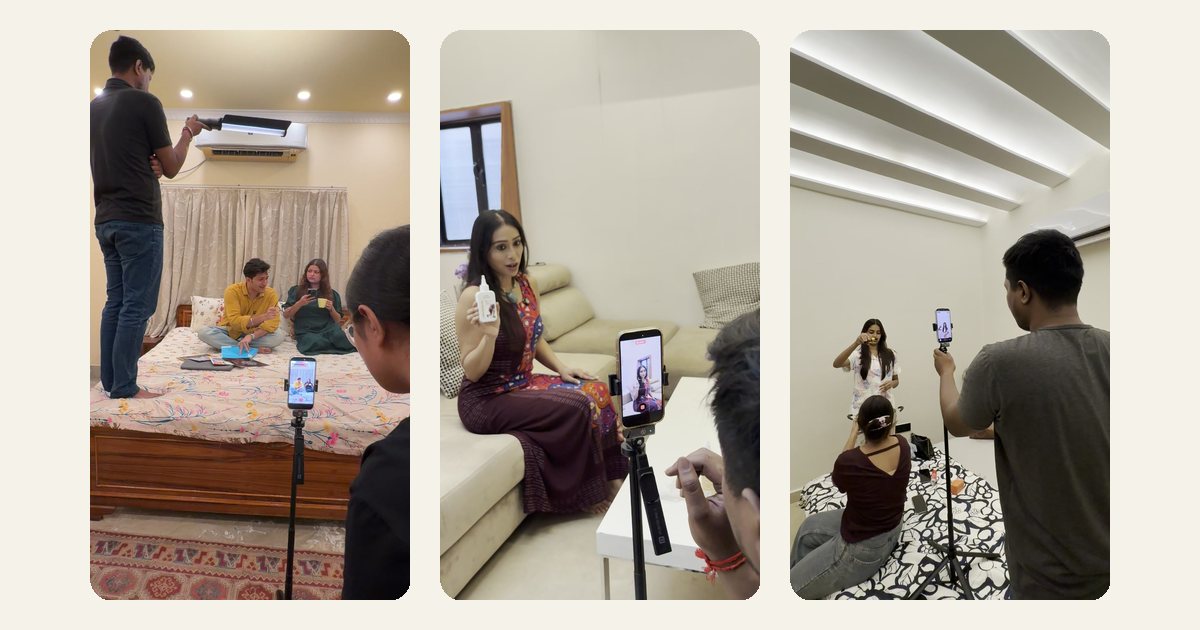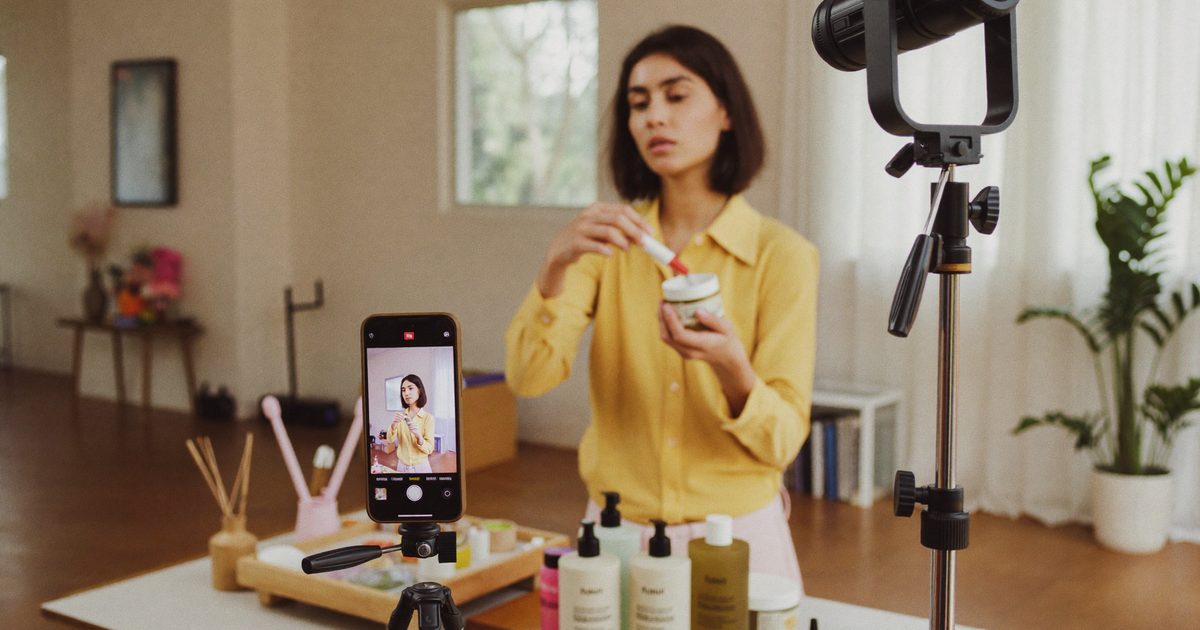
Most brands pick a UGC agency on two data points, price and a showreel, and discover the real differences only after signing: who owns the footage, how revisions work, whether the creators were vetted or just scraped from a marketplace. This checklist is the vendor-evaluation we wish every brand ran on us and on our competitors. Twelve questions, why each one matters, and what a good answer sounds like.
TL;DR
- The biggest hidden differences between UGC agencies are usage rights, revision policy, and creator vetting, not price.
- Ask for the per-variant math: an "18 videos" plan should mean distinct master videos multiplied by hook variations, not 18 re-exports.
- Any agency serious about performance should talk in CPA and hook-rate terms, not views and vibes.
- In India, also check ASCI disclosure practice and GST invoicing, both are routinely ignored by informal operators.
The 12 questions
1. Can I see work in my category, and what it was used for?
A showreel proves editing ability, not category understanding. Ask for examples in your vertical (skincare needs different claims handling than fintech; food needs FSSAI-aware framing) and ask where the videos ran. UGC made for organic social and UGC made to survive as a paid Meta ad are different crafts. Our own category work is on the portfolio page, filterable by industry.
2. What usage rights are included, in writing?
This is the single most common dispute in Indian UGC deals. Some agencies license videos for 6 or 12 months and charge renewal fees; some exclude paid advertising from the base price entirely. Get the channel scope (paid social, website, marketplace listings), the duration, and raw-footage ownership in the agreement. We wrote a full guide to UGC usage rights in India, take it into any negotiation, including one with us.
3. What exactly does one "video" mean in your pricing?
The industry counts creatively. An "18 video" plan can mean 18 genuinely distinct ads, or 6 master videos delivered with 3 hook variations each, or 3 videos re-cropped into 6 aspect ratios. None of these is wrong, hook variants are exactly what Meta's algorithm needs, but you should know which one you are buying. Our plans are 6 master videos with 3 hooks each, 18 ad-ready variants, stated as such on the pricing page.
4. How do you source and vet creators?
"We have 5,000 creators" usually means a database, not a bench. Ask how many creators the agency has actually shipped paid work with in the last quarter, how they brief them, and what happens when a creator delivers unusable footage (the honest answer: it happens, and the agency should absorb the reshoot, not you).
5. Who writes the scripts and hooks?
If the answer is "the creator improvises", you will get authenticity and lose strategy. If the answer is "we hand them a word-for-word script", you get the opposite failure. The workable middle: the agency writes hooks and beat-sheets from your offer and objections, the creator delivers them in their own voice.
6. What is the turnaround, and what is the revision policy?
Typical Indian UGC production runs 2 to 4 weeks from product-in-hand to delivery. More important than speed is the revision loop: how many rounds are included, what counts as a revision versus a reshoot, and how disputes get resolved. Get it in the agreement, not the sales call.
7. How do you handle ASCI disclosure?
ASCI's influencer guidelines require material-connection disclosure on branded content, and Meta has its own branded-content tools. An agency that shrugs at this is exposing your brand, not theirs. (Our compliance summary: ASCI guidelines for UGC ads in India.)
8. Do you think in performance terms?
Ask what hook rate and hold rate they consider healthy, and how they would structure a first Meta test. You are not hiring media buyers, but an agency that cannot discuss 3-second views over impressions, or why you test one variable at a time, will make pretty videos that never beat your control. Our standard first-month structure is the 4-week UGC test.
9. What do you need from us, and how is product shipping handled?
UGC requires your product in creators' hands. Clarify who pays shipping, what happens to units, and how many you should budget. An agency that has not thought about reverse logistics has not shipped much volume.
10. What does the contract and invoicing look like?
You want a signed agreement covering deliverables, timelines, usage rights and confidentiality, and a proper GST tax invoice from a registered entity. Informal operators quoting over WhatsApp with no paper trail are cheaper right up until something goes wrong.
11. What happens if the videos underperform?
No honest agency guarantees ROAS, creative is one input among offer, price, landing page and audience. But a good one has a defined iteration path: which variants get rebuilt, on what data, at whose cost. "We'll make more" is not a path.
12. Who will actually run my account?
The person selling you is rarely the person briefing creators in week 6. Ask to meet the account owner and ask how many brands they handle concurrently.
Scoring the answers
You do not need perfect answers to all twelve. You need documented answers to 2, 3, 6 and 10 (rights, math, revisions, paper), and fluent answers to 4, 5 and 8 (creators, scripts, performance). Anything vague on the first group is a contract risk; anything vague on the second group is a quality risk.
If you are still building your shortlist, our comparison of the best UGC agencies in India covers how the main players differ, including where we are not the right fit.
Frequently asked questions
How much should a UGC agency cost in India in 2026?
Structured monthly plans from established agencies typically start around ₹70,000 to ₹1,20,000 for a batch of 15 to 20 ad-ready variants with usage rights included. Per-video freelance pricing looks cheaper per unit but shifts briefing, QC, rights paperwork and reshoot risk onto your team. Category benchmarks: UGC pricing in India 2026.
Should I try freelance creators before hiring an agency?
If you have someone in-house who can brief, script, QC and chase five creators, a freelance test is a legitimate first step. Most teams underestimate the coordination cost; that, not the videos, is what an agency actually sells.
What is the fastest red flag when evaluating a UGC agency?
Ask question 2 (usage rights) and question 3 (what counts as one video) in the first call. An evasive answer to either predicts the rest of the relationship.