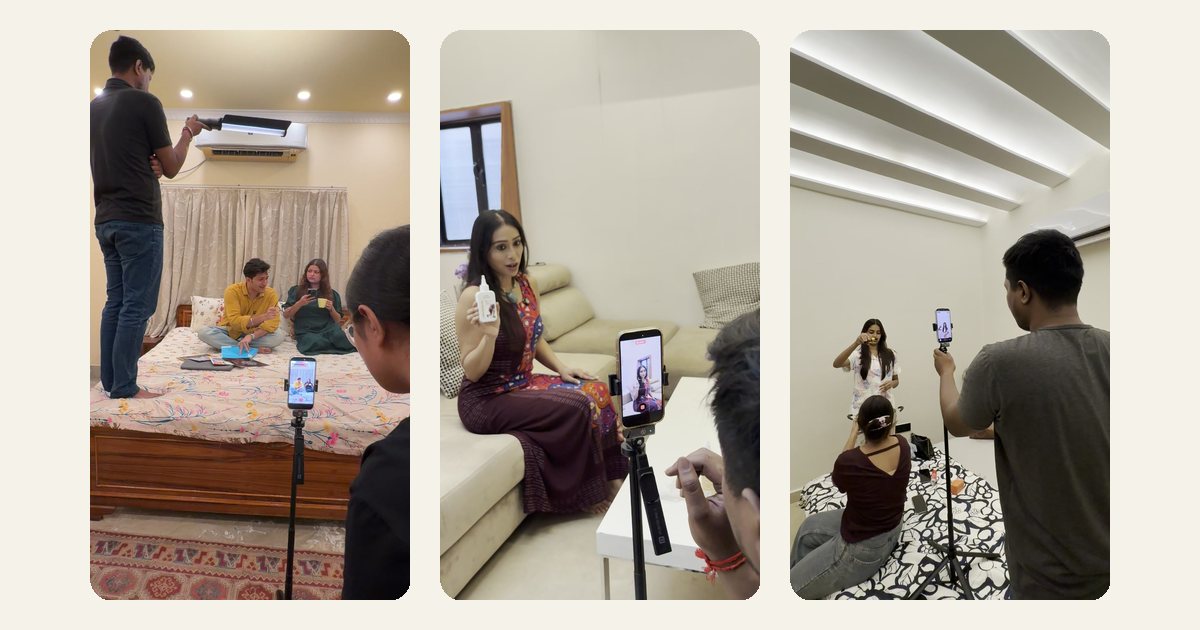
Most first UGC tests fail before the first video is shot, because "let's try UGC" is not a test, it is a vibe. A real test has a fixed structure, a control, decision gates and a budget that survives the learning phase. This is the 4-week loop we run with D2C brands trying creator ads for the first time, with the rupee math and the mistakes that invalidate results.
TL;DR
- Week 1: launch 3 creators × 3 hooks = 9 variants on cold traffic, against your current best ad as control.
- Weeks 2 to 3: read hook rate and CPA, iterate only the winning hooks with fresh variations.
- Week 4: scale the single winner into fresh ad sets, or diagnose honestly why nothing beat control.
- Judge at the hook level, not the video level, and never call a test in the first 72 hours.
Before week 1: the setup that makes the test valid
- A control. Your current best-performing ad keeps running. The question is never "did UGC get sales", it is "did UGC beat what I already had on cost per result".
- One goal metric. Purchases for most D2C; qualified leads for high-ticket. Decide before launch what number decides the test.
- Clean tracking. Pixel plus server events verified before spending. A test read on broken attribution is worse than no test.
- Variant math. 3 creators × 3 hooks on the same core body content = 9 variants. Hooks are the experiment; the creators are the replication. One creator with 9 hooks tests the person, not the idea.
Week 1: launch wide, touch nothing
All 9 variants go into a cold-audience campaign, broad or lightly interest-shaped targeting, with the algorithm free to allocate. Then the hard part: leave it alone. Meta's learning phase punishes edits, and day-2 panic edits are the most common way brands corrupt their own test. Budget guidance for India in 2026: enough daily spend that your goal event can happen several times a day, for purchases with a sub-₹2,000 AOV that usually means ₹1,500 to ₹3,000 per day on the test campaign; high-ticket lead gen can run leaner. Two weeks of that spend is the entry ticket, if that budget is not available, test with a cheaper goal first rather than starving a purchase test.
Weeks 2 to 3: read hooks, not videos
By early week 2 the spread appears. Read three layers, in order:
- Hook rate (3-second views ÷ impressions): did the opener stop the scroll? Healthy vertical-video hook rates sit well above what polished studio ads manage; your winners will be obvious relative to your own spread.
- Hold rate (how far viewers get): does the body sustain the promise the hook made?
- CPA versus control: the only layer that decides anything.
Iteration in weeks 2 and 3 means: take the 2 or 3 winning hooks, produce fresh variations of each (new creator, new setting, same opening idea), and retire the rest. This is why production cadence matters, a batch structure of 6 masters × 3 hooks per month, like our plans deliver, exists precisely to feed this loop without a new procurement cycle every fortnight.
Week 4: the decision gate
Three honest outcomes:
- A variant beats control on CPA: scale it, fresh ad sets, higher budget, and start the next batch iterating its hook family. This is the compounding path most of the brands in our brands-that-use-UGC roundup are on.
- Close but not conclusive: extend two weeks with the top 3 variants only. Do not add new variables mid-read.
- Nothing came close: the creative is rarely the sole culprit. Before batch two, audit offer, price framing and landing page, and change the angle entirely rather than re-shooting the same brief prettier. An agency that will not have this conversation is selling batches, not outcomes.
The five mistakes that invalidate first tests
- Judging in 72 hours and killing the campaign mid-learning.
- Launching UGC into a retargeting ad set, warm audiences flatter any creative.
- Testing 9 different concepts instead of 3 hooks × 3 creators, nothing replicates, nothing is learned.
- Measuring views and engagement because CPA was "still stabilising". Engagement is a diagnostic, never the verdict.
- Running one test batch, winning or losing, and stopping. Creative fatigues in weeks; the test is the start of a cadence, not an event.
If you want the full context on where UGC fits in Meta ad strategy, start with our UGC ads guide; if you are evaluating who should run this loop with you, take the 12-question agency checklist into the calls.
Frequently asked questions
How much budget does a proper first UGC test need in India?
Production (a structured batch from an agency starts around ₹72,000 for 18 variants) plus two to four weeks of media at a spend where your goal event fires several times daily, commonly ₹1,500 to ₹3,000 per day for purchase-goal D2C. Cutting either half below threshold does not shrink the test, it invalidates it.
Can I run the 4-week test with freelance creators instead of an agency?
Yes, if you can brief, script, QC and chase 3 creators to a synchronized delivery date yourself. The structure is what matters; the agency's role is making the structure happen on calendar time.
What counts as a "win" at the end of week 4?
A variant matching or beating your control's cost per result on cold traffic, with enough conversions behind it that you would bet next month's budget on it. Trending-toward with a clear hook signal is a legitimate "extend", not a loss.
Why test hooks instead of whole videos?
Because the first three seconds decide most of a vertical ad's fate, and hooks are cheap to vary while bodies are expensive to reshoot. Hook-level testing gives you nine experiments for the production cost of three.