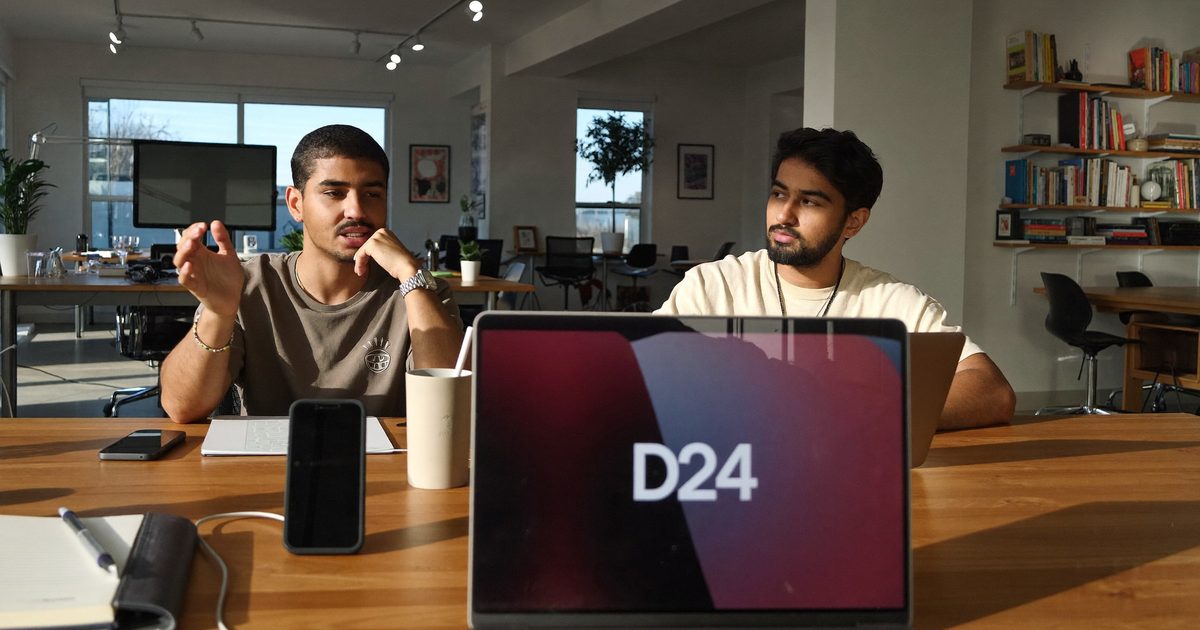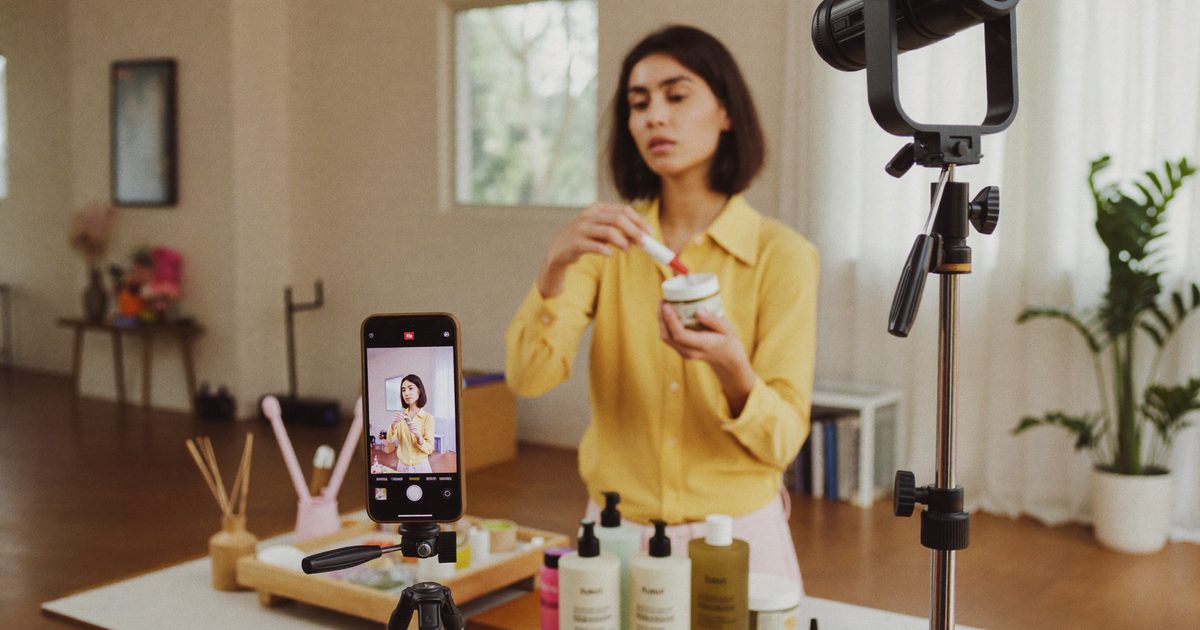
Most UGC goes wrong long before anyone presses record: a vague brief, a generic script, a creator left to shoot alone at home. This is the exact process we follow at The UGC Agency for every set of ads we make, from the first call to the files you upload to Meta. Our co-founder Kajal walks through all of it in the 7-minute video below, with footage from our real shoots. The written version follows, step by step.

TL;DR: the 9 steps
- Onboarding call: your goal, audience, cities, language, CTA and USPs.
- Research: your brand, category, competitors and the words your customers use.
- Concepts: built from ads that have run longest in your category, split by persona.
- Scripts: every script comes with three hooks to A/B test.
- Creator selection: you pick from a shortlist with their profiles and sample videos.
- Pre-production call: tone and visual expectations locked before the shoot.
- Production day: our own crew shoots in a real home, not the creator alone on a phone.
- Post-production: one round of consolidated feedback, edited in every format you need.
- Delivery: three hooks per script, lifetime ad usage rights and all raw files.
Timeline: 20 to 25 days for the first set, end to end, then 15 days for every set after that.
Step 1: the onboarding call
The first call is about getting as much from your side as we can, because every later step depends on it. Brands come to UGC for different reasons: some want awareness, some want hard sales, some want to tell their story and see whether it lands. We split the content according to that goal.
We also ask about:
- How you want the creators split across personas
- Which cities you want to reach, and which sizes or variants to focus on
- Your ideal customer profile and preferred language
- Where the CTA goes: website or app
- How long you want the videos to be
- Your core USPs and your secondary USPs
The USP split matters more than it sounds. Every script we write pairs one core USP with one secondary USP, so each ad has a single clear promise plus a supporting reason to believe, instead of a list of features.
Step 2: research
With your inputs in hand, we research the brand, the category and your target persona: their emotional pain points, how they talk and the exact words they use. Then we work through four questions in order:
- Positioning: how should this brand be positioned?
- Competitive landscape: who are we up against, and how do we win against them?
- Pricing strategy: how does the price support or undercut the message?
- Delivery and trial model: what makes it easy for a viewer to say yes?
Step 3: concepts
Concepts come out of the research. Some are based on reference ads we find on Instagram or in the Meta Ad Library, especially ads that have been running the longest in your category, because a long-running ad is one that is paying for itself.
We then split concepts by persona. For Sevora, a fashion app, we picked a male persona, a Gen Z persona, a homemaker, a working professional, a plus-size model and a model over 40. Each got a situation they would recognise:
- The working professional has dinner plans at 7 pm but is stuck in a client meeting until 6, so she orders her outfit on Sevora.
- The plus-size model speaks to a real gap: nobody styles plus-size bodies, everyone styles petite models. So she books the personal stylist on the app.
We also keep language local where it helps. For a Bangalore audience, a line like "macha" lands better than polished English.
Step 4: scripts, with three hooks each
Once you approve the concepts, we write the scripts. Every script comes with three different hooks so you can A/B test them and see which performs best.
The hook is only the first five to eight seconds, but it decides whether anyone sees the rest. We often see ads with a strong body and a good CTA that fail because the hook loses people. Three hooks mean at least one has a real chance, and once you find it you can double down on it.
For the body, we follow a set of building blocks so nothing found in the research stage gets left out.
Step 5: creator selection
When the scripts are final, we send you a shortlist of creators. You can see their Instagram, their sample videos and how they speak on camera, and choose who fits your brand. We work with independent creators, including some with only a few hundred followers, and with actors. Our only test is whether they are good in front of the camera and can deliver the script.
Step 6: the pre-production call
Before the shoot, we have a pre-production call where Kajal takes notes on exactly what you want. Should the creator feel completely natural or a little exaggerated? What are your visual expectations? A shoot cannot be redone cheaply, so we lock every expectation before production, not after.
Step 7: production day
This is where we differ from most UGC setups. We do not send the script and product to a creator and ask them to shoot at home and send raw files. Instead:
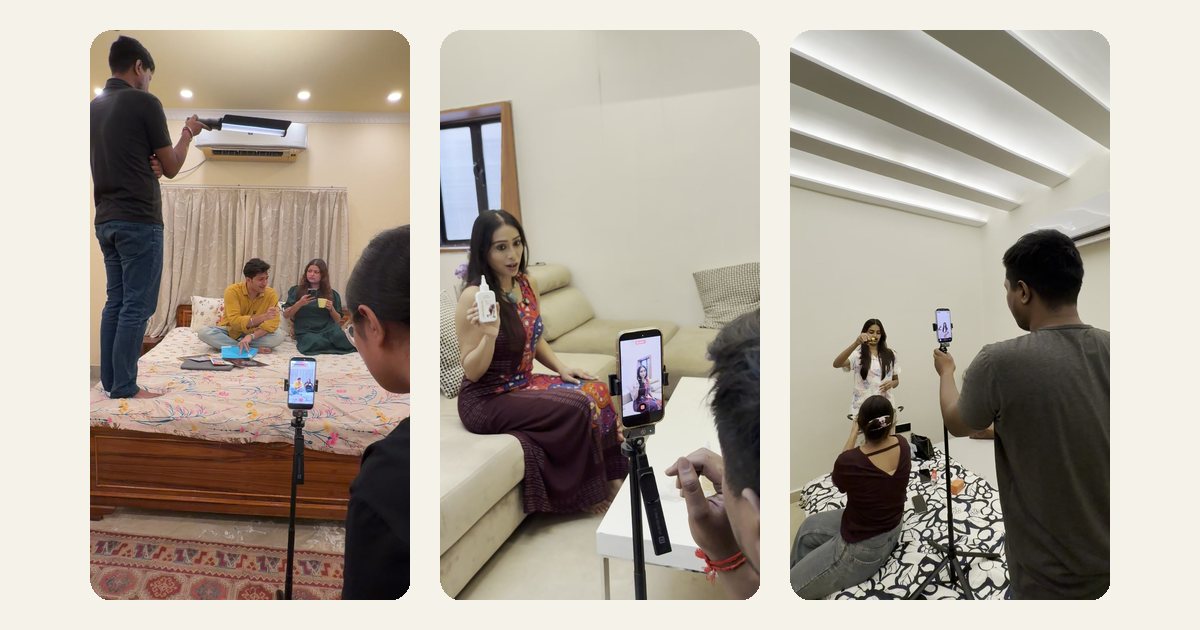
- We book an Airbnb, so the video still has the authentic feel of a creator filming at home.
- The creators come to the Airbnb, and our production team runs the shoot, including a director and a DOP.
- We shoot on iPhones with proper lights and mics.
Because our own team executes the production, we keep full creative control: we know exactly how each shot should look and how to get it.
Step 8: post-production
After the shoot, the footage goes into editing. We ask for consolidated feedback in one go, which keeps rounds short and the edit coherent. Every ad is delivered as a 9:16 master, plus 4:5 or 1:1 versions, whichever you need.
Step 9: delivery, and what you keep
Most brands run these videos as Meta ads, and our aim is for at least one hook to become a winning ad for you. With every script you get:
- Three hooks to test against each other
- Lifetime ad usage rights, so you can run the ads for as long as you want
- All the raw files, so you can re-edit or reuse footage later
You can also post the videos on your own channels, such as Instagram or YouTube.
How long it takes
The first set takes 20 to 25 days, end to end, from scripting to post-production. From the second set onwards, the research is done and our editors know your brand, so we work to 15 days. The timeline stays the same whether you need 10 videos or 20.
The biggest thing that speeds it up is quick decisions from your side at four points: choosing the concepts, giving feedback on the scripts, selecting the creators and giving feedback on the edit.
FAQs
How long does it take to make a set of UGC ads?
20 to 25 days for the first set, end to end. Every set after that takes 15 days, whether it is 10 videos or 20.
Do the creators shoot at home on their own?
No. We book an Airbnb so the video still feels like it was shot at home, and our own production team, including a director and DOP, runs the shoot on iPhones with proper lights and mics.
How many hooks do we get per video?
Three per script, so you can A/B test which opening keeps people watching.
Can we choose the creators?
Yes. We share a shortlist with each creator's Instagram and sample videos, and you pick who fits.
What formats and rights do we get?
A 9:16 master plus 4:5 or 1:1 versions, lifetime ad usage rights and all the raw files.
Want this process for your brand? Book a strategy call and we will plan your first set together, or see the short version on how we work.