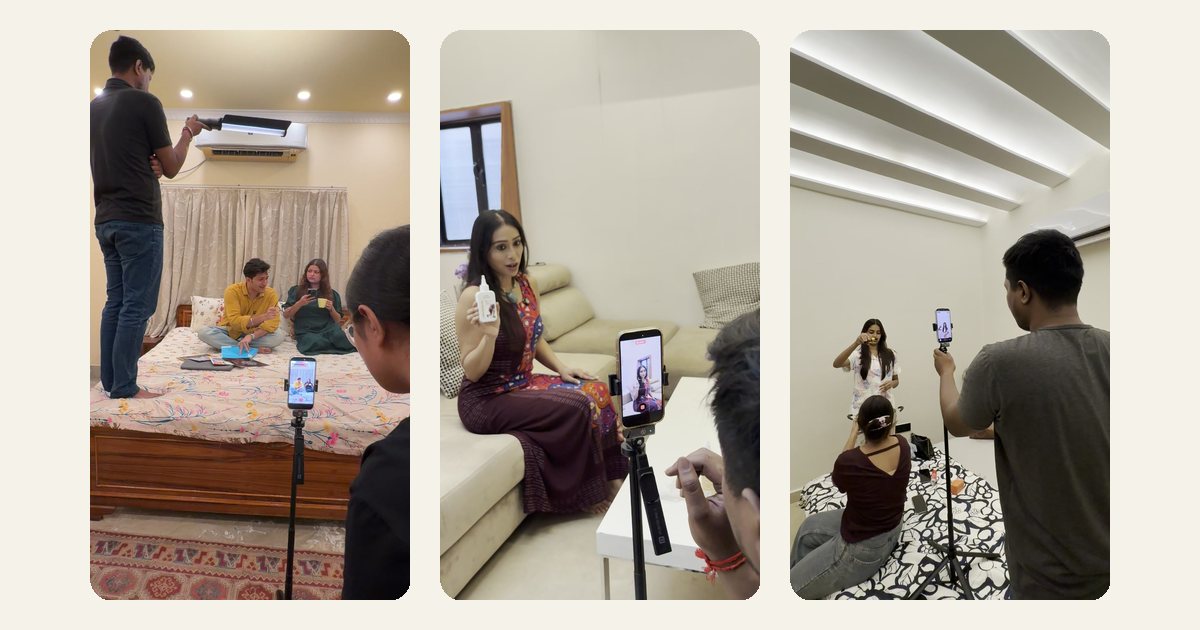
A hotel in Udaipur briefed us to capture "luxury vibes." A heritage resort in Coorg wanted "authentic local experiences." A budget chain in Bengaluru asked for content that felt "real but aspirational." All three briefs, if handed to a creator without further direction, would have produced thirty seconds of someone dramatically swirling a bedsheet. The brief is where hospitality UGC campaigns succeed or collapse, and most brands in this category are still writing briefs the way they write press releases.
This is a behind-the-scenes look at how we actually structure creative briefs for hospitality clients at The UGC Agency, from property-type segmentation to script scaffolding to the compliance guardrails that matter when you're making claims about food, hygiene, and wellness services on Indian social platforms.
Why Hospitality Briefs Need a Different Architecture
Most product UGC briefs follow a simple arc: unbox, demonstrate, react. Hospitality content does not have a product to unbox. What it sells is a feeling of place, and that is far harder to capture in a 30-second reel unless the creator has been told exactly which feeling, from which angle, at which time of day.
The hospitality sector in India spans wildly different use-cases: leisure travel (Goa, Shimla, Kerala backwaters), business travel (hotels near BKC Mumbai, Whitefield Bengaluru, DLF Cyber City Gurugram), pilgrimage travel (Tirupati, Varanasi, Shirdi), and the growing "workation" segment (Coorg, Manali, Pondicherry). A brief for a 5-star business hotel near an airport targets a different persona, a different scroll context, and a different platform than a brief for a boutique property in Hampi. We segment briefs by property type before we write a single line of direction.
- Leisure/resort properties: Prioritise aspirational sensory triggers, the pool at golden hour, the sound of rain on a teak roof, the plating of a filter coffee. Emotion over information.
- Business/transit hotels: Lead with functional proof, fast check-in, workspace quality, blackout curtains, proximity to metro or business districts. Trust over beauty.
- Heritage/boutique properties: The story IS the product. Brief creators to ask staff about history, surface one architectural detail, find the unexpected corner. Specificity beats polish.
- Budget/OYO-tier properties: Cleanliness, value signals, and honest "this is what you actually get" framing perform best. Overclaiming here destroys trust faster than any other category.
The Seven Brief Sections We Always Include
A brief for a hospitality campaign at our agency runs between 600 and 900 words. That may sound long, most platform marketers write briefs in a Notion bullet list, but ambiguity in a hotel shoot costs a reshoot fee, a return visit, or worse, content that simply cannot be used. These are the non-negotiable sections:
- 1. Property context (2-3 sentences): Star rating, USP, location landmark, target guest profile. Not marketing copy, operational facts the creator needs to know before they walk through the lobby.
- 2. Campaign objective with a single primary metric: Is this driving direct booking page traffic? Building Instagram follower trust? Feeding a Meta retargeting funnel? One objective. We see briefs that say "awareness AND conversions AND brand recall", these produce content that achieves none of those.
- 3. Platform-specific format requirements: For Instagram Reels, we specify aspect ratio (9:16), audio-off readability (on-screen text requirements), and reel length (currently 30-45 seconds outperforms 60+ for hospitality discovery). For YouTube Shorts, the hook window is tighter. For Snapchat, which still has meaningful reach among Tier 2 city youth planning weekend trips, we brief vertical storytelling differently because that audience is younger and skips faster.
- 4. Shot list with times of day: Natural light inside hotel rooms is the difference between a ₹40,000 booking and a ₹4,000 booking looking at the same space. We specify whether pool shots happen before 8 AM or after 4 PM, and we tell creators which amenities photograph poorly under artificial light and should be avoided.
- 5. Script scaffold (not a script): We give creators a structural framework, opening hook options, the 1-2 specific claims they must make, the CTA phrasing the property needs, but we deliberately leave the middle open for the creator's authentic voice. Over-scripted hospitality UGC reads like a tourism board announcement. Under-scripted UGC misses the booking driver entirely.
- 6. Mandatory disclosures and ASCI compliance notes: The Advertising Standards Council of India requires sponsored content to be labelled, on Instagram this means using the paid partnership label or an explicit "#Ad" or "#Sponsored" disclosure that is visible without expanding the caption. For properties making specific claims (e.g., "best rooftop bar in Kolkata," "award-winning spa"), ASCI guidelines require that superlatives be substantiatable. We flag these in the brief explicitly because creators often don't know, and the platform enforcement risk falls on the brand account, not the creator's.
- 7. What NOT to show: Staff faces without consent, identifiable other guests, anything from the kitchen unless hygiene standards have been pre-cleared, unfinished areas of the property, or menu prices if those prices change seasonally. This section alone prevents three categories of post-production problems.
Script Scaffolding: The Hook Problem in Hospitality UGC
The opening three seconds of a hospitality reel are doing one specific job: stopping a scroll for someone who is either passively dreaming about a trip or actively comparing options. These are different scroll states and they respond to different hooks.
For passive discovery audiences (typically running on broad interest targeting on Instagram or YouTube), sensory hooks outperform informational ones. "This pool exists 3 hours from Bangalore and nobody is talking about it" will stop more scrolls than "Chikmagalur has some amazing resorts." We brief creators with 2-3 hook options and ask them to test which feels most natural in their voice, forced hooks are visible immediately.
For retargeting audiences, people who have already visited the hotel's website or engaged with previous content, the brief shifts. Here, objection-handling hooks work: "I know what you're thinking, is it actually worth the price?" opens a conversation that a warm audience is already having internally.
We tell creators: your first line is not an introduction. It's a door. Open it for the person most likely to walk through, don't try to hold it open for everyone at once.
Language and Creator Matching for Indian Hospitality Markets
One brief does not serve all markets. A resort property in Kerala working to attract domestic tourists from Tamil Nadu, Karnataka, and Maharashtra needs content in at least two languages beyond English, typically Malayalam for the aspirational "local pride" angle, and Hindi or Tamil for the outbound traveller audience. This isn't about translation; it's about briefing creators who speak to those audiences natively.
For Tier 2 city campaigns, a new business hotel in Nashik, a resort near Jamshedpur, a heritage property outside Mysuru, we specifically brief against the assumption that the audience wants "luxury" framing. Research consistently shows that Tier 2 audiences respond better to value clarity, local cultural signals, and peer-validation hooks ("people from [city] are already booking this for the long weekend") than to aspirational lifestyle framing that reads as out-of-reach.
Creator selection for hospitality UGC also affects brief design. A travel creator with 80K followers who regularly covers South Indian temple circuits needs a different brief than a lifestyle creator with 200K Mumbai-based followers doing "weekend escapes." We match the creator's existing audience geography and travel profile to the property's target booking source before the brief is even written.
Budget Realities and Content Volume for Hospitality Campaigns
A typical hospitality UGC campaign we run, covering one property, one stay, two creators, content for three formats (Reels, Stories, a longer YouTube Short), with full rights licensing, sits in the ₹80,000–₹1,50,000 range depending on the creators' tier and the property's location. This includes the brief development, creator coordination, review cycles, and a compliance check before content goes live.
Properties that try to compress this into a single ₹15,000 "one creator, one reel" arrangement usually find themselves with content they cannot run on paid channels (no rights agreement), content that makes unsubstantiated claims (ASCI liability), or content that is technically beautiful but drives zero bookings because the brief never specified what action it was trying to generate.
The brief is not overhead. It is the single document that determines whether the production budget yields usable, scalable, high-performing content, or a lovely reel that gets 4,000 organic views and then quietly disappears.
The Review and Approval Workflow for Hotel Clients
Hospitality clients tend to have multiple internal stakeholders, the marketing team, the GM, sometimes the F&B head if food content is included. We build a two-stage review into every brief: a concept approval before the creator's stay, and a content approval before publication. Skipping the first stage is the most common reason hospitality UGC campaigns go over budget. A creator who shows up at a property without concept sign-off will shoot freely, produce content that doesn't match the campaign objective, and trigger a round of revision requests that the brief would have prevented entirely.
We also build the property's own organic reshare rights into the brief terms, hotels have Instagram accounts and often want to repost creator content. Without explicit licensing language in the brief and deliverables agreement, that reshare can create a dispute that sours the creator relationship and complicates future campaigns.
If you're running hospitality campaigns and finding that your UGC output looks good but isn't connecting to bookings, the brief is almost certainly where the gap lives. We build and execute hospitality UGC campaigns for properties across India, you can see how we work or get a campaign scoped at our work page.