Ad blindness is the cognitive habit that kicks in whenever the brain recognises something as an advertisement and routes it away from conscious attention before the viewer is even aware of it. For anyone running paid campaigns, this is not a future problem—it is happening right now in your ad account, expressed as declining CTR on creatives that worked last month and rising CPMs that are harder to explain through audience fatigue alone. Understanding ad blindness from first principles is the starting point for building creative strategies that stay ahead of it.
What Ad Blindness Actually Is (And Is Not)
Ad blindness is not simply people deciding they do not want to see ads. It is a trained neural response—the brain learns to recognise the visual and structural patterns of advertising (stock imagery, formal voiceovers, product-on-white-background shots, certain text overlay styles) and begins processing them as background noise before conscious evaluation occurs. The implication is important: making a more visually impressive ad does not overcome ad blindness. If the visual patterns still signal “this is an ad,” the cognitive filter activates regardless of production quality.
What does overcome it is pattern-breaking: content that does not look or feel like an advertisement at first glance. This is a large part of why authentic UGC—which looks like organic social content—consistently outperforms polished brand creative in the feed.
Beginner Level: Breaking the Visual Pattern
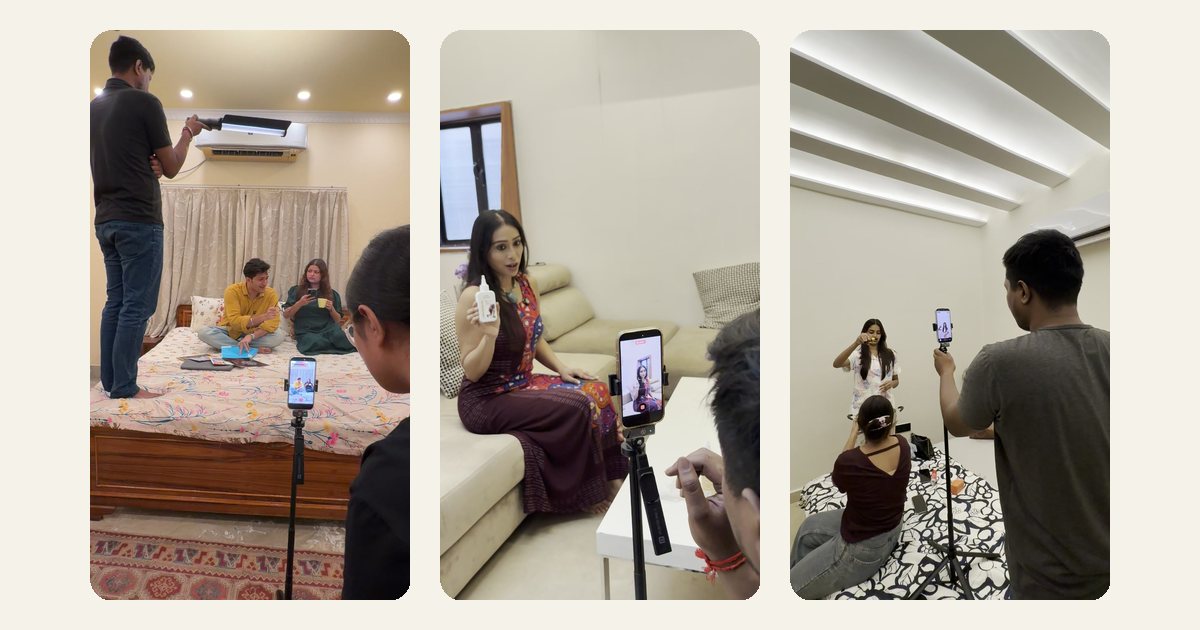
For brands just beginning to address ad blindness, the highest-impact change is visual. Remove the visual markers that signal “ad”: logo in the first three seconds, product name in text overlay at the top, formal brand colour backgrounds, stock music. Replace them with content that looks like a friend’s video: phone-quality footage, casual framing, ambient sound, conversational delivery. This single change—moving from brand-designed to creator-shot content—typically produces measurable improvements in hold rate and CTR without any other change to the message or offer.
Intermediate Level: Hook Engineering
Once visual pattern-breaking is in place, the next lever is hook engineering. The first three seconds must give the viewer a specific reason to watch the next ten seconds. The most reliable hook structures are:
- Surprising claim: “I stopped using cleanser and my skin got better.”
- Relatable frustration: “I have tried seven different protein powders and most of them tasted like chalk.”
- Curiosity gap: “My dermatologist told me I was using my face wash wrong.”
- Social proof opening: “Three of my friends in my building switched to this and two of them asked me what I was using.”
Test each structure systematically. Watch the 3-second view rate and the average watch duration as the primary metrics for hook quality.
Advanced Level: Creative System Design
At the advanced level, overcoming ad blindness is a systems problem, not a creative problem. The system has two requirements: volume and diversity. Volume means a continuous pipeline of new creative entering the ad account regularly enough that no single creative is overserved to any audience segment. Diversity means variation across multiple axes simultaneously—creator identity, hook structure, visual environment, product benefit angle, and call-to-action style.
Advanced brands run creative testing with a deliberate hypothesis for each test: “We believe that a hook featuring a price-justification opening will outperform a problem-statement hook for our consideration-stage audience.” This turns creative production into a learning programme rather than a content exercise.
The Role of Platform Diversity
Ad blindness is also platform-specific. An audience that has become blind to a certain creative style on Instagram Reels may respond freshly to the same content on YouTube Shorts, where they have different viewing habits and attention patterns. Distributing UGC content across Meta, YouTube, and emerging platforms extends the effective lifespan of the creative library and reduces the overall CPM pressure from over-serving on a single platform.
Takeaway
Overcoming ad blindness is an ongoing practice, not a one-time creative fix. It requires visual pattern-breaking at the beginner level, hook engineering at the intermediate level, and a systematic testing and rotation programme at the advanced level. The brands building these capabilities now are creating durable creative advantages that compound over time.
Ready to build a creative system that stays ahead of ad blindness? Book a strategy call and let’s design a testing programme for your campaigns.