Every brand running paid social at scale eventually confronts the same frustrating pattern: a campaign that performed strongly in weeks one and two gradually loses effectiveness without any obvious change in targeting, bidding, or budget. The audience, the offer, and the placement are all the same. What changed is the audience's willingness to notice the ad. This is ad blindness — and it is not simply about seeing the same creative too many times. It is a more structural challenge rooted in how human attention works in high-stimulus digital environments.
What Ad Blindness Actually Is
Ad blindness has two distinct forms that are often conflated. The first is banner blindness — the trained tendency of users to visually skip over elements that are positioned or formatted like ads, regardless of their content. This is a spatial and visual pattern: humans learn where ads typically appear on a page or screen and stop processing those zones consciously.
The second form is creative fatigue — a specific decline in response to content the audience has already seen. Creative fatigue is measurable: it shows up as declining CTR and increasing CPM on the same audience over time, even as the creative itself has not changed. This is the form most relevant to brands running paid social campaigns, and it is the form that UGC-led creative strategies are best positioned to address.
Why Traditional Ad Formats Accelerate Blindness
Traditional ad formats are visually distinctive in ways that are now working against them. Polished video with branded lower-thirds, professional lighting, and clearly promotional music immediately registers as 'an ad' in the viewer's unconscious sorting process. That pattern recognition triggers the avoidance response before any message is absorbed. The higher the production value, the more clearly it signals 'this is a commercial' — and the faster it gets screened out.
This creates a paradox: the signals that traditional advertising used to use to build brand credibility (production quality, professional talent, branded aesthetics) are now the exact signals that cause audiences to disengage before the message lands.
Why UGC Breaks Through Where Traditional Ads Fail
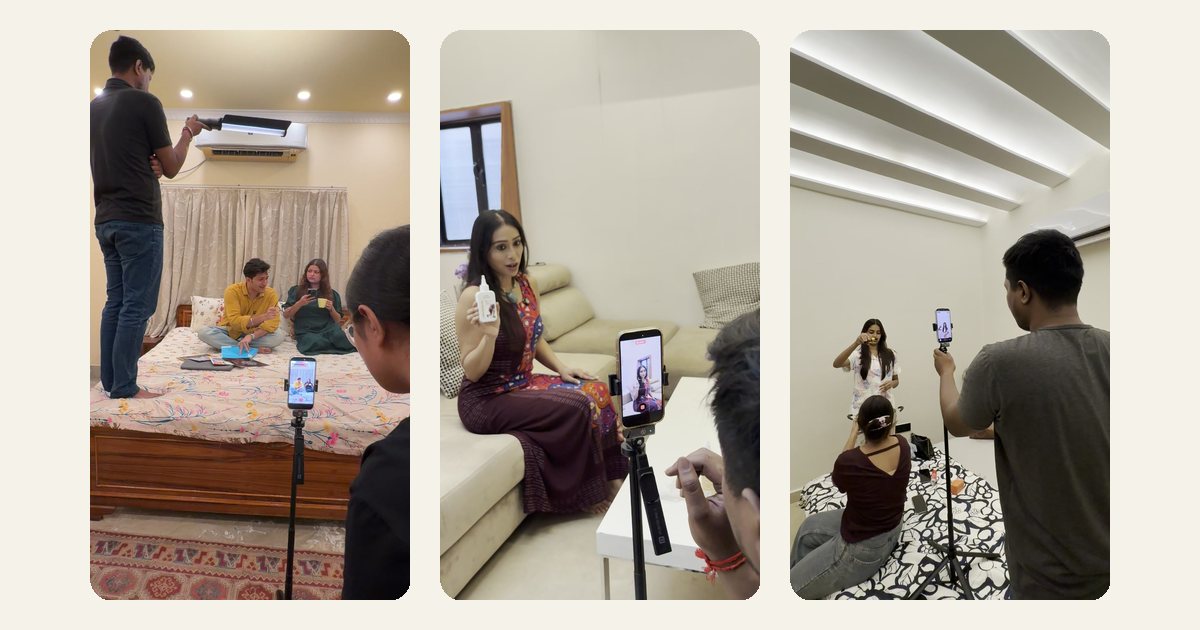
UGC-style content bypasses ad blindness not by being clever or unexpected, but by being visually and tonally indistinguishable from the organic content surrounding it in the feed. Phone-shot video, natural lighting, casual speech, and imperfect framing do not trigger the 'this is an ad' sorting pattern in the same way. The viewer's brain processes the first few seconds as organic content before the branded message is delivered — by which point the hook has done its job.
This is not a trick that works once and then fails as users adapt. The visual language of authentic creator content is the same visual language as organic social media content, which means it does not become identifiable as a category that brains learn to skip.
Managing Creative Fatigue Through Volume and Variety
Overcoming ad blindness at the creative level requires a different production mindset. Rather than producing one or two high-investment creatives and running them until performance collapses, brands need a pipeline of shorter-production-cycle content that can be refreshed frequently. For most D2C brands spending meaningfully on Meta, this means introducing new creative every two to three weeks in active placements — not once per quarter.
Variety matters as much as frequency. Different hooks, different creator profiles, different use contexts, and different problem framings each reach different audience segments at different stages of their consideration journey. A creative rotation strategy that maintains variety reduces the rate at which any single audience segment reaches blindness on a specific piece of content.
How to Diagnose Blindness in Your Current Campaigns
Three metrics signal ad blindness in an active campaign:
- Declining hook retention: The percentage of viewers watching past the first three seconds is falling week-over-week, even as reach stays constant.
- Rising frequency with falling CTR: The same users are seeing the ad more often but clicking less. Classic creative fatigue.
- Rising CPM without targeting changes: Meta's algorithm is detecting declining engagement signals and raising the price of showing your ad to the same audience.
Any one of these signals is a reason to introduce new creative. All three together indicate the current creative is genuinely exhausted and continuing to run it is accelerating audience avoidance conditioning.
Takeaway
Ad blindness is a structural challenge, not a targeting problem. It is caused by creative formats that audiences have been trained to screen out and by creative fatigue from overexposure. The solution is authentic, frequently refreshed creative that does not look or sound like an ad — which is exactly the brief that well-executed UGC is designed to fill.
If your campaign metrics are showing the patterns of ad blindness, book a strategy call and we will build a creative refresh strategy that breaks through.