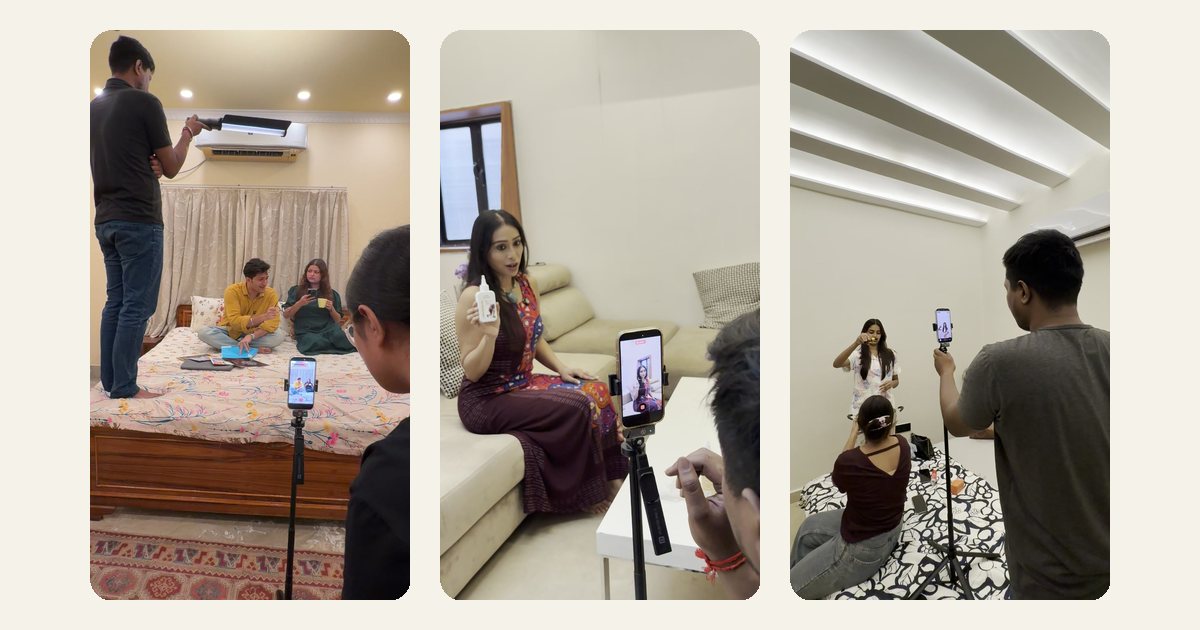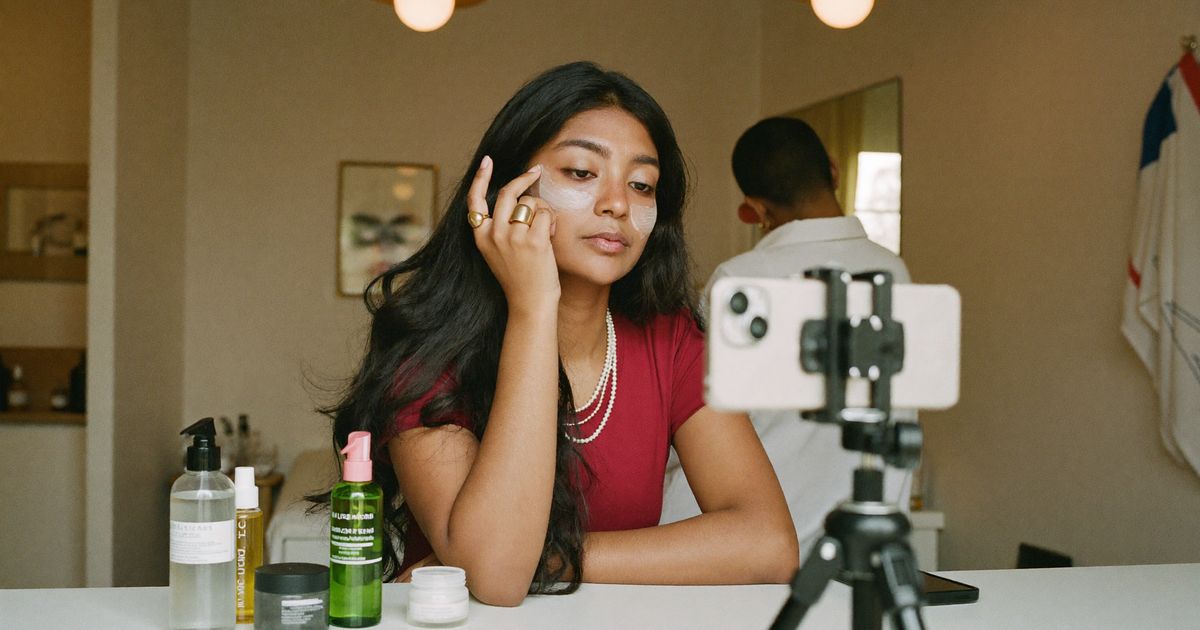
Skincare is one of the most brutally honest categories on the internet. Indian consumers, particularly women aged 18–35 in metros and Tier-cities across India, will cross-reference a single product claim across five Instagram Reels, two YouTube reviews, and a Reddit thread before adding it to cart. If your UGC is structured like a TV commercial, they'll scroll past it in under two seconds. This playbook is for brands that already have a UGC programme running and are asking the harder question: why isn't it converting at the rate it should?
The answer is almost always in the brief, the creator selection, or the proof architecture, not the production quality. Let's go through each lever methodically.
Audit Your Existing Creatives Before Briefing the Next Batch
Before you commission more content, pull your last 30 skincare UGC videos and categorise them by hook type. If more than 60% open with a creator holding the product and saying "so I've been using this for the past few weeks," you have a hook problem. In a congested feed, that opening has zero pattern-interrupt. Indian audiences on Instagram and YouTube Shorts have been conditioned to swipe away that structure.
Run this quick audit on your existing library:
- Hook diversity: How many unique hook formats do you have, problem-agitation, myth-bust, before/after tease, ingredient callout, testimonial-first? Aim for at least four distinct types in any batch of ten.
- Skin concern specificity: Does each video clearly call out one concern, pigmentation, fungal acne, dry patches, post-acne marks, rather than vague "glowing skin" language? Vague claims get ignored; specific concerns stop the scroll.
- Proof density: Count the number of verifiable proof points per video: before/after photos, visible texture change, ingredient name dropped with a function explained ("niacinamide at 5%, not the 2% you get in most serums"). Low proof density is the most common reason skincare UGC fails to convert.
- ASCI compliance check: Under ASCI guidelines (and now the CCPA-backed ASCI Influencer Guidelines 2023), testimonials making skin results claims must reflect genuine, personal experience and cannot promise results that aren't achievable for an average user. If creators are claiming "100% clear skin in 7 days," that is both an ad compliance risk and a trust-destroying overclaim.
Build Creator Briefs Around Skin-Type Segmentation, Not Product Features
The single most effective structural change we have seen in skincare UGC is shifting the brief anchor from "here is what the product does" to "here is the specific skin problem this creator has, and here is how the product fits into their existing routine." This produces content that reads as authentic to Indian viewers because it mirrors how they actually think about skincare, not as standalone products but as part of a stacked routine.
A production-ready brief for a vitamin C serum, for example, should not just list the product's attributes. It should:
- Match creators to verified skin types: oily + combination for a Mumbai/Delhi audience (humidity-prone skin), dry + sensitive for creators in Rajasthan or Punjab (dry-climate relevance).
- Ask creators to show the serum in the context of their full AM routine, where it sits, what it layers over, what SPF they use after. Routine context dramatically increases save rates on Instagram, which is a downstream conversion signal.
- Specify the texture moment: we brief creators to capture a close-up of the product's texture on the back of the hand or fingertip. For Indian skin tones (Fitzpatrick III–V), finish and absorption visuals are high-trust signals because toners and serums that look white or ashy register poorly, and showing the actual absorption on brown skin answers that objection pre-emptively.
- Restrict language around results to experience-based framing: "I noticed my dark spots looked lighter after three weeks" rather than "this removes dark spots." The former survives ASCI scrutiny; the latter does not.
The Before/After Protocol That Actually Scales
Before/after content is the highest-converting format in skincare UGC, but it is also the most frequently botched. Poor lighting consistency, different angles, and makeup contamination destroy the visual argument even when the product genuinely works.
For brands running UGC at scale (creators per month), standardise this with a simple shot protocol in the brief:
- Same-day lighting rule: Both shots taken within the same hour of day, in natural light, phone facing a window. No ring light, it flattens texture and makes before/after comparisons meaningless.
- No-makeup mandate for both frames: Brief creators explicitly. If the "after" frame includes concealer or foundation, the comparison is not just misleading, it is a potential ASCI violation as it could constitute a false comparative claim.
- Angle lock: Ask creators to take the before photo on Day 1 and store it, then replicate the same distance and angle for the after. We include a simple reference image in our briefs showing the correct framing, face filling 70% of the frame, slight upward tilt to show chin/forehead, neutral expression.
- Timeline honesty: For claims visible in three to four weeks, a 21-day or 30-day timestamp is credible. "Results in 3 days" claims for pigmentation or acne scarring are not believable to an Indian beauty audience that has been disappointed by such claims before, and they damage brand trust rather than build it.
The Indian skincare buyer is not naïve, she has tried ten products for her hyperpigmentation already. A creator who says "this took six weeks and it's not perfect but it's genuinely better" will outconvert a creator who promises transformation in a week.
Platform-Specific Formatting for Indian Skincare UGC
Each platform demands a different structural approach for skincare content in India, and recycling the same cut across all three wastes media spend.
- Instagram Reels (primary conversion surface): Keep to 30–45 seconds. The hook must land in the first 2 seconds, a close-up skin concern shot or a text overlay naming the exact problem ("fungal acne on oily skin") outperforms any speaking-to-camera opening. End with the product name, a visible price anchor ("₹799 on Nykaa"), and a CTA to the link in bio. Save rates, not just views, indicate purchase intent and should be your primary optimisation metric for Reels.
- YouTube Shorts: Indian audiences use Shorts for longer consideration research. A 55–60 second format that walks through a mini-routine with the product embedded, explaining why it comes before or after another step, performs better here than the punchy Reels format. Including Hindi or regional language subtitles (even over English-spoken content) increases watch completion for Tier-2 audiences in UP, Bihar, and Tamil Nadu.
- Meta Feed Ads (boosting UGC): When whitelisting creator content to run as paid ads, the single most valuable edit is adding a text card in the first frame that names the skin concern. This improves thumb-stop rate for cold audiences who have no existing brand recall. Keep the creator handle visible in the video, removing it reduces trust signals in the feed.
- WhatsApp Status: For D2C brands with direct WhatsApp catalogues, 15-second skin-benefit clips with Hindi text overlays shared via Status by the brand's business account can drive direct add-to-cart behaviour, particularly effective for price-sensitive customers in Tier-2 and Tier-cities across India who live primarily in WhatsApp.
Ingredient-Led UGC: The High-Trust Format for Educated Buyers
The Indian skincare audience has been educated by accounts like @Skincare_by_Hyram (and dozens of Indian dermatology creators) to read ingredient labels. Brands that produce ingredient-led UGC, where the creator explains what a specific active does and why the formulation is designed for Indian skin conditions, see consistently higher add-to-cart rates among urban millennial audiences.
To execute this well:
- Brief creators to pick one active per video (glycolic acid, kojic acid, retinol at 0.1%, tranexamic acid) and explain it in plain language, 20 seconds max, no jargon.
- Have the creator state the concentration if it is a selling point: "this has 10% vitamin C, which is the effective dose, most budget serums use 5%." This is a specific, verifiable claim that drives purchase consideration.
- Pair ingredient education with the skin concern it addresses. Audiences in humid metros (Mumbai, Chennai, Kolkata) are more likely to respond to oil control and anti-fungal actives; North Indian audiences to hydration and anti-pigmentation. Creator selection and brief localisation should reflect this.
- Avoid having creators make therapeutic claims ("treats acne," "cures hyperpigmentation"). These cross into drug-claim territory under the Drugs and Cosmetics Act and will attract platform review flags as well as regulatory attention.
Measuring UGC Performance at a Granular Level
Brands that have been running UGC for six months or more should move beyond CPM and CPC as primary success metrics for skincare content. The metrics that predict purchase conversion more reliably are:
- Save rate on organic Reels: A save indicates the viewer wants to return to the product information, a strong purchase-intent signal. Skincare UGC with ingredient education or before/after proof typically generates 3–5x the save rate of generic lifestyle content.
- Comment sentiment on specific claims: Read the comments on creator posts manually each fortnight. Phrases like "which niacinamide is this?" or "does this work on tan skin?" are unprompted demand signals. Brands that feed these questions back into the next brief, addressing them explicitly, see conversion rates improve over successive batches.
- Return visitor rate from UGC traffic: If you are tagging UTM parameters on link-in-bio clicks from creator posts, segment returning visitors from UGC sources. A high return rate means the content is building genuine consideration rather than impulse clicks that bounce.
- Whitelisted ad ROAS by creative type: Test ingredient-led vs. before/after vs. routine-context as separate ad creative types. In our production work with skincare D2C clients, ingredient-led creatives generally show higher ROAS among 25–34 year olds in metro cities compared to lifestyle-only content.
If your skincare brand is at the stage where you are producing 15–20 UGC videos a month and the results are inconsistent, the problem is almost always upstream, in brief structure, creator matching, and proof architecture. At The UGC Agency, we offer a free consultation to audit your existing skincare UGC strategy and identify exactly where the conversion drop-off is happening, so your next batch outperforms your last.