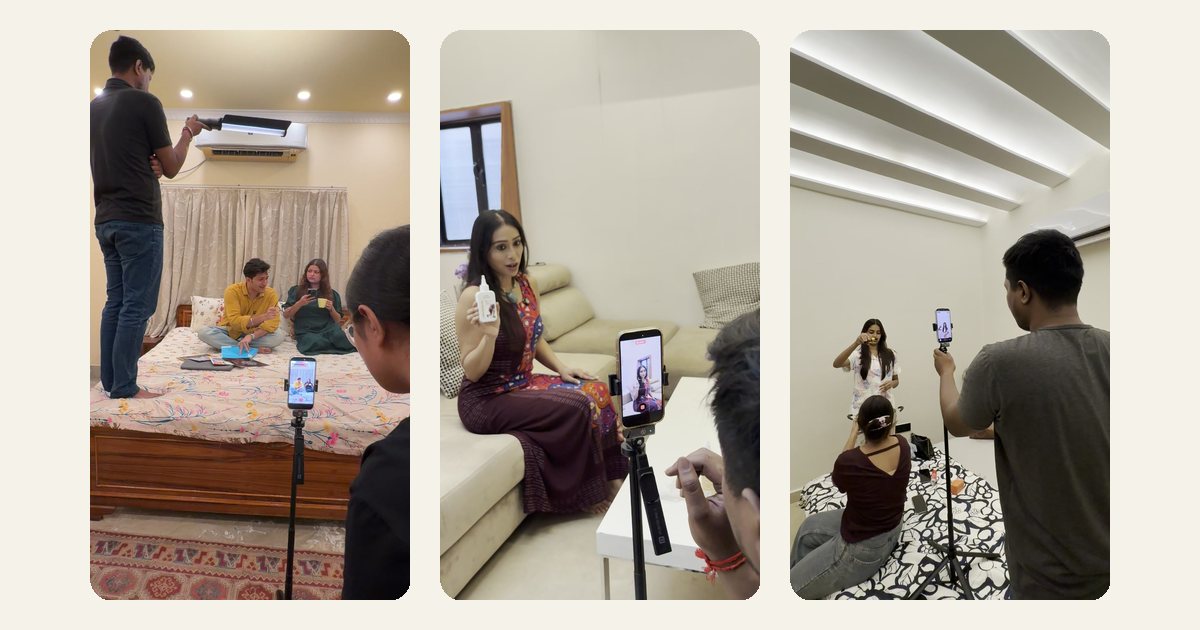
Fitness supplements sold out within 72 hours of a single Instagram Reel. The brand was MuscleBlaze, the creator was a gym-goer from Pune with 18,000 followers, and the video was an unscripted 47-second clip of him mixing whey protein after a leg day. No voiceover artist. No studio. Just sweat, a shaker bottle, and an honest reaction. That outcome is not an accident, it is what happens when a brief is built around the right principles.
Fitness is one of the most competitive UGC categories in India right now. Brands across protein powders, resistance bands, yoga mats, gym apparel, and health drinks are all chasing the same creator pool and the same scroll-stopping formats. Getting it right requires more than handing a product to someone with an Instagram account. Here is a step-by-step process for building fitness UGC that actually converts.
Step 1: Match the Creator Profile to the Product Claim
Fitness UGC fails most often at the casting stage. A lean marathon runner endorsing a mass-gainer looks dishonest. A beginner using an elite powerlifting belt reads as aspirational at best, misleading at worst. Before you write a single brief line, align the creator's visible fitness journey to the specific claim your product makes.
- Transformation products (fat burners, meal replacements, cutting supplements): cast creators who are visibly mid-journey, not before-and-after extremes, but someone your target customer sees as "a few months ahead of me." Cities like Hyderabad, Ahmedabad, and Lucknow have active gym communities with mid-tier creators in this bracket.
- Performance products (pre-workouts, creatine, BCAAs): cast active gym lifters or team sport athletes who can speak to effort and output, not just aesthetics.
- Lifestyle fitness (yoga mats, foam rollers, protein granola): home-workout creators and morning-routine content makers on Instagram Reels work well here. Female creators in the 25–35 age range from metros like Bengaluru and Delhi dominate this niche with highly engaged audiences.
One practical rule we follow in our production work: the creator should be able to name their gym, their training schedule, or their coach in the video. That level of specificity signals authenticity and is nearly impossible to fake.
Step 2: Brief Around a Single Physical Moment, Not a Feature List
Fitness consumers are sceptical. They have seen too many six-pack-in-six-weeks promises. The brief that converts is one anchored in a specific, verifiable physical moment, not a string of product features.
Instead of briefing: "Talk about the 25g protein per serving, the no-sugar formula, and the new chocolate flavour."
Brief around: "Show us what your post-workout routine looks like on a day you trained hard. The product should appear naturally. Tell us the one thing you noticed in your recovery this week."
This framing produces content where the claim emerges from lived experience rather than a recitation. Under ASCI's guidelines for health and fitness products, creators and brands must ensure claims are not misleading and are substantiated. A creator saying "I felt less sore the next morning and was back squatting by Thursday" is both credible and defensible. A creator saying "this gave me 40% more endurance" without substantiation invites scrutiny and potential complaints.
Brief the moment, not the message. The message will follow from the moment.
Step 3: Use the Right Formats for Each Platform
Fitness UGC in India performs differently across platforms, and your format choice should follow the platform's native consumption behaviour, not your creative preference.
- Instagram Reels (15–30 seconds): The dominant format for fitness brands targeting 18–35 audiences. Hook in the first two seconds with a physical action, a lift, a run start, a mat rollout. Cut fast. Add Hindi or regional-language captions; a large percentage of fitness Reel viewers on Instagram come from Tier cities across India and engage more when captions are in their language.
- YouTube Shorts: Works particularly well for quick how-to UGC, "how I use this band for shoulder rehab," "3 recipes with this protein powder." Slightly longer retention window than Reels allows creators to land a clearer product use case.
- YouTube long-form: For higher-consideration purchases (treadmills, smart cycles, premium supplements costing Rs.3,000+), a genuine 5–8 minute "week with this product" video from a credible creator converts better than any short-form equivalent. The viewer is doing due diligence; respect that.
- WhatsApp Status and broadcast lists: Increasingly used by direct-to-consumer fitness brands to push creator clips to their own customer lists. This is a owned-channel play, not paid media, but it is where repeat purchase decisions happen.
Note on TikTok: it remains banned in India. Any fitness brand told to "go viral on TikTok" by an agency in 2025 should ask for updated advice. The playbook has fully migrated to Instagram Reels and YouTube Shorts.
Step 4: Structure the Video to Earn Trust Before the Ask
Fitness UGC that converts follows a three-beat structure, regardless of length. We brief creators to think of it as: Context → Proof → Invite.
- Context (first 20–30%): Establish who you are and what the training problem or goal is. "I've been training for a half-marathon and my recovery has been the weak point" sets up the product naturally.
- Proof (middle 50–60%): Show the product in actual use, not on a shelf, not in a hand with a voiceover. On a gym floor, in a kitchen, on a trail. Show the preparation, the consumption or use, the immediate reaction. Real-time proof, a visible reaction to taste, a close-up of muscle pump, the sound of a blender, outperforms any claim.
- Invite (final 20–30%): Do not script a CTA that sounds like an ad. Brief creators to answer the question: "Would you recommend this, and to whom?" A creator saying "if you're training more than four days a week and struggling with recovery, this is worth trying" is a peer recommendation. It is far more effective than "use code CREATOR10 for a discount."
Step 5: Handle Repurposing Before You Shoot
Most fitness brands in India are running Meta ads alongside their organic UGC strategy. The mistake is treating these as separate workflows. Plan your repurposing rights upfront, and brief the creator to produce material that works both as an organic post and as a paid ad unit.
Practically, this means:
- Shoot vertically (9:16) as primary, it covers Instagram Reels, YouTube Shorts, and Meta Stories/Feed ads without cropping.
- Ask for a clean version without music and a version with the creator's recommended track, so your paid team can swap licensed audio on the ad version without a reshoot.
- Collect a standalone 5–8 second clip of the product in use. This becomes the creative asset for Meta carousel ads or collection ads without requiring a new shoot. For an Rs.8,000–Rs.15,000 creator fee, getting three usable ad assets from one session dramatically improves cost per creative.
- Get written permission for paid amplification explicitly in the creator agreement. ASCI requires that paid partnerships be disclosed ("AD" or "Paid Partnership" labels), and Meta's ad policies require disclosure on boosted creator content. Build this into the contract, not as an afterthought.
Step 6: Test Systematically Before Scaling Spend
Even a well-produced fitness UGC video needs to earn the right to media spend. Run a structured creative test before committing a full budget.
- Launch three to four UGC variants against the same audience, vary the hook (different opening lines or visuals), not the product message. A Rs.3,000–Rs.5,000 test budget per variant over five to seven days gives you statistically meaningful signal on thumb-stop rate and click-through rate.
- Fitness audiences in India respond differently by gender and life stage. A whey protein ad showing a woman lifting in a commercial gym tends to outperform a male lifter variant for female audiences on Instagram, but underperforms on YouTube for the 22–28 male audience. Test both rather than assuming.
- Watch the comment section on organic posts as a qualitative data layer. Comments like "which flavour is this?" or "does it mix well with water?" tell you what the video answered and what it left open. Feed those gaps back into the next creator brief.
Fitness is a category where trust compounds. A creator who genuinely uses a product and posts authentically for three months builds more brand equity than ten one-off sponsored posts, and their followers notice the difference. The brands winning in Indian fitness UGC right now are the ones building small, committed creator communities around real training relationships, not rotating through influencer marketplaces chasing the lowest fee.
If you are working on a fitness brand campaign and want to build a creator programme that produces content built for conversion from the brief stage, book a consultation with us, we work with D2C fitness and health brands across India and can structure your UGC strategy from casting to creative testing.