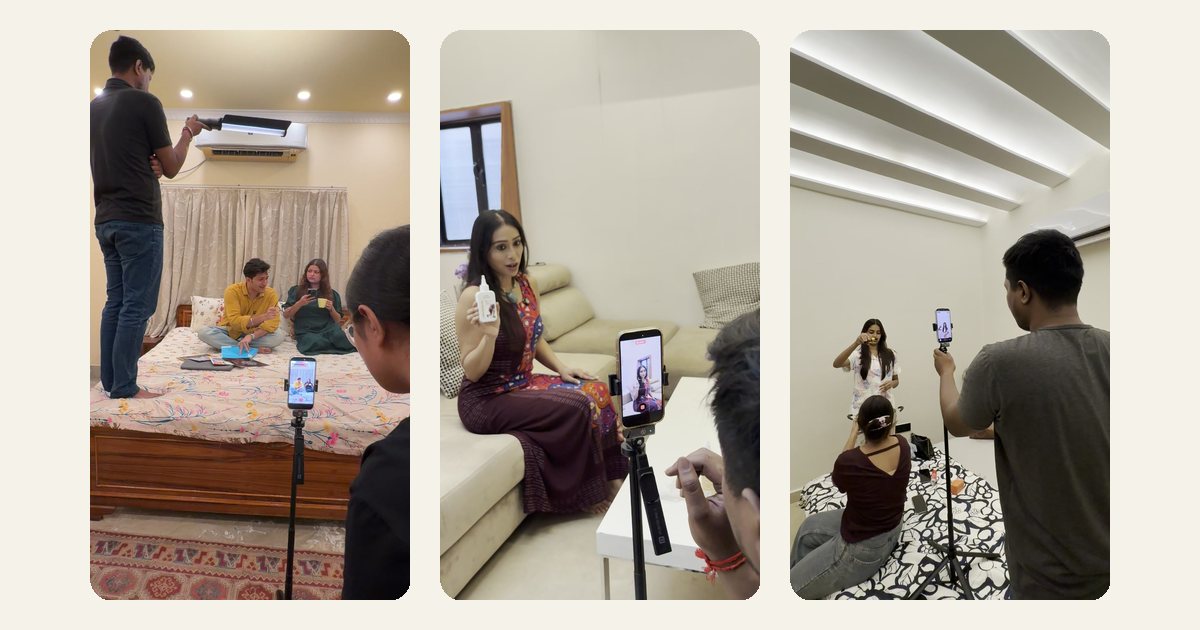
Most wellness brands in India launch UGC the same way: seed a few influencers with free product, collect a handful of Reels, run them as ads, repeat. That loop works, until it stops working. If you are already past that point and your UGC ads are delivering diminishing returns despite fresh creatives, the problem is almost never the creators. It is the absence of a content engine: a system that produces, tests, and iterates UGC at a pace that outstrips your audience's ability to habituate.
This article is a production-level playbook for wellness brands, supplements, Ayurveda, skincare, fitness-tech, mental-health apps, that are already running UGC and want to move from ad-hoc creative to a scalable, repeatable machine. We will cover creator roster architecture, brief taxonomy, ASCI compliance for health claims, multi-language distribution, and the feedback loop that separates brands systematically winning on Instagram and YouTube Shorts from those stuck recycling the same two hooks.
Architect a Tiered Creator Roster, Not a Flat List
The most common structural mistake we see in wellness UGC is treating all creators identically, same brief, same deliverables, same turnaround. A functioning content engine runs on three distinct tiers:
- Tier 1, Narrative anchors (2–4 creators): Mid-size creators with 50K–300K followers who have established credibility in a wellness niche, a certified nutritionist on YouTube, a yoga teacher with a real practice following on Instagram. They produce long-form testimonials, before/after protocol videos, and tutorial content. Budget: Rs.15,000–Rs.40,000 per deliverable. These are longer-term retainer relationships (3–6 months), not one-off deals.
- Tier 2, Volume producers (8–15 creators): Micro-creators in the 5K–50K follower range, fitness enthusiasts in Pune, postpartum wellness followers in Chennai, skincare hobbyists in Lucknow. They deliver high-frequency, raw-feel content: routine integrations, product reveals, candid reactions. Budget: Rs.3,000–Rs.10,000 per deliverable. These creators supply the creative variations your paid media team needs to test hooks, formats, and messaging angles simultaneously.
- Tier 3, Ugc-only contributors (10–20 creators): Real customers who are not influencers, sourced through post-purchase email or WhatsApp flows, rewarded with product credit (Rs.500–Rs.1,500 equivalent) rather than cash. Their content is the lowest-production-value tier but often the highest-converting because it is genuinely unscripted. For wellness specifically, this tier generates the most legally defensible testimonials, real outcomes, real people, no implied medical promises.
Running all three tiers in parallel means you have narrative depth, volume, and authenticity feeding into the same content pipeline simultaneously.
Build a Brief Taxonomy Around Wellness-Specific Job Types
A wellness UGC brief is not a standard brief with "mention the health benefits" appended. Different job types need fundamentally different creative directions:
- The Protocol Brief: Creator demonstrates a multi-step usage sequence, morning ashwagandha routine, nightly skincare layering, pre-workout supplement prep. The job is to teach, not sell. Hook: show the outcome state first (calm, clear skin, performance in the gym), then walk back to the product's role. Duration sweet spot: 45–75 seconds on Reels/Shorts.
- The Skeptic-to-Convert Brief: Creator articulates exactly the doubt they had before trying the product, then walks through what changed their mind. This is the highest-trust format for wellness because doubt is universal. Brief must specify: name the specific skepticism (cost, ingredient sourcing, efficacy claims), do not let the creator use vague phrases like "I wasn't sure about it."
- The Context Brief: Creator embeds the product in a real lifestyle moment, a 6 AM Mumbai local commute, a work-from-home afternoon slump, a post-delivery recovery. The product is incidental to the scene, not the centrepiece. This format performs well at the top of funnel on Instagram Explore and YouTube Shorts for audiences who do not yet know the brand.
- The Comparison Anchor Brief: Creator references what they were using before, a competing brand or a homemade alternative (haldi-milk, amla powder from the kirana store), and explains the shift. ASCI guidelines require this be truthful; you cannot brief a creator to make performance claims your product cannot substantiate. Keep comparisons preference-based ("I find it more convenient") rather than efficacy-based ("it works better").
ASCI Compliance Is a Production Variable, Not an Afterthought
Wellness is the most-scrutinised category under ASCI's guidelines, and in 2023–24 the Advertising Standards Council of India significantly increased its proactive monitoring of influencer content, including UGC used in paid ads. If your content engine is producing at volume, compliance must be embedded at the brief stage, not reviewed after shooting.
- Any creator making a health or wellness claim in India must disclose the paid partnership with #Ad or #Sponsored prominently, buried at the bottom of a long caption does not meet the standard. Brief creators to say it on-screen or in the first line of caption copy.
- For supplements and nutraceuticals: do not brief creators to claim the product treats, cures, or prevents any condition. Phrases like "helps support immunity," "may aid digestion," or "formulated with ingredients traditionally associated with..." are safer framing. If your product has FSSAI-approved claims, specify them precisely in the brief so creators use the exact permitted language.
- Before/after visuals are permissible under ASCI if results shown are typical and clearly disclosed. "Results may vary" or "individual results" language must appear on-screen, not just in caption.
- We include a one-page compliance checklist as an appendix in every wellness brief we send, it takes a creator 90 seconds to review and eliminates costly reshoots.
Multi-Language Distribution as a Multiplier, Not a Translation Exercise
The most underutilised lever in Indian wellness UGC is language. A well-performing Hindi creative rarely transfers directly to Tamil or Bengali audiences with a dubbed voiceover, the idiom, the cultural context around health, and the trust signals are different.
We brief Tamil-language creators separately from Hindi creators, with different skepticisms, different lifestyle contexts, and different comparison anchors. A protein supplement brief for a Chennai creator references dosai and filter coffee as baseline nutrition contexts; the same brief for a Delhi creator references roti and dahi. The product is identical; the creative logic is not.
At an operational level, this means:
- Maintain a separate creator roster for each primary language market you are targeting, at minimum, Hindi, Tamil, Telugu, Kannada, Bengali if your D2C brand ships nationally.
- Budget for original shoots per language, not dubs. A Telugu creator shooting their own content costs Rs.4,000–Rs.8,000 more than dubbing a Hindi cut, the conversion improvement typically justifies it within the first two weeks of running language-specific ad sets.
- Produce native-language caption copy alongside the video, not machine-translated English captions. The creator's own caption voice builds comment trust, which Instagram's algorithm rewards in regional-feed distribution.
The Feedback Loop That Compounds Over Time
A UGC content engine without a feedback loop is just a content pipeline. The compounding advantage comes from systematically routing what you learn in paid media back into your briefs and creator selection.
The minimum viable feedback structure for a wellness brand running 20+ UGC assets per month:
- Weekly hook audit: Pull the 3-second view rate for every creative running in Meta Ads Manager. Identify the top-performing opening line or visual. Brief the next batch of creators to test variations of that hook, same emotional trigger, different execution. This is how you develop brand-specific hook frameworks rather than reinventing each brief from scratch.
- Bi-weekly format review: Track cost-per-landing-page-view (or cost-per-add-to-cart for D2C) by content format, protocol, skeptic-convert, context, comparison. Different wellness sub-categories respond differently. We have seen Ayurvedic hair oil brands pull 40% lower CPCs on context-format creatives versus protocol, while protein supplement brands show the opposite pattern. You cannot know this without tracking it systematically.
- Monthly creator calibration: Score each creator on two axes, content quality (production, clarity, brief adherence) and ad performance (CTR, hook rate, downstream conversion). Creators in the high-quality, low-performance quadrant get reformatted briefs. Creators in the low-quality, high-performance quadrant get better equipment briefings and a higher retainer. This prevents churn of your most valuable raw-authenticity contributors.
- Quarterly brief refresh: Wellness consumer conversations shift, new ingredients trend (berberine, shilajit), regulatory language evolves, new lifestyle contexts emerge (sleep optimisation, hormone health). Audit your brief templates every quarter and retire language that sounds dated or has been flagged in comments by viewers.
Scaling Spend Without Killing Authenticity
The operational tension in scaling wellness UGC to a genuine content engine is that the formats with the highest production consistency, creator-agency partnerships, structured briefs, multiple takes, can gradually strip away the spontaneity that made UGC outperform polished brand video in the first place.
Two structural choices keep authenticity intact at scale:
- Protect your Tier 3 (real-customer) pipeline rigorously. Do not brief these contributors the way you brief professional creators. Ask them one open question, "What would you tell a friend who asked whether this product is worth trying?", and let them answer it in whatever format feels natural. Your paid media team will find the gems inside the rougher footage.
- Allow brief failure with Tier 2. When a mid-tier creator deviates from the brief because something felt more natural to them, review it before asking for a reshoot. Some of the best-performing wellness creatives we have produced came from creators who ignored the scripted hook and opened with a genuine moment of uncertainty or humour. A brief is a direction, not a script.
If your wellness brand is producing 10 or more UGC assets a month and still treating each as an individual project rather than a system output, the gap between your current results and what a structured content engine delivers is significant. We work with wellness and D2C brands across India to design and run exactly this kind of end-to-end UGC operation, from roster architecture and compliant briefing to paid media integration. Book a consultation to see how this applies to your specific category and scale.