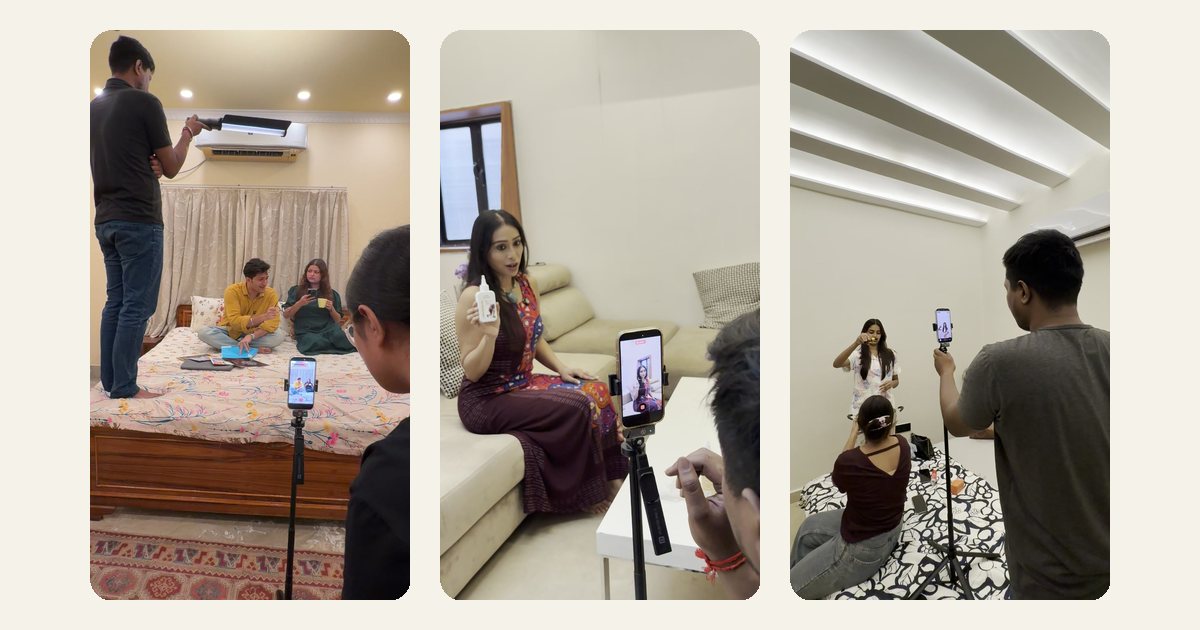
The UGC video formats that worked eighteen months ago—shaky testimonials filmed in a spare bedroom—are being replaced by something more deliberate. Audiences have become sophisticated. They can spot a fake review faster than a poorly targeted ad, and platforms are rewarding content that holds attention past the three-second mark. What is changing is not whether UGC works; it is what counts as good UGC.
1. Hook Engineering Is Now a Standalone Skill
The first three seconds of a UGC video used to be treated as an afterthought. In 2025, brands that treat hook writing as a dedicated creative function—separate from the rest of the script—consistently outperform those that leave it to the creator. The best hooks are declarative, category-specific, and slightly counterintuitive. Generic openers like 'I can not believe this product...' are losing effectiveness rapidly.
2. Regional Language UGC Is Outperforming English-Only Content
On platforms like Reels and YouTube Shorts, Hindi, Tamil, Telugu, and Kannada UGC videos are generating significantly higher engagement than equivalent English content when targeted to the right geography. Indian D2C brands that have historically produced only English ads are leaving trust equity on the table in Tier 2 and Tier 3 markets.
3. Situation-Based Briefs Replace Feature-Based Briefs
Briefs that say 'talk about the moisturiser's hyaluronic acid content' produce flat videos. Briefs that say 'you are getting ready for a wedding and your skin has been dry all week—show us what you reached for' produce videos people watch till the end. The shift from feature-first to situation-first briefing is one of the most impactful operational changes brands can make right now.
4. Multi-Creator Angles on the Same Product
Rather than one creator doing a comprehensive review, brands are now running three to five creators simultaneously, each covering a distinct angle—price justification, ingredient deep-dive, before-and-after, gifting use case, or lifestyle context. This gives media buyers a richer creative pool and surfaces the angle that resonates fastest with each audience segment.
5. UGC Is Moving Into Retention, Not Just Acquisition
Historically UGC was treated as a top-of-funnel tool. Forward-thinking brands are now deploying creator content in post-purchase email sequences, WhatsApp flows, and loyalty programme communications. A video from a creator explaining how to get the most from a product in the first thirty days reduces return rates and improves repurchase behaviour.
6. Longer-Form UGC for YouTube Is Making a Comeback
While fifteen-second Reels dominate paid, three-to-five-minute creator reviews on YouTube are becoming a significant organic discovery channel for Indian D2C brands in high-consideration categories—supplements, skincare, consumer electronics. These longer formats build the trust that converts a curious viewer into a first-time buyer.
7. Brands Are Building Internal UGC Libraries
Rather than treating each campaign as a one-off production, brands are building structured video asset libraries—tagged by hook type, product, creator demographic, and performance tier. This allows media buyers to pull from existing content and remix elements without commissioning new shoots for every test.
8. Platform-Native Editing Styles Are Replacing Agency Polish
Heavily edited, colour-graded UGC that looks like a TV commercial is underperforming against raw, platform-native edits with trending audio, text overlays, and minimal post-production. The aesthetic of authenticity is itself evolving, but the underlying principle—content that does not look like an ad—remains consistent.
Takeaway
The brands winning on UGC in 2025 are not the ones with the biggest budgets; they are the ones who understand which signals to read and which formats to bet on. If you want to build a UGC strategy that accounts for where the landscape is heading, book a strategy call and we will build a roadmap specific to your category.