Most creators shoot a Story the way they shoot a Reel, horizontally framed, full-screen reveal, no plan for the tap-through. That single habit wastes the format. Instagram Stories were built for a different kind of attention: someone's thumb is moving, context resets every 5–15 seconds, and the first frame either stops that thumb or doesn't. This guide walks through exactly how to produce Stories-first UGC that performs, from brief to final clip, with specific techniques we use for Indian brands.
Instagram Stories is not a retired format, as of 2026 it consistently outperforms feed posts for direct response among Indian audiences aged 18–34, particularly in Tier cities across India like Surat, Indore, Nagpur, and Coimbatore where local creators have tight-knit follower communities. If you're building a UGC programme and only thinking about Reels, you're leaving a meaningful conversion surface on the table.
Understand the Stories canvas before you brief a creator
Stories run at 9:16, 1080×1920 pixels, and each slide is 5 seconds for a photo or up to 60 seconds for a video. The bottom 250 pixels are often obscured by the creator's profile name, reaction strip, and DM bar. The top 60 pixels sit under the story progress bar and account name. If your creator places a price callout or a key visual in those zones, it will be invisible to half the viewers.
- Safe zone for text and product shots: keep important elements between 15% and 80% of the vertical height.
- Aspect ratio discipline: brief creators to shoot with their phone fully vertical, not cropped from a horizontal shot.
- Swipe-up (link sticker) placement: the link sticker should sit in the lower-middle safe zone, large enough to tap without zooming, but not obscuring the creator's face.
When we brief creators for Stories-first campaigns, we send a single annotated screenshot showing the safe zone and the three overlay positions (top, mid, bottom). This one-page visual reduces reshoots by roughly half.
Structure the Story as a sequence, not a single clip
A single 30-second monologue works on YouTube. On Stories, it dies at slide one. Think of a Stories UGC set as a 4–6 slide micro-journey, each slide doing one job:
- Slide 1, Stop the thumb: A bold visual hook or a text question. Example: a Bangalore creator holds up a moisturiser and says "This cleared my hyperpigmentation in 3 weeks, I wasn't expecting that." No brand name, no logo yet. Pure curiosity gap.
- Slide 2, Context: Who the creator is and why their opinion matters. Keep it under 8 seconds. "I've been using skincare products for 4 years, I review everything I try."
- Slide 3, The demonstration: The product in actual use. For food brands this is a pour or a bite reaction. For skincare it's application. For a SaaS tool, a screen recording with a voiceover. Real hands, real environment.
- Slide 4, The specific result or opinion: Not "I loved it" but "The texture doesn't feel greasy in Kolkata humidity, which is my biggest skincare problem in July." Specificity is what makes UGC trustworthy.
- Slide 5, The CTA slide: Clean background, the product name visible, link sticker, a direct instruction, "Tap to check the price" or "Swipe up, they have a free trial." If your brand is running a limited-time offer (say, a flat Rs.200 off during a Diwali sale), this is where you say it.
This five-slide structure is a starting template, not a rule. For a quick product drop you might compress it to three slides. For a detailed comparison post you might run seven. The key principle: every slide earns the viewer's next tap forward.
Shooting and lighting for the Stories format
Indian creators often default to shooting near a window because it's free and flexible. That works, but only if the creator knows a few rules specific to vertical video.
- Face the light source: Window light to the side creates unflattering shadows on a tight 9:16 frame. The creator's face should be turned toward the window, not alongside it.
- Background compression: In a narrow vertical frame, a cluttered background dominates. Brief creators to use a single-colour wall, a clean shelf, or a neutral fabric. In homes across Chennai or Pune this is usually the inside of a closet door or a plain corridor wall.
- Phone stabilisation: No tripod? A creator can brace their elbow against their chest and prop their back against a wall. Shaky vertical footage is far more disorienting than shaky horizontal footage because there's nowhere for the eye to rest.
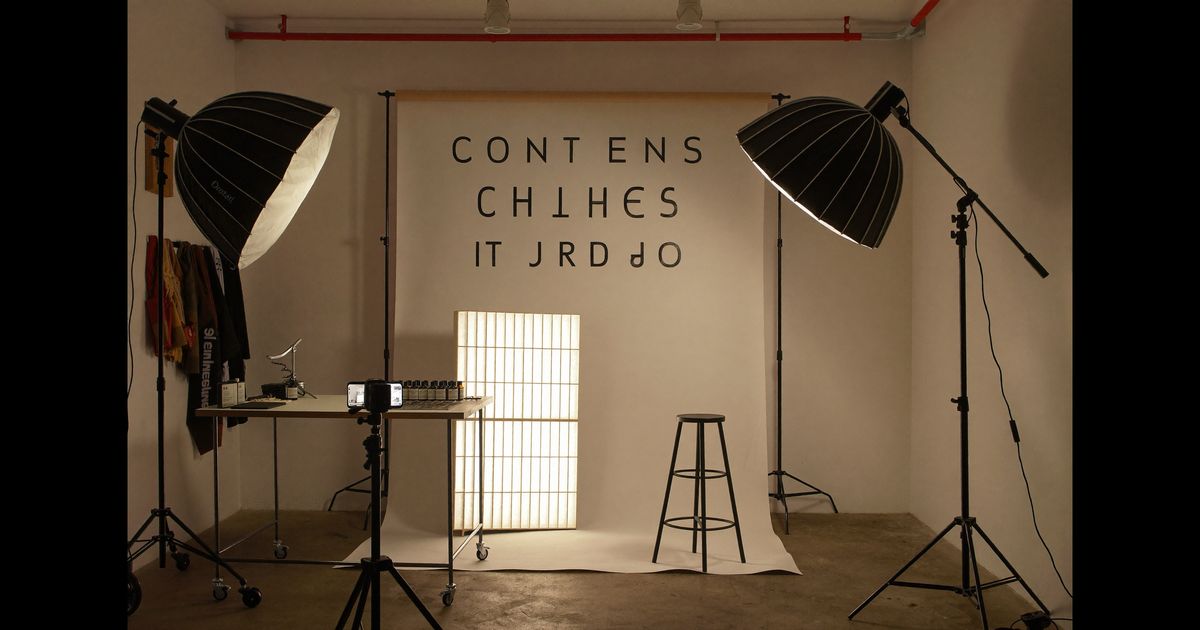
- Ring light note: Budget ring lights (Rs.800–Rs.1,500 on Amazon/Flipkart) create flat, harsh fill that reads cheap on premium products. For skincare or jewellery, a softbox or a window with a white bedsheet diffuser produces better results at the same price point.
For brands that send products to creators in multiple cities, we include a two-page lighting guide in the creator brief. It takes five minutes to produce and it standardises the visual quality across 20 different shooting environments.
Language and tone decisions for Indian audiences
One of the strongest conversion levers in Stories UGC for Indian markets is using the creator's natural language register, not forcing them into formal English. A Delhi creator who naturally switches between Hindi and English ("yaar, seriously iska texture ekdum light hai") will outperform a scripted English testimonial with the same message. This is not a new insight but it is consistently underused by brands that brief creators with a word-for-word English script.
- Regional language first: If the creator's audience is primarily Tamil-speaking, brief them to speak in Tamil with English product callouts. A Coimbatore-based homeware creator doing a Tamil unboxing will convert local audiences better than a generic pan-India English cut.
- Script structure vs. script text: Give creators the five-slide structure and the three key messages (problem, product feature, result). Do not give them exact sentences unless ASCI compliance requires it. ASCI guidelines require that paid promotions be disclosed, the creator must say "collaboration with [brand]" or use the #ad or #collab label clearly. This disclosure belongs on slide 1 or slide 2, not buried at the end.
- Slang and humour: Mumbaiya slang, Hyderabadi Telugu phrases, Bengali colloquialisms, these are features, not bugs. A creator who sounds like their audience converts that audience. Only restrict language if the brand's positioning explicitly requires formal tone (e.g. a B2B SaaS or a premium investment product).
ASCI's guidelines on influencer disclosures apply to Stories just as they do to feed posts or Reels. The disclosure label must be prominent enough to be noticed in the first few seconds of the slide, a tiny white-on-light-background "#ad" in a corner does not meet the standard.
Stickers, polls, and interactive elements as engagement mechanics
Instagram's native Stories stickers, polls, question boxes, emoji sliders, countdowns, are underused in branded UGC. When a creator uses a poll ("Would you try this? Yes / Already using it"), Meta's algorithm treats the engagement signal as a quality indicator and boosts Story reach to a slightly wider audience. For a creator with 8,000 followers in Jaipur, a poll sticker can meaningfully extend the organic reach of a sponsored Story.
- Poll on slide 2 or 3: Frame the poll around the audience's experience, not the product. "Do you deal with oily skin in summer?" is more likely to get a tap than "Do you use sunscreen?"
- Question box on the last slide: "Ask me anything about this" invites DMs, which are warm conversion signals. Brands that monitor DMs coming from a creator's Story link can use these for retargeting or for organic follow-up.
- Countdown sticker for launches: If the brand is running a 48-hour sale (Navratri, end-of-financial-year, Flipkart BBD), the countdown sticker on slide 5 creates urgency without a single word of pushy copy.
- Don't stack stickers: One interactive element per slide maximum. Two stickers on one slide create visual noise and reduce tap-through rate.
Repurposing Stories UGC as paid ad inventory
A well-produced Stories UGC set has a direct second life as a Stories placement ad in Meta's Ads Manager. The 9:16 format is native to Stories and Reels placements, and content shot by a real creator in a real environment consistently outperforms brand-produced vertical video in cost-per-click for Indian D2C brands. We have run Stories UGC as Advantage+ placements for clients in the Rs.30,000–Rs.80,000 monthly ad spend range and found that creator-shot Story content routinely holds a lower CPM than polished studio creative, particularly in the beauty, health foods, and home care categories.
The key requirement for Stories-to-ad repurposing is a clean version without the creator's personal branding overlaid, no Spotify music stickers, no countdown timers set to past dates, no personal username watermarks. When briefing creators, ask for a raw export of the video alongside the final Story. This is now standard practice for any creator partnership that includes paid media rights.
Licensing terms matter here. A creator who agrees to "organic use" on their channel has not consented to paid amplification. Make paid media rights explicit in your creator agreement, either a one-time buyout or a time-limited licence (30/60/90 days is typical in India). Rates for paid media rights for mid-tier creators (50,000–200,000 followers) typically add Rs.3,000–Rs.8,000 to the base collaboration fee.
Measuring Stories UGC performance
The metrics that matter for Stories are different from Reels. Reach and views are vanity signals. The numbers to track are:
- Forward taps vs. back taps by slide: A spike in back taps on slide 3 tells you that slide 2 under-delivered context. A drop-off before slide 5 means the CTA slide never gets seen.
- Link sticker taps: This is your primary conversion signal. Track it against total Story views to get a click-through rate. A well-structured 5-slide UGC Story should achieve 2–5% link-sticker CTR for a warm audience.
- Replies and DMs: Direct messages from a Story are high-intent signals. Even 10–15 genuine DMs from a 6,000-follower creator indicates strong resonance.
- Exit rate on slide 1: If more than 40% of viewers exit on the first slide, the hook is not working. Test a new opening, a bolder question, a closer face frame, or a faster cut.
Ask creators to share their Stories analytics screenshots within 48 hours of posting (when slide-level stats are still accessible in the Instagram app). After 48 hours some granular data disappears. Build this into your post-campaign reporting brief.
If you want to build a Stories UGC programme that runs systematically, from creator sourcing and briefing through to paid media repurposing, The UGC Agency works with Indian brands across categories. Book a free consultation to discuss what a structured Stories production plan looks like for your budget and goals.