Most SaaS tutorial videos made with UGC creators end up looking like screen recordings with a face pasted on top. The creator talks at the camera, a screencast plays behind them, and the viewer, usually a busy founder or marketing manager evaluating a ₹15,000/month tool, bounces within 20 seconds. The problem isn't the creator. It's the brief.
Tutorial-style UGC is one of the highest-converting formats available to SaaS brands right now, if it's done correctly. But because most brands treat it like regular product UGC (hand product to creator, let them talk), the common mistakes are deeply baked in. This guide breaks down exactly what goes wrong, and how to fix it.
Mistake #1: Briefing for Features Instead of the "Before/After Moment"
The most common error we see when brands brief tutorial UGC: they hand creators a list of features, "show the dashboard, the automation builder, the reporting tab." The creator dutifully walks through each screen, explaining what every button does. Viewers who already use the product gain nothing. Viewers who are evaluating it get overwhelmed.
SaaS tutorial UGC works when it captures a specific transformation. Not "here is the automation builder." Instead: "I was manually sending follow-up emails to every lead, it was taking 45 minutes a day. Here's the exact workflow I built in LeadSquared that cut that to zero." That's the before/after moment. The product is the bridge between the two states.
- Brief creators with a pain scenario first, not a features list
- The transformation must be believable for an Indian B2B audience, think realistic team sizes (3–12 people), realistic tools they're replacing (Excel, WhatsApp threads, manual email), and realistic time saved
- Keep the problem framing under 20 seconds; the working demo is the payoff
Mistake #2: Using Screen Recording as a Crutch
Screen recording plus talking head is the default format because it's easy to produce. It's also the format viewers are most likely to skip. On Instagram Reels and YouTube Shorts, where most SaaS discovery now happens among Indian SMB decision-makers, a clean screencast with no human presence feels like a corporate explainer, not a creator recommendation.
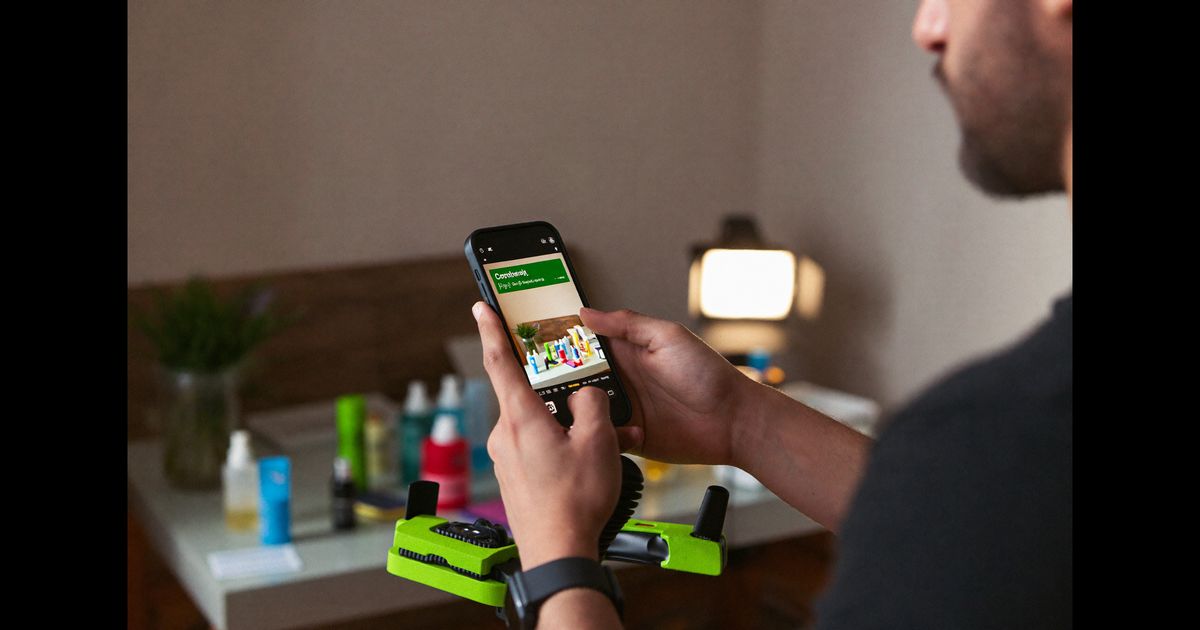
The format that performs better for SaaS UGC is phone-over-shoulder or desk point-of-view: the creator is visibly at their desk or on a mobile device, with the screen filling 70% of the frame while their hands and voice guide the viewer through the steps. It preserves the authenticity of UGC while giving the viewer the tutorial content they need.
- For mobile-first SaaS tools (CRMs, invoicing apps like Zoho Books or Vyapar, HR tools like greytHR), shoot entirely on phone, it mirrors exactly how the viewer will use the product
- For browser-based tools, a laptop screen in a natural desk setup works better than a pure screencast, frame it so the creator's face or hands are visible
- Caption key steps on-screen using native text overlays in CapCut or InShot, not a post-production screencast annotation, but burnt-in text that reads as creator-made
Mistake #3: Ignoring Language Reality
India's SaaS audience is not monolingual. A Bengaluru-based startup using Razorpay Payroll and a Delhi textile exporter using Tally Prime are both legitimate SaaS buyers, and they often consume content in very different languages. Brands consistently produce tutorial UGC only in English, then wonder why it underperforms in states like Maharashtra, Tamil Nadu, or Gujarat.
We brief creators to record Hindi or regional-language versions of tutorial UGC for any campaign targeting Tier cities across India or non-metro founders. The content doesn't have to be fully translated, code-switching (Hindi with English product terms) is natural and credible. A creator in Pune explaining a GST filing workflow in Marathi-inflected Hindi will convert a Maharashtra-based accountant far better than a polished English tutorial.
- Identify two or three regional markets where your product has traction, then source creators who speak those languages natively
- For compliance-heavy features (GST, TDS, payroll), local-language tutorials reduce buyer anxiety significantly, this is an ASCI-adjacent concern too; make sure claims in regional versions are as accurate as the English version
- Even simple Hindi subtitles on an English tutorial video measurably improve watch-through on Meta placements targeting non-metro audiences
Mistake #4: Treating Every Format the Same
Tutorial UGC for SaaS needs to be format-calibrated, not just repurposed from one long video. The same tutorial content serves different functions on different surfaces, and briefing a creator to "make one video we'll use everywhere" produces a video optimised for nothing.
A 60-second Reel that hooks with a problem statement and ends with a tight demo of one feature works very differently from a 3–5 minute YouTube tutorial that walks through a complete workflow. Both are tutorial UGC. Neither can substitute for the other.
- Instagram Reels / YouTube Shorts (30–60 seconds): One problem, one feature, one outcome. Hook in the first 3 seconds with the pain, "I was losing ₹8,000 a month reconciling GST manually", then demonstrate the fix in one smooth screen capture.
- YouTube long-form (3–7 minutes): Full workflow walkthroughs. Useful for bottom-of-funnel viewers who are close to a buying decision and want to see the full product in action before committing to a free trial.
- LinkedIn video posts (60–90 seconds): More appropriate for B2B SaaS targeting founders, ops heads, or HR managers. Keep the tone professional but real, a Bangalore-based operations manager describing how they automated vendor onboarding with a tool like Kissflow lands differently than a generic walkthrough.
Mistake #5: Skipping the "Permission to Believe" Layer
SaaS products carry inherent skepticism. Indian buyers, especially SMBs who've been burned by tools that looked great in demos but required expensive implementation, will not convert on a tutorial video alone unless the creator establishes credibility. Most tutorial UGC briefs completely skip this.
The "permission to believe" layer is a 5–10 second moment at the top of the video where the creator establishes that they are a genuine user with relevant context. Not "I'm a content creator partnering with this brand" but "I run a 6-person D2C brand out of Hyderabad and we moved to Shopify + Shiprocket last quarter, here's what I actually use every day." That single sentence changes how the rest of the tutorial lands.
- In your creator brief, include a "context sentence" template they can adapt with their real details, don't leave it to them to figure out how to establish credibility
- Avoid overclaiming in this section; ASCI guidelines require that testimonials and endorsements reflect genuine usage, and India's ad standards enforcement is increasingly active on performance claims in SaaS ads
- Creators with actual professional backgrounds in the domain (a CA demonstrating a GST tool, a logistics manager demonstrating a fleet management SaaS) convert significantly better than generalist tech creators, source accordingly
Mistake #6: No Clear Call to Action That Matches the Buyer's Stage
Tutorial UGC typically attracts mid-funnel viewers, people who know they have a problem and are actively evaluating solutions. The worst thing a tutorial video can do is end with "link in bio to learn more." That's a top-of-funnel CTA on mid-funnel content.
Match the CTA to the viewer's likely intent. Someone who has just watched a 90-second tutorial on how to set up automated payment reminders in Instamojo is already past the awareness stage. They want a free trial, a pricing page, or a demo booking, not a vague "learn more." Brief creators to end with a specific, low-friction next step.
- "Start your 14-day free trial, no card needed" outperforms "visit the website" by a wide margin for SaaS tutorial content
- If the product has a freemium tier, the CTA should reference it explicitly: "The free plan covers everything I just showed you"
- For higher-ticket SaaS (₹50,000+/year contracts), a "book a 20-minute demo" CTA is more honest and converts better than pushing a free trial that requires significant setup
If you're building out a SaaS content programme and need tutorial-style UGC that's properly briefed, produced, and formatted for Indian audiences, see how we approach it on our work page, or book a consultation to talk through what formats and creator profiles make sense for your product category.