Most beauty brands briefing UGC reviews for the first time make the same mistake: they hand creators a product, give them a shot list that reads like a TV commercial, and wonder why the footage looks polished but performs poorly. Review-style UGC lives or dies on perceived authenticity, and that is not the same thing as low production quality. It means the viewer believes the creator is telling the truth. Getting that belief requires avoiding a specific, learnable set of errors.
Below are the most common mistakes we see in beauty UGC reviews, across skincare, haircare, colour cosmetics, and personal care, and exactly what to do instead.
Mistake 1: Writing a Script That Sounds Like a Script
The most damaging thing you can do to a review video is hand a creator a verbatim script and ask them to read it naturally. Viewers, especially on Instagram Reels and YouTube Shorts, have developed a finely-tuned ear for scripted testimonials. The moment the cadence feels memorised, trust collapses, and beauty audiences in particular are unforgiving about this.
What works instead is a talking-points brief: three or four specific facts the creator must include (key ingredient, texture, result claim, price point), and one mandatory disclosure line for ASCI compliance, but no sentence-by-sentence script. The creator then speaks in their own voice, their own language, whether that is Hindi, Bengali, Tamil, or a Hinglish mix that matches their actual audience.
- Give the creator freedom on sentence structure; control only the factual claims and the disclosure.
- If the brand needs a specific phrase (e.g., a tagline), mark it clearly as the one required line, not the whole video.
- Brief by outcome: "tell us what your skin felt like after three days" lands better footage than "say the serum improved hydration by X%".
Under ASCI guidelines updated in 2023, any paid or gifted relationship must be disclosed. We brief creators to say something like "this product was gifted to me by [brand]" early in the video, not buried in captions. A natural spoken disclosure actually builds trust rather than eroding it, provided the rest of the review is honest.
Mistake 2: Filming in the Wrong Light (and Thinking "Natural Light" Means Outdoors)
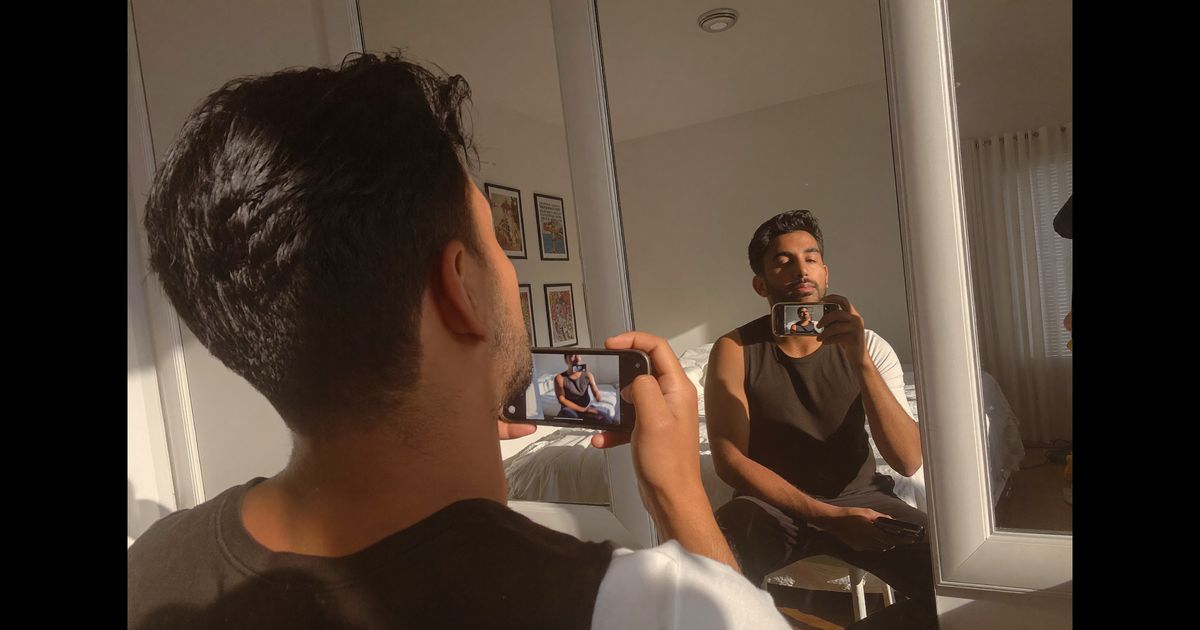
Lighting is where most DIY beauty UGC falls apart technically. Outdoor light in Indian cities, especially between 11am and 3pm, is harsh and directional. It bleaches skin tones, creates deep shadow under the eyes and nose, and makes product textures invisible. A Rs.2,000 serum swatched in afternoon Mumbai sun looks worse than a drugstore moisturiser filmed in a well-set indoor window shot.
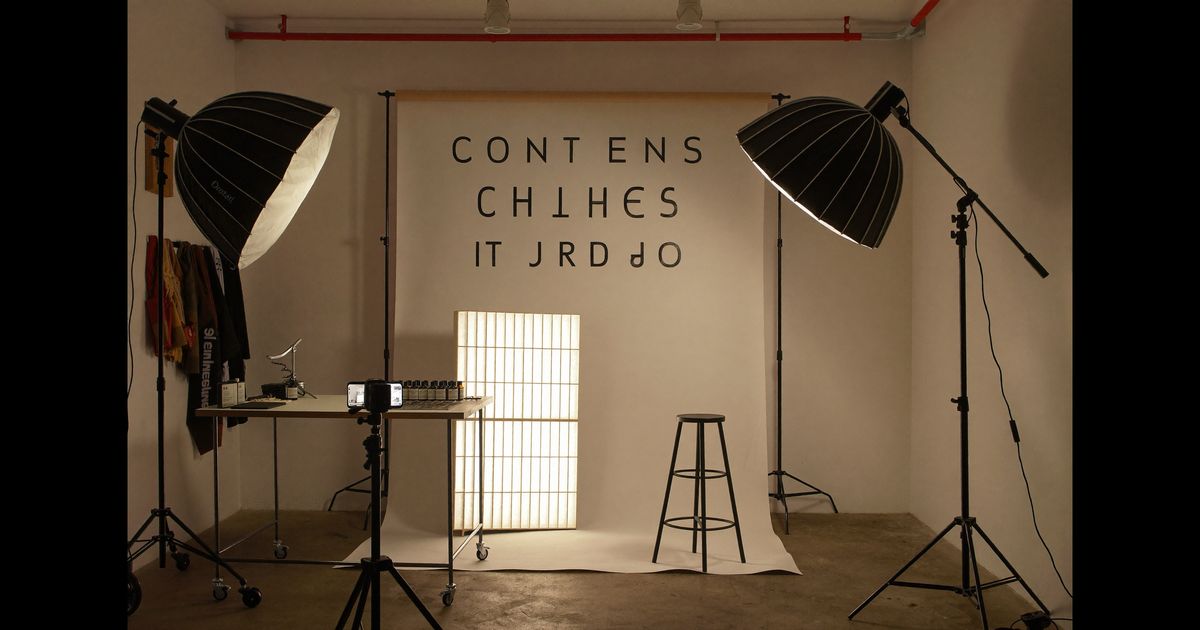
The correct setup for review-style beauty UGC is diffused front light, either from a north-facing window (ideally overcast sky) or a ring light with a diffuser placed at eye level or just above. This matters especially for Indian skin tones across the NC40–NC50 range that are underlit when creators default to a single ring light placed too high, it creates the same racoon-eye effect as harsh outdoor sun.
- North-facing window + cloudy day = the single best free lighting setup for any skin tone.
- If using artificial light: ring light at chin height, not overhead. Add a diffuser if budget allows (a plain white fabric in front of the light works).
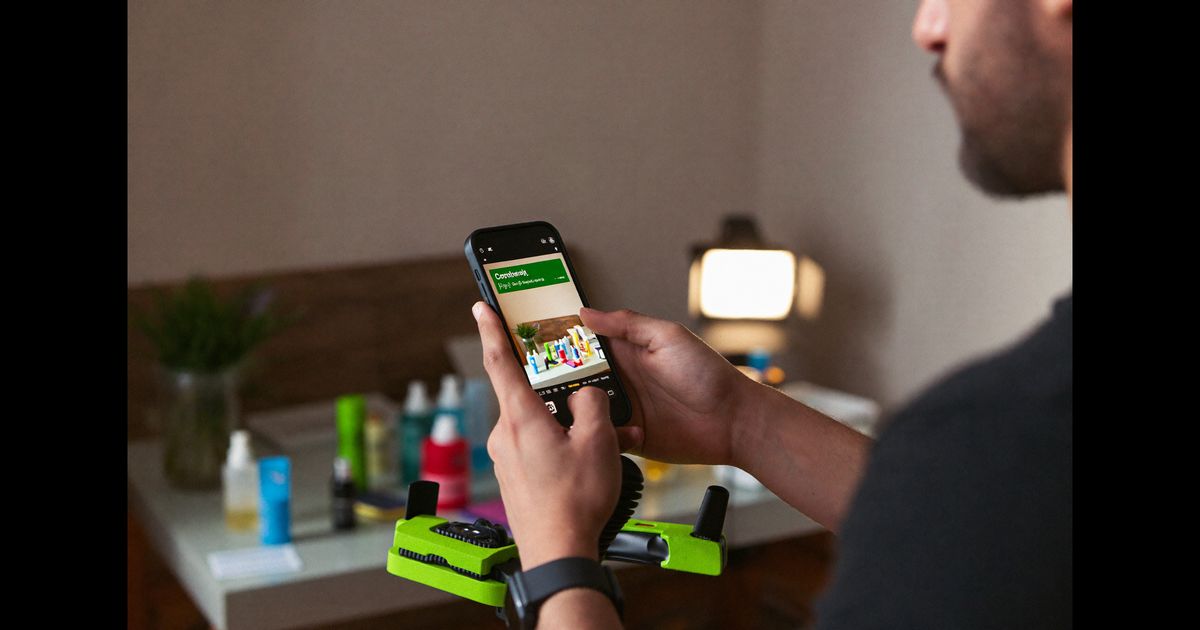
- For swatch shots and texture close-ups, use a second phone or a small LED panel angled from the side to reveal product dimension.
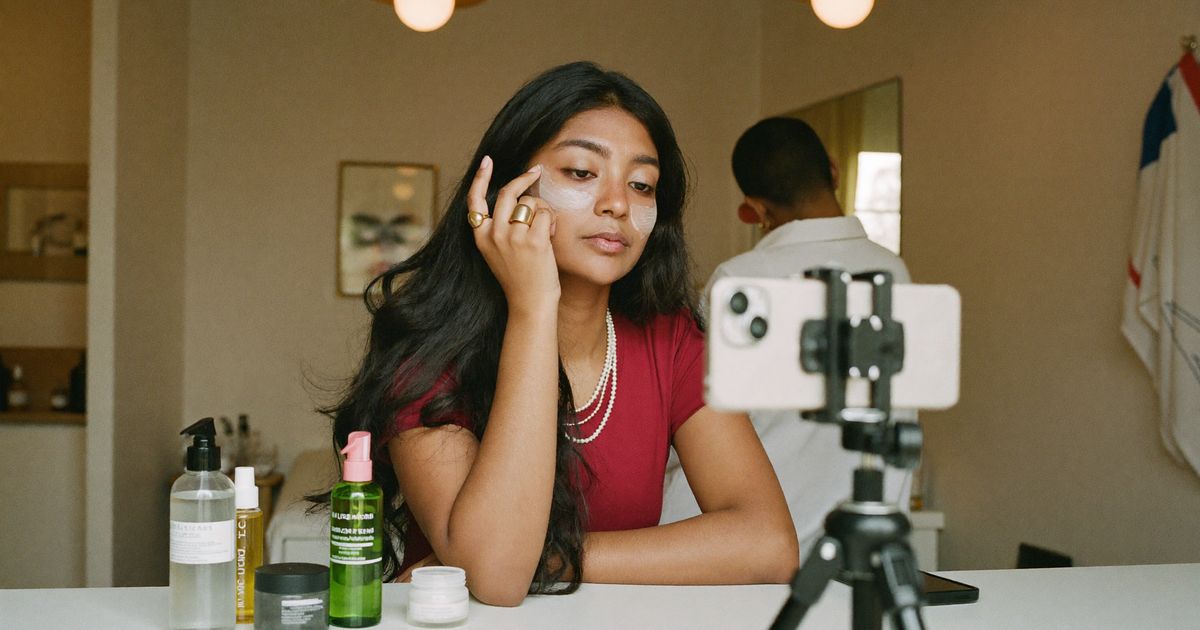
- Background should be clean but human, a neat shelfie, a bathroom counter with a single plant, not a white wall that looks like a product shoot.
Mistake 3: Skipping the Before/During/After Arc
Review-style UGC is fundamentally a transformation story, even when the product is something mundane like a face wash. Brands often brief creators to show the "result", the glowing skin, the defined curls, without the journey. Without the before and during, the result has no credibility. It looks like a brand ad, not a review.
The strongest review structure we have found for beauty is a simple three-beat arc:
- Before: the creator's honest description of the problem, not dramatised, not styled. Bare face on camera, or hair in its natural state. This is uncomfortable for many creators; brief them explicitly that this discomfort is what makes the review believable.
- During: application footage. Texture on fingers, spread on skin, lather in hair. The hands-on moment is the most-watched segment in beauty reviews because it answers "how does this actually feel?"
- After: the result, shown in the same lighting as the before so the comparison is honest. If the result is subtle, say so. Subtle honest results outperform dramatic dishonest claims because ASCI complaints aside, Indian beauty audiences are sophisticated, especially post-2022 when influencer scepticism peaked after several high-profile dermatologist call-outs on Instagram.
A creator who says "my skin isn't transformed, but it's genuinely softer after a week and I'd repurchase" will drive more conversions than one claiming overnight miracles, because viewers believe the first one.
Mistake 4: Ignoring Vernacular and Regional Context
A beauty brand targeting Tier-cities across India in Tamil Nadu and running only Hindi UGC reviews is leaving real money on the table. The Indian beauty market's growth since 2023 has been disproportionately in smaller cities, Coimbatore, Bhopal, Nagpur, Lucknow, and creators in those markets produce reviews in the local language that convert at significantly higher rates than dubbed or subtitled Hindi content.
The mistake is not lack of intention but lack of process. Brands approve one English or Hindi script, then ask regional creators to "translate" it. The result is a review that uses the right language but the wrong cultural references, skin tone context, and climate-specific claims.
- Brief regional creators separately. A Kerala-based creator reviewing a sunscreen should mention humidity, not just SPF, because her audience knows exactly what a Thiruvananthapuram summer does to foundation.
- Skin tone language matters: a creator in Chennai talking about a foundation should use descriptors her audience recognises, not pan-Indian marketing language about "fair" or "wheatish" that no longer lands.
- For Hindi-belt creators, Hinglish mixing is more natural than formal Hindi, and it performs better on Reels in UP, MP, and Bihar markets.
Mistake 5: Treating the Hook as Secondary
On Instagram Reels and YouTube Shorts, the first 1.5 seconds determine whether anyone watches the review. Most beauty UGC briefs say nothing specific about the hook, they tell the creator to "introduce yourself and the product." That produces slow, wasted openers that kill watch time before the actual review begins.
The hook for a review video should be a problem statement or a result tease, not an introduction. Nobody is watching a 60-second Reel to find out who the creator is. They are watching because the first frame showed something relevant to their skin or hair problem.
- Problem hook: Creator holds up the product to camera and says "I've been using this for three weeks because my combination skin couldn't survive Kolkata's pre-monsoon humidity", then cuts to the review. Immediate, contextual, specific.
- Result tease hook: Open on the after shot, glowing skin or defined hair, and say "here's what happened after 21 days." Then cut back to the beginning. Works especially well for haircare and skincare where transformation is visible.
- Avoid: "Hi guys, today I'm reviewing [product] by [brand]." This is a skip-magnet. Brief creators explicitly never to lead with a self-introduction.
Mistake 6: Not Distinguishing UGC for Paid Ads from UGC for Organic Posts
This is the most operationally common mistake we see, and it wastes budget. A review video designed for a creator's organic Instagram audience, with their handle, their catch phrases, a casual three-minute runtime, performs poorly when cut into a 15-second Meta or YouTube ad. Conversely, a tightly edited 20-second brand-ad-style clip looks out of place on a creator's organic feed and gets low engagement.
The fix is to brief for the placement from the start, not adapt after shooting:
- For Meta/YouTube paid ads: brief the creator to film a 30–45 second version with the hook in the first 3 seconds, the key claim by second 10, and a clear verbal CTA ("link in the ad below"). No rambling. No cold introduction. Landscape or 9:16 vertical only, no square crops.
- For organic creator posts: allow a longer format (60–90 seconds), encourage the creator's natural storytelling style, and let the ASCI disclosure happen organically in their own words. The brand gets authentic reach; the creator gets content that fits their channel.
- Budget for both versions at the brief stage. A single shoot day can produce both if the creator knows they are filming two separate cuts.
Getting review-style beauty UGC right is less about finding the perfect creator and more about giving any capable creator a brief that removes the most common failure points. If you are a beauty brand, skincare, haircare, colour cosmetics, or personal care, and want a production process that covers all of this from brief to final cut, take a look at how we work on our work page, or reach out for a conversation about your next campaign.