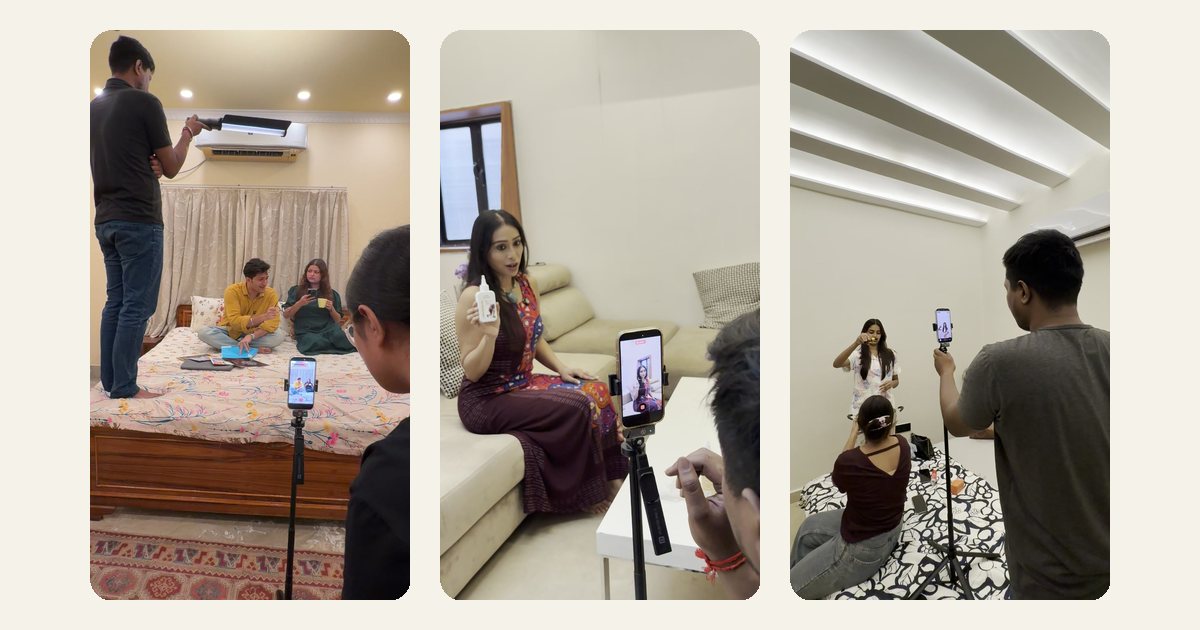
A skincare brand in Bengaluru ran polished studio ads for eight months, saw flat ROAS, then switched half their Meta budget to creator-shot videos. Within six weeks, cost-per-purchase dropped by 40%. The only thing that changed was who held the camera. That shift, from brand-controlled imagery to authentic, creator-driven content, is not a trend to watch. It is a structural change in how Indian consumers decide what to buy, and building a brand without understanding it puts you at a meaningful disadvantage.
This guide walks you through exactly how to build that advantage: from choosing the right creators and briefing them correctly, to publishing, amplifying, and measuring UGC on the platforms where Indian audiences actually spend their time. Every step is actionable. No step requires a celebrity budget.
Step 1: Define What You Need Before You Source a Single Creator
Most brands jump straight to finding creators and end up with beautiful content that serves no specific goal. Before you brief anyone, answer three questions:
- What is the content job? Top-of-funnel awareness (scroll-stopping hooks), mid-funnel consideration (demo, comparison, problem-solution), or bottom-funnel conversion (testimonial, results proof, limited-time offer)?
- Which language and dialect serves your target market? A D2C brand selling in Tamil Nadu needs Tamil-language content; a pan-India SaaS product may need Hindi and English variants. Multilingual UGC is one of the clearest advantages creator content has over studio production.
- What does your audience's native content environment look like? Reels on Instagram? YouTube Shorts? Snapchat among Tier-2 city teens? The format requirements are genuinely different across these surfaces, and a brief built for Reels will produce awkward YouTube Shorts.
Write a one-page content brief template before you start creator outreach. Include: content objective, platform and aspect ratio, target audience persona (e.g., "working woman, 25–35, Mumbai or Pune, interested in wellness"), key message hierarchy (primary claim + two supporting points), mandatory disclosures, and what you do not want said or shown.
Step 2: Find and Evaluate Creators the Right Way
India's creator ecosystem is enormous and unevenly reliable. Here is a practical sourcing approach that does not require expensive influencer platforms:
- Instagram and YouTube search: Search your product category + city (e.g., "skincare routine Jaipur" or "budget cooking Delhi") and filter for accounts with 5,000–100,000 followers. Nano and micro creators in this range typically have higher comment-to-like ratios and more genuine audience trust than larger accounts.
- Your own customer base: Email or WhatsApp your existing buyers and ask if anyone makes content. Customers who already love your product need far less convincing and produce naturally authentic videos. Offer a product top-up or a flat fee, even Rs.1,500–3,000 per video is fair at this scale.
- UGC-specific talent networks: Platforms like Wobb or Plixxo give you access to vetted creators with deliverable history. Expect to pay Rs.3,000–15,000 per video for solid micro-creators, more for established voices with a track record of conversion-focused content.
Evaluate any creator on three things before signing: content consistency (do their last 12 posts look like someone who takes briefs seriously?), comment quality (genuine questions and opinions beat emoji-only replies), and category relevance (a creator who has talked about your product category even once is more valuable than a bigger creator who has never touched it).
Step 3: Brief for Outcomes, Not Aesthetics
The biggest mistake brands make is writing a brief that reads like an ad script. Creators are not actors; they perform best when given a framework, not a word-for-word dialogue.
A conversion-focused brief should specify:
- Hook type and first three seconds: Ask for a problem-statement hook ("My skin was breaking out every monsoon until…") or a curiosity hook ("I tested this for 30 days so you don't have to"). Specify that the hook must not start with the brand name, the viewer needs a reason to care before they are told what to buy.
- Mandatory claim and substantiation: Under ASCI's guidelines (updated 2023), paid creator posts on Instagram, YouTube, and other Indian platforms must carry a clear #Ad or #Sponsored disclosure that is not buried in hashtag strings. Build this into your brief explicitly and ask creators to show the label on-screen, not just in the caption. This protects both parties from ASCI notices, which have been issued to both brands and influencers in categories like skincare, health supplements, and fintech.
- What not to claim: If you sell a health supplement, brief creators to avoid any claim about treating or preventing a condition, ASCI and the FSSAI both restrict this language. A brief that says "talk about how you feel, not what the product cures" is both legally safer and more believable to viewers.
- Format specifics: Duration (45–60 seconds tends to outperform on Reels for D2C conversion), on-camera or voiceover, whether subtitles are required (they are, for reach, a large share of Indian users watch without sound), and the call-to-action placement.
In our production work, we brief creators to record two versions of the hook, one emotional, one curiosity-driven, and deliver both. In about 60% of cases, the version the brand expected to win loses to the other. Testing is not optional; it is the whole point of working with multiple creators.
Step 4: Build a Distribution System, Not Just a Library
Collecting creator videos without a distribution plan is the most common reason UGC programs underdeliver. Here is a practical amplification stack:
- Organic posting cadence: Post one UGC video per week minimum on your owned Instagram and YouTube accounts. Repost creator content with explicit permission (get this in writing in your creator agreement). Original creator handle tags drive engagement and often prompt the creator to share your repost to their own audience.
- Whitelisting (Creator Licensing): For Meta campaigns specifically, ask creators to grant you "Ad permissions" via their Instagram settings. This lets you run paid ads from the creator's handle, not just your brand page. Ads run from a creator handle consistently outperform the same creative run from a brand handle in click-through rate, the social proof of a real person's account does measurable work.
- YouTube Shorts for discovery: If you have longer UGC videos (2–5 minutes), cut 30–60 second hook clips and post them as Shorts. YouTube's algorithm treats Shorts as a discovery surface, and a well-edited clip from a creator demo can bring in organic search traffic on terms like "product name review" or "category problem solution".
- WhatsApp Business broadcast lists: For retention and repeat purchase, share 1–2 UGC videos per month with opted-in customers via WhatsApp broadcast. A creator doing an honest "how I use this every morning" video is more persuasive than any discount push notification.
Step 5: Measure What Actually Moves the Business
Tracking vanity metrics (views, likes) on UGC is a fast way to feel good about a program that isn't working. Tie your measurement to business outcomes:
- For paid UGC ads: Track cost per add-to-cart and cost per purchase at the creative level, not just the campaign level. Meta Ads Manager lets you break down performance by creative; use this to identify which creator, which hook type, and which format is driving actual purchases. Rotate out underperforming creatives after 10,000–15,000 impressions.
- For organic UGC: Track saves and shares more than likes. On Instagram, saves indicate intent, someone bookmarked that video for a future purchase decision. A post with 200 saves and 400 likes is more valuable than one with 2,000 likes and 50 saves.
- For whitelist campaigns: Compare CPM and CTR of creator-handle ads versus brand-handle ads running the same creative. Most brands see a 15–30% lower CPM on creator-handle placements in Indian markets, that is real media efficiency.
- Month-over-month creative refresh rate: As a rule, any UGC creative that has served more than 40,000–50,000 impressions to the same audience needs to be rotated or the frequency-driven drop in ROAS becomes visible. Build a production calendar that keeps your library fresh, four to six new videos per month is a realistic minimum for a brand running consistent paid UGC activity.
Step 6: Systematise and Scale
Running a UGC program ad hoc, one creator here, one brief there, produces inconsistent results and a team that is constantly firefighting. Systematisation is what converts UGC from a tactic into a brand-building engine:
- Create a master content calendar that maps creator deliverables, publishing dates, and paid amplification windows at least four weeks ahead.
- Maintain a creator roster of 8–15 vetted creators across categories (hero product advocates, aspirational lifestyle creators, problem-focused reviewers) so you can spin up new content without starting from scratch each time.
- Build a reusable asset library in a shared Google Drive or Notion workspace: approved hooks, signed briefs, past-performing scripts, and creator agreements. When a new campaign brief needs to go out, 70% of the work should already exist.
- Set a quarterly creative audit: review which hooks, formats, and creator profiles produced the best cost-per-result and brief the next quarter's creators based on that evidence, not gut feel.
Brands that reach scale, say, Rs.5–10 lakh in monthly Meta spend with consistently strong ROAS, almost always have this system in place. The content is not special because the creators are gifted; it is special because the brief, the testing cadence, and the distribution are disciplined.
If you are at the stage where you understand the model but do not yet have the production infrastructure to execute it consistently, talking to our team is a practical next step. We work with D2C, FMCG, and SaaS brands across India on end-to-end UGC production, from creator briefing and compliance to whitelisting and creative iteration, starting at Rs.60,000 per month.