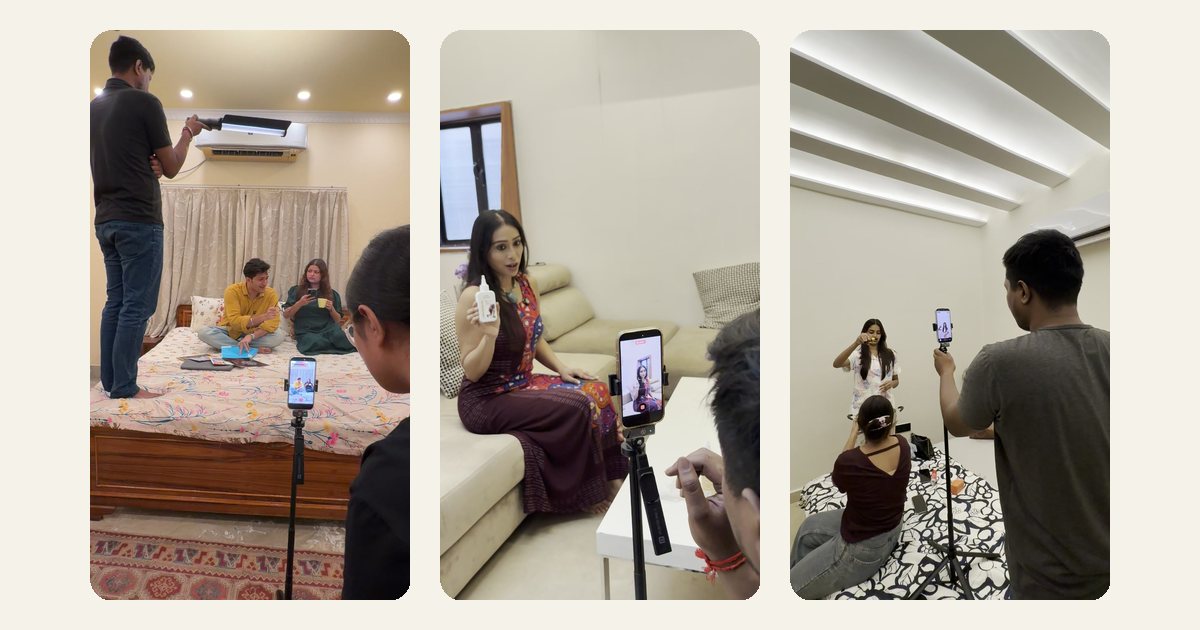
There is a moment in the media planning meetings of most D2C brands when someone says: our traditional ads are not performing the way they used to. The data backs this up. CPMs are rising, click-through rates on brand-produced creative are declining, and the engagement gap between influencer content and authentic user-created content is widening in favour of the latter. This is not a platform glitch or a bidding problem — it is a structural shift in how consumers process and respond to commercial content.
What We Mean by Traditional Ads
For the purposes of this discussion, traditional ads means brand-produced commercial content — studio shoots, polished product photography, scripted spokesperson videos, and highly produced campaign films. These are assets where the production value is visible, the brand's hand is clearly present, and the content does not attempt to disguise its promotional intent. Traditional advertising also encompasses influencer marketing in its conventional form: paying a public figure with a large following to feature your product in content that is implicitly or explicitly promotional.
These formats are not inherently bad. They serve real functions at scale, particularly for awareness building. The problem is that their cost-to-performance ratio in direct response advertising — the kind where you need a click, a lead, or a sale — has deteriorated significantly over the past few years.
Why Traditional Ad Performance Is Declining
Several compounding factors are driving this decline:
- Banner blindness extended to video: The same cognitive filtering that made banner ads ineffective has extended to video advertising. Viewers have learned to recognise the visual and structural cues of commercial content — the lighting, the pacing, the product reveal — and begin mentally disengaging before the message lands.
- Influencer credibility erosion: Large-following influencers who promote multiple brand partnerships simultaneously have seen their perceived authenticity decline. Audiences are aware of commercial arrangements and adjust their trust accordingly. The influencer market's own saturation has commoditised what was once a premium trust signal.
- Platform algorithm evolution: Meta and YouTube now prioritise content that earns genuine engagement over content that looks polished. Their algorithms have become relatively good at identifying and downranking content that generates passive impressions without active responses — a category that heavily produced brand content falls into with increasing frequency.
- Rising CPMs: More brands competing for the same inventory has pushed costs up significantly. This amplifies any underlying drop in creative performance — you are paying more per impression for an ad that converts less efficiently.
What UGC Does That Traditional Advertising Cannot
UGC addresses the specific weaknesses of traditional advertising through structural differences in how the content is made and perceived:
- Passes the scroll test: Content that looks like a peer's recommendation rather than a brand advertisement earns the pause that conventional ads increasingly fail to earn. This is the prerequisite for everything else in the conversion funnel.
- Delivers specific, personal social proof: A creator describing their own specific experience with a product is categorically more persuasive than a brand claiming the same outcome. The personalisation signals genuine experience; the brand claim signals promotional intent.
- Scales with variety, not budget: Traditional advertising scales by increasing production investment — more shoots, more locations, higher-quality talent. UGC scales by increasing the number and diversity of creators, which produces more creative variation at lower marginal cost.
- Regenerates continuously: A creator community, properly maintained, generates a continuous supply of fresh, authentic content. A traditional campaign produces a finite set of assets. As creative fatigue accelerates on social platforms, the brands with ongoing creator supply have a structural advantage.
Where Influencer Marketing Still Adds Value
Influencer marketing and UGC are often conflated, but they are not the same thing. Large-following influencer content still serves a real function for brand awareness, new market entry, and category education — contexts where reach matters more than conversion precision. The mistake many brands make is applying influencer marketing as a direct response tool, where UGC's authenticity and specificity consistently outperform celebrity-style endorsements.
The most effective D2C strategies use both: macro-influencers for awareness and brand positioning, micro-creator UGC for conversion-focused performance marketing. These are complementary layers, not competing alternatives.
The Indian Context: Why the Shift Is Accelerating Here
Indian consumers, particularly in the 20–40 age bracket driving D2C growth, have unusually sophisticated peer-recommendation networks — from family WhatsApp groups to regional YouTube communities to local Instagram micro-niches. In this environment, the trust signal of a genuine peer recommendation carries more weight than in markets where formal brand advertising has deeper roots. The shift away from traditional ads toward UGC is not just a global trend imported into India — it is accelerating faster here because the underlying cultural preference for peer-sourced information was already strong.
Takeaway
Traditional ads and conventional influencer marketing are not disappearing, but their role in a smart D2C marketing mix is narrowing. UGC fills the gap they are leaving in performance marketing — delivering the authenticity, specificity, and creative volume that modern social algorithms and sceptical consumers require. Brands that build UGC capability now are not chasing a trend; they are building the creative infrastructure that the next three to five years of digital marketing will reward.
Ready to shift more of your creative strategy toward UGC that actually performs? Book a strategy call and let us map out the transition together.