Meta's advertising environment has fundamentally changed over the last three years, and many Indian D2C brands are still running the same studio-shot creatives they produced in 2021. The result is predictable: rising CPMs, shrinking ROAS, and marketing teams convinced that Meta simply doesn't work anymore. The platform works — the creative format doesn't.
What 'Traditional' Actually Means in the Meta Context
When we say traditional ad formats, we mean: polished studio photography on white or gradient backgrounds, scripted voiceover videos with professional actors, stock footage montages, and catalogue-style product showcases. These formats were built for a media environment where the advertiser controlled the channel — billboards, print, TV. On Meta, the user controls the scroll.
The average Indian consumer scrolls through roughly 300 feet of content daily on mobile. In that environment, a perfectly lit flat-lay of your skincare product reads as an advertisement within 0.3 seconds — and gets skipped accordingly. The creative needs to not look like an ad to earn the attention that makes an ad work.
The Algorithm Rewards Engagement, Not Polish
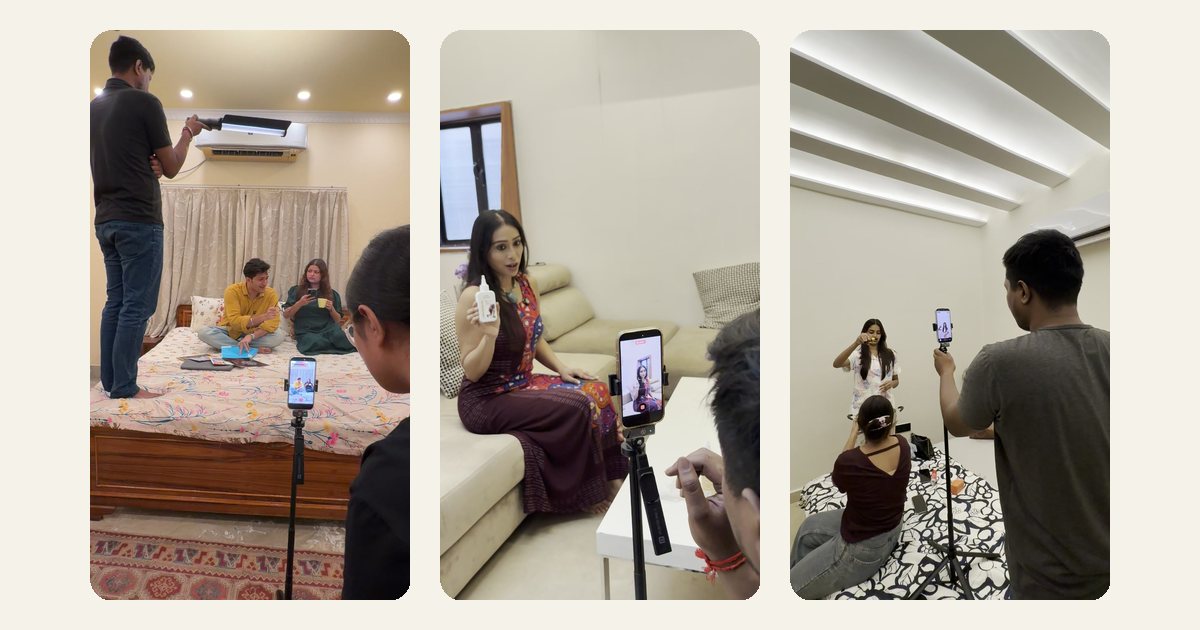
Meta's delivery algorithm distributes ad budget based on predicted engagement probability. A creative that generates saves, comments, shares, and extended watch time costs less per result than one that generates passive impressions. This is where UGC-style content has a structural advantage: it looks native to the feed, triggers pattern recognition as organic content, and earns the kind of genuine engagement signals that tell the algorithm to keep showing it.
Brands we work with consistently see cost-per-purchase drop when they move even 30–40% of their creative budget toward UGC formats. The effect is not marginal — it is often the single largest lever available without changing targeting, bidding strategy, or offer.
Why Indian Audiences Specifically Are Rejecting Polished Ads
Indian consumers have grown up watching unboxing videos on YouTube, honest reviews on ShareChat, and real-person testimonials on Instagram Reels. The cultural baseline for 'authentic' content is set by creators, not advertisers. When a brand shows up with a visibly expensive studio production, the implicit message is that the brand is selling very hard — which raises skepticism rather than desire.
This is amplified for categories like beauty, personal care, food, and fashion, where the question 'but does it actually work on a real person?' is always present. A mother in Jaipur explaining why she switched baby lotion brands carries more persuasive weight than a dermatologist reading from a teleprompter in a Delhi studio set.
The Specific Mechanics of ROAS Improvement
UGC improves ROAS through three distinct mechanisms:
- Lower CPM through better relevance scores: When the algorithm sees strong engagement signals early in a campaign, it rewards the creative with cheaper distribution.
- Higher click-through rate: Native-looking content earns more stops and more clicks from users who don't register it as an ad until they're already interested.
- Better landing page conversion: When the UGC creative sets honest, realistic expectations about the product, the user who clicks is more qualified — and more likely to convert.
The combination of lower acquisition cost and higher conversion rate compresses cost-per-purchase significantly. For brands spending above ₹5 lakh per month on Meta, even a 15–20% improvement in ROAS translates to meaningful P&L impact.
When Traditional Creative Still Has a Role
This is not an argument for eliminating studio creative entirely. Brand-building campaigns, high-production hero videos for awareness, and catalogue assets for dynamic retargeting still serve specific purposes. The shift is in how you allocate across the funnel. Top-of-funnel prospecting — where you need to earn attention from strangers — is where UGC wins decisively. Retargeting users who already know your brand can use more polished formats effectively.
The brands getting the best results on Meta in 2025 are running a 70/30 split: 70% UGC and creator-led content for prospecting, 30% polished brand content for retargeting and brand recall.
Takeaway
If your Meta ROAS is declining and your creative hasn't changed, the creative is the problem. The structural advantages of UGC — native appearance, authentic voice, algorithm-friendly engagement — are not a trend. They reflect a permanent shift in how attention works on social platforms. The brands winning on Meta today have accepted this and rebuilt their creative pipelines accordingly.
If you want to audit your current creative mix and build a UGC pipeline that consistently delivers ROAS improvement, book a strategy call with our team.