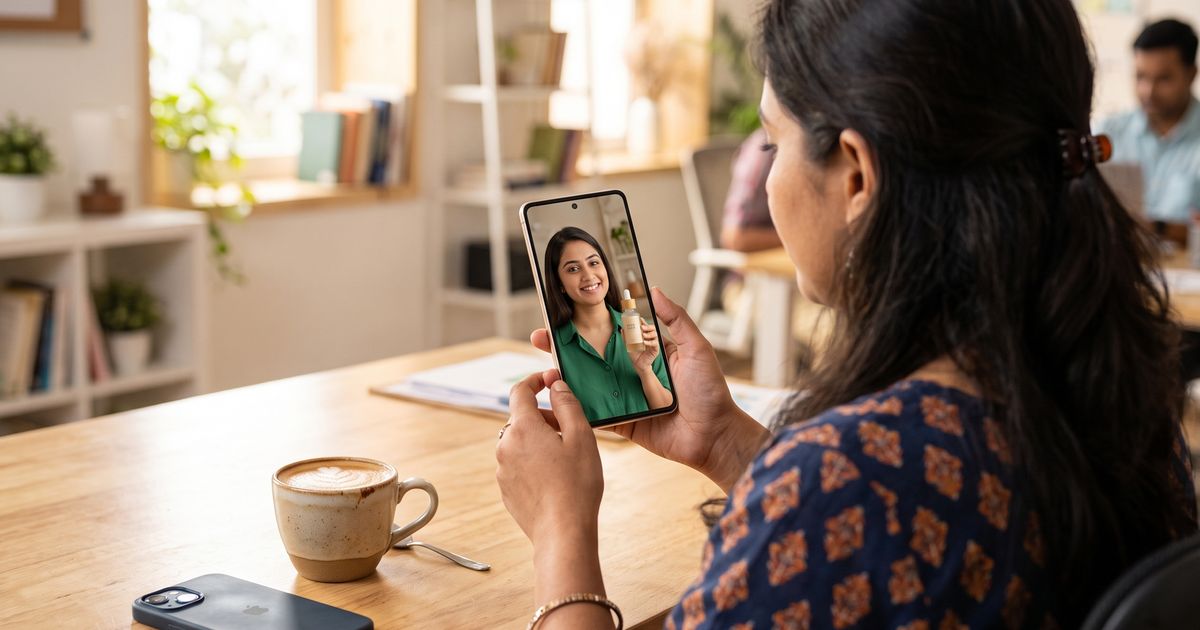
Walk down any supermarket aisle in Pune, Lucknow, or Coimbatore and you will see the same FMCG products that aired on television for thirty years. Yet ask a 24-year-old where she discovered her last shampoo purchase, and the answer is almost never a TV commercial, it is a 30-second Instagram Reel where a girl with hair like hers explained why she switched. That gap between how brands traditionally advertised and how consumers actually make decisions today is exactly what this article unpacks.
If you are new to terms like UGC, performance creative, or paid social, do not worry. We will start from scratch, define everything clearly, and by the end you will understand precisely why the biggest FMCG companies in India are quietly shifting budget away from traditional formats, and what that means for your brand.
What "Traditional Advertising" Actually Means
Traditional advertising refers to any paid promotional format that exists outside the internet, and, increasingly, includes older digital formats too. For FMCG brands in India, this historically meant:
- Television commercials (TVCs): 30- or 45-second spots on Star Plus, Sony, Zee TV, or regional channels like Sun TV and ETV Bangla. A single national TVC shoot with a known face can cost anywhere from Rs. 15 lakh to Rs. 1 crore or more before media buying is even factored in.
- Print ads: Full-page spreads in newspapers like The Times of India or Dainik Jagran, or inserts in magazines. Good for visibility in Tier cities across India; expensive per reader reached.
- Outdoor/OOH: Hoardings in high-footfall corridors like MG Road in Bengaluru or CP in Delhi, bus shelter panels, auto-rickshaw branding.
- Radio spots: Still effective in Tier 2 and Tier cities across India through stations like Radio Mirchi and Big FM.
- Branded TV content: Sponsored fiction serials or reality shows, a format that costs in crores and suits only the largest brands.
The defining characteristics of these formats are one-way communication, high production budgets, long lead times (a TVC typically takes 6–12 weeks from brief to broadcast), and very limited ability to measure actual sales impact at the SKU level.
What Is UGC, and What It Is Not
UGC stands for User-Generated Content, but in a marketing context the term has evolved. Originally it meant organic content that real customers spontaneously posted, someone filming themselves unboxing a Mamaearth face wash they bought. That organic version still exists and is valuable.
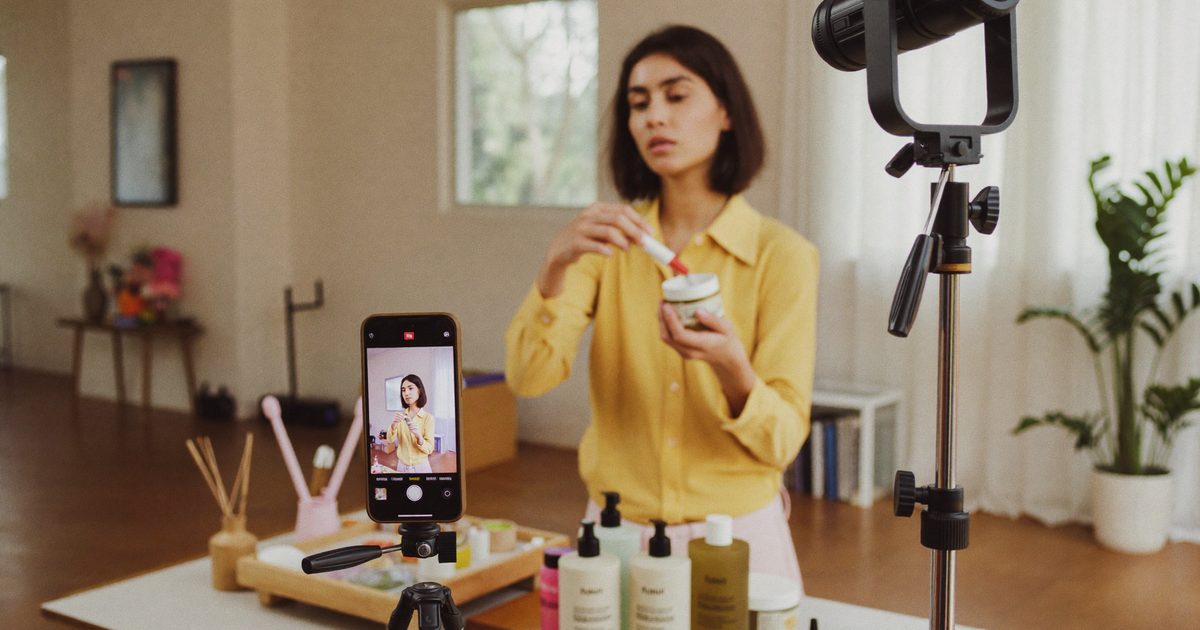
Today, however, most brands and agencies use "UGC" to describe creator-made content that mimics the look and feel of organic posts but is produced intentionally for advertising. A real person, not a celebrity, not a polished model, speaks to camera in their flat in Bengaluru or their kitchen in Jaipur, talks about a product in their own words, and the resulting video is used as a paid social ad on Instagram, YouTube Shorts, or Meta's audience network.
The key things that make UGC different from a standard brand video:
- It is shot on a phone or a mirrorless camera, deliberately avoiding the high-gloss look of a studio production.
- The creator speaks conversationally, there is no voiceover, no product shots cut with stock footage, no background music that sounds licensed.
- It is formatted natively for the platform: vertical 9:16 for Reels and Shorts, with captions, because a large percentage of Indian audiences watch without sound.
- The creator may or may not be disclosed as a paid collaborator, but per ASCI's Influencer Advertising Guidelines (updated 2021 and now enforced actively), any material connection between brand and creator must be disclosed with labels like #Ad, #Sponsored, or #Collab placed prominently at the beginning of the caption, not buried after three lines of text.
How Production Costs and Lead Times Compare
This is often where FMCG marketing managers have their first "aha" moment. The economics are not just slightly different, they are structurally different.
A typical TVC production for a mid-size FMCG brand (think a regional hair oil or a packaged snack launching in Maharashtra) involves location scouting, a director, lighting crew, camera crew, a stylist, post-production with colour grading and sound mixing, and usually agency and production house fees. A conservative estimate for a 30-second broadcast-quality spot: Rs. 8–25 lakh in production alone, before any media spend.
A UGC batch for the same brand, six 30-to-60-second videos across three creators in two languages (Hindi and Marathi, for example), can be delivered for Rs. 60,000–1,50,000 in production, often within 10–14 days of briefing. The creators shoot on their own equipment, light their own space, and iterate based on a brief that specifies the key message, any mandatory claims, and ASCI-required disclosures.
That cost difference has a practical implication: you can test many more creative angles. A brand that can afford one TVC per quarter can afford 8–10 UGC variations per month, and then put media spend behind whichever version drives the lowest cost-per-click or highest add-to-cart rate on their D2C site.
Why FMCG Is a Specific Case, Not Just "Any Brand"
FMCG stands for Fast-Moving Consumer Goods: products like biscuits, shampoo, cooking oil, skincare, dairy, packaged foods, and personal care items. They share specific advertising characteristics that make UGC particularly well-suited:
- Repeat purchase cycles: A consumer buys the same shampoo every 4–6 weeks. A 15-second UGC testimonial that appears in their Instagram feed three times before their next purchase can meaningfully shift brand preference, something a TVC airing once a fortnight on cable cannot reliably do.
- Language diversity: India has 22 scheduled languages and hundreds of dialects. A creator recording in Bhojpuri for eastern UP, Tamil for Chennai, or Bengali for Kolkata creates trust that a Hindi-only national TVC cannot replicate. We brief creators in their mother tongue specifically because code-switching mid-video, the natural way urban Indians actually speak, resonates in ways a scripted translation never does.
- Ingredient and claim sensitivity: Consumers increasingly research FMCG ingredients before buying (coconut oil vs. mineral oil in hair care; real fruit vs. flavouring in packaged juice). A creator who explains an ingredient honestly, on camera, in plain language outperforms a glossy product shot every time for this audience segment.
- Tier 2 and Tier 3 penetration: Cities like Nagpur, Bhopal, Mysuru, and Siliguri have high smartphone penetration and active Instagram/YouTube usage, but consumers there trust local-looking creators more than pan-India celebrities. UGC's informal, relatable format is a natural fit.
What Traditional Ads Still Do Better
A balanced view matters here. Traditional advertising is not dead for FMCG, it does specific jobs that UGC cannot replicate, at least not yet.
- Mass awareness at scale: If you are launching a new packaged snack nationally and need 100 million impressions in 30 days, a combination of TV and OOH still delivers this faster than any digital-only approach, especially for audiences above age 45 who are light smartphone users.
- Retail shelf association: A TVC that shows the product packaging repeatedly builds visual recognition at the point of sale. In general trade (kirana stores, chemists), where many FMCG products are still discovered physically, this matters.
- Brand equity building over decades: Brands like Amul, Lifebuoy, and Parle-G have built multi-generational trust partly through consistent, repetitive traditional advertising. That equity does not come from a six-month UGC campaign.
The honest answer for most mid-size FMCG brands is not "replace TV with UGC", it is "use UGC to do the performance and conversion work that TV was never designed to do, and reserve TV for the brand-building moments that justify its cost."
How to Start Using UGC if You Have No Experience
If your brand has never worked with UGC creators before, here is a practical starting framework:
- Define one measurable goal first: Are you trying to reduce cost-per-purchase on your D2C site? Increase Flipkart/Amazon conversion on a specific SKU? Drive WhatsApp enquiries for a B2B FMCG product? UGC works differently for each goal; the format, platform, and CTA all change.
- Start with three to five creators, not twenty: A small test batch lets you identify what tone, format, and language works before scaling. In our production work, the first batch is diagnostic, we watch which hook style (problem-led, transformation, comparison) performs best and build the next batch around that data.
- Brief for honesty, not perfection: Tell creators the real product benefit, provide any mandatory claim language (especially for health or beauty products where ASCI and FSSAI rules apply), and then let them express it in their own words. A creator reading a scripted line verbatim sounds exactly like what it is.
- Plan for paid amplification: Organic UGC reach on Instagram is low unless the creator already has a large following. The model that actually drives sales is whitelisting, running the creator's video as a paid Meta ad from the creator's handle or your brand's account. This requires written permission from the creator, which should be built into your contract from day one.
- Follow ASCI disclosure rules from the start: Every paid UGC video must include a disclosure. Use #Ad or #Sponsored, not vague terms like #Partner or #Collaboration, which ASCI has flagged as insufficiently clear. Violations can result in public notices on ASCI's website, which is visible to every other brand marketer and journalist in India.
If you are weighing whether UGC makes sense for your FMCG brand specifically, whether for a D2C launch, a regional push, or a meta-ads overhaul, the clearest next step is a conversation about your category, your current creative costs, and what a realistic test budget could produce. Book a free consultation with The UGC Agency and we will tell you plainly whether UGC is the right lever for where you are right now.