SaaS sales cycles in India are long, trust-dependent, and often lost at the demo stage, not because the product is weak, but because prospects have no social proof from people who look and work like them. A CFO in Pune evaluating an accounts payable automation tool needs to hear from another mid-market finance team in Hindi or Marathi, not watch a polished US testimonial. That is precisely where a UGC funnel, built intentionally for each stage of the buyer journey, creates a measurable edge.
This guide walks through how to build that funnel from scratch: which content formats to produce at awareness, consideration, and decision stages; how to brief and compensate Indian creators; what compliance guardrails matter; and how to measure what is actually working.
Map Your Funnel Stages Before Briefing a Single Creator
Most SaaS brands commission testimonial videos and call it a UGC strategy. That is a decision-stage asset dropped at an awareness-stage problem. Before any production begins, map the three distinct jobs your content needs to do:
- Top of Funnel (Awareness): The prospect does not yet know they have a problem your software solves. Content here must create recognition of a pain, not pitch a product.
- Middle of Funnel (Consideration): The prospect is actively comparing tools, watching demos, reading G2 reviews. Content here must answer the "why you over the competitor" question from a peer's mouth, not a brand's.
- Bottom of Funnel (Decision): The prospect is in a trial or proof-of-concept phase. Content here must reduce implementation anxiety and confirm ROI from someone at a similar company size and vertical.
Write these three briefs as separate documents. Each has a different creator profile, different platform, and different success metric.
Top-of-Funnel: Problem-Led Reels and Shorts
At awareness, the most effective UGC format for Indian SaaS brands is the pain-point Reel, a 30–45 second video where a creator describes a workplace frustration without ever naming your product. Examples that work in practice: a startup founder in Bengaluru venting about reconciling GST filings manually every quarter; an HR manager in Delhi describing the chaos of onboarding three hires simultaneously; a logistics coordinator in Ahmedabad explaining how shipment tracking across three carriers destroyed his Sundays.
Platforms to prioritise: Instagram Reels (for founders, managers aged 28–40) and YouTube Shorts (for ops and IT decision-makers who index higher there). LinkedIn video is growing for B2B SaaS in India specifically, the algorithm now surfaces Reels-style short videos to first-degree connections, making a relatable pain post highly shareable within professional peer groups.
Creator brief essentials for this stage:
- Do not mention the brand or product at all. This is seeding awareness of a problem, not a solution.
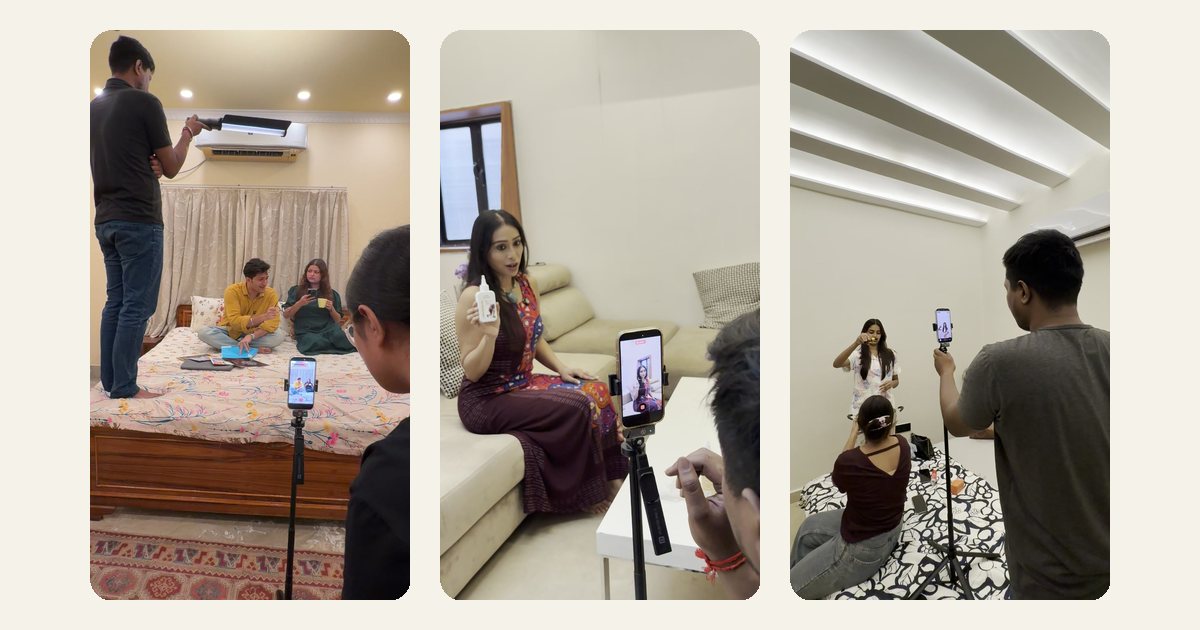
- Shoot in the creator's real workspace, a cluttered desk, a shared office floor, a home office in a tier-2 city. Authenticity here is functional, not aesthetic.
- Caption the video fully in the language of the target audience. For a pan-India HR tool, brief one creator in Hindi, one in English, one in Tamil or Telugu if you are targeting South Indian enterprise accounts.
- Budget: Rs. 5,000–15,000 per creator for organic rights, Rs. 15,000–35,000 if you are whitelisting the content for paid distribution via Meta or Google.
Middle-of-Funnel: Comparison and Deep-Dive Content
This is where most SaaS brands underinvest. By the consideration stage, a prospect has probably shortlisted your tool alongside two or three alternatives, often Zoho, Freshworks, or a regional competitor. UGC that performs here is not a testimonial; it is a structured use-case walkthrough from someone in a comparable role.
The format that consistently outperforms at this stage is the screen + face split video: the creator narrates their actual workflow inside the product while their face appears in a corner. It is not a polished demo; it is a peer showing "here is how I actually use this on a Tuesday morning." Authenticity signals are critical, keep the UI unpolished, the cursor movements real, the language conversational.
A note on ASCI compliance: if the creator is being paid to make this content, it must be disclosed. ASCI guidelines require a clear "#Ad" or "#Sponsored" disclosure that is prominent and not buried in hashtags. For B2B SaaS UGC specifically, we brief all creators to say "this is a paid collaboration with [Brand]" verbally within the first 10 seconds of the video, not just in the caption. This also builds credibility with a skeptical B2B audience, hiding the partnership often backfires.
Additional middle-funnel formats:
- Carousel posts on LinkedIn: A creator walks through 5–7 slides explaining how they solved a specific workflow problem. Works well for accounting, CRM, and HR SaaS categories.
- Long-form YouTube reviews (8–12 minutes): For tools with an annual contract value above Rs. 1 lakh per seat, buyers research extensively. A creator-led review with honest pros and cons outperforms a brand demo because it is searchable and trusted.
- Email-embedded video clips: Pull a 60-second clip from a creator walkthrough and embed it in your nurture sequence. Open rates for video-in-email campaigns run noticeably higher in B2B India compared to static CTAs.
Bottom-of-Funnel: Implementation Confidence and ROI Stories
The single biggest drop-off point in Indian SaaS funnels is post-trial: the prospect has seen the product, likes it conceptually, but stalls because they cannot visualise the implementation effort for their team size. UGC at this stage must directly address that anxiety.
The format: a two-week implementation diary, filmed by an actual customer (or a briefed creator playing a customer persona, disclosed as such). Day one setup, day three first report run, day eight team onboarding, shot on a phone, narrated casually, uploaded as a short playlist. This format answers "what does it actually take to go live?" better than any case study PDF.
In our production work with a Bengaluru-based project management SaaS, we briefed a founder-persona creator to document her team's first 14 days on the platform. The playlist generated a 38% trial-to-paid conversion rate among prospects who watched at least three videos, compared to 19% for those who only watched the brand demo.
Other bottom-funnel assets worth producing:
- ROI soundbites (60–90 seconds): A real user states a specific, verifiable number, "we cut invoice processing time from three days to four hours", framed as their own experience. Under ASCI, ensure the claim is substantiated; avoid superlatives like "the best" unless you can prove market comparison.
- Objection-response clips: Brief creators to address the three most common sales objections your team hears. Pricing, data security (especially relevant for cloud SaaS in India where enterprise clients ask about data residency), and integration with existing Indian payroll or ERP systems are frequent blockers.
- WhatsApp-native content: For SMB SaaS targeting tier-2 and tier-3 markets, a 90-second vertical video shared via WhatsApp Status or a business broadcast list is a legitimate and high-engagement distribution channel. Keep file size under 16MB and open captions on, as many users watch on mute.
Creator Selection and Sourcing for SaaS UGC
B2B UGC requires a different creator profile than D2C. You are not looking for follower count, you are looking for professional credibility and audience composition. A finance professional in Chennai with 4,000 LinkedIn followers whose connections are primarily CFOs and finance controllers is more valuable for an accounts SaaS than a generic lifestyle creator with 100,000 Instagram followers.
Sourcing channels that work in the Indian SaaS context:
- LinkedIn creator search: Filter by job title (e.g., "Finance Manager", "HR Business Partner", "CTO at startup") and look for people who post regularly about their professional workflows. Outreach conversion is higher when the DM references their specific content.
- Your own user base: Existing customers who have mentioned your product positively, in NPS surveys, support tickets, or social mentions, are your warmest creator pool. Offer a small honorarium (Rs. 3,000–8,000 per video) and production guidance, not a script.
- Niche communities: Slack groups like SaaSBoomi, IndiaStack, and various city-specific founder communities (BengaluruCTO, Nasscom forums) contain practitioners who create content. Sponsoring a community event and activating a few members as creators is a cost-effective entry point.
Measuring Funnel Performance by Stage
Each funnel stage needs a different success metric. Tracking only leads from all UGC content misattributes the awareness-stage investment and undervalues middle-funnel content that accelerates deal velocity without directly generating form fills.
- Top of funnel: Reach, saves, shares, and profile visits generated. On Meta, track "landing page views" from paid distribution, not just link clicks.
- Middle of funnel: Watch-through rate (aim for 60%+ on YouTube long-form; 70%+ on short-form), demo request attribution (add UTM parameters to all creator link-in-bio URLs), and trial sign-up volume from organic search, creator content that ranks for "[Tool Name] review" or "[Category] software India" compounds over time.
- Bottom of funnel: Trial-to-paid conversion rate segmented by content touchpoint, sales cycle length for deals where a UGC asset was shared versus those where it was not, and churn rate at 90 days (customers who engaged with implementation content before purchase tend to onboard faster).
Run this measurement framework for a full quarter before drawing conclusions. SaaS buying cycles in Indian mid-market typically run 45–90 days, which means a campaign launched in October will show its real conversion impact only in December or January. Pulling spend decisions earlier than that discards attribution data mid-cycle.
If you are building a UGC program for a SaaS product and want to move past generic testimonials to a stage-mapped content system, book a consultation with our team, we scope the creator mix, production budget, and distribution plan in a single working session.