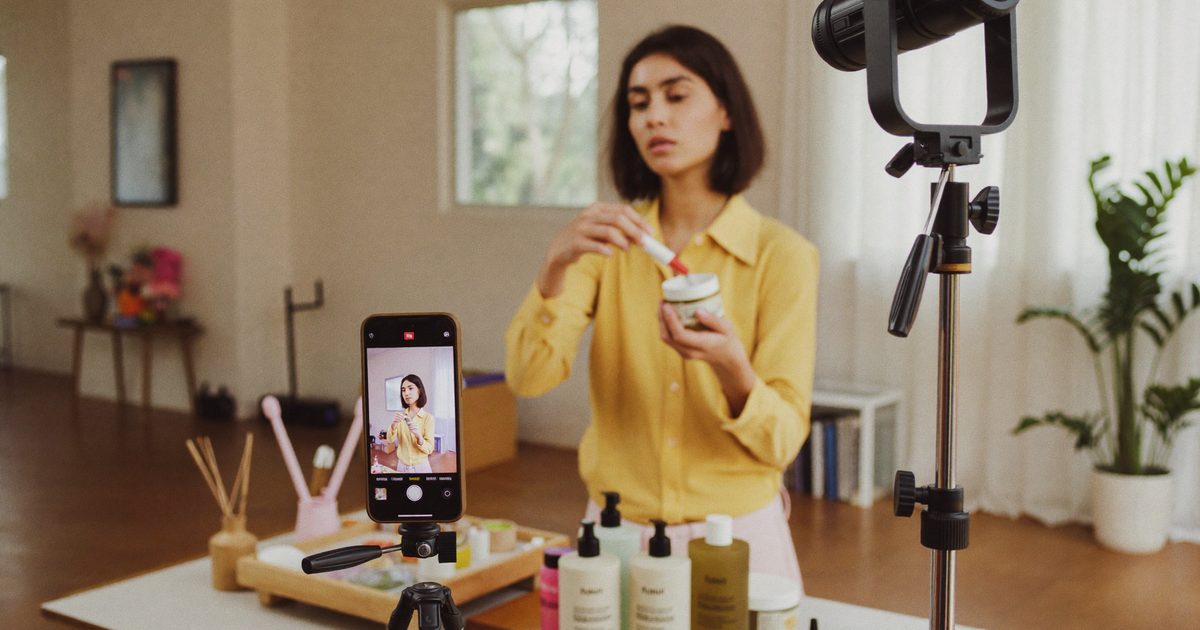
A UGC creator films herself holding a bottle of iron supplements and says, directly to camera: "This completely cured my anaemia in two weeks." The brand's marketing team approves it. Within a month, the Advertising Standards Council of India flags the ad, the reel gets pulled from Meta, and the brand is fielding uncomfortable questions from its legal team. This is not a hypothetical, versions of this scenario play out regularly in the Indian health and wellness category, and in almost every case, a better creative brief would have prevented it.
Healthcare UGC sits at the intersection of compliance law, platform policy, and consumer psychology, a combination that makes generic brief templates dangerous. Below is a breakdown of exactly where brands and their agencies go wrong, and what a brief for a health campaign actually needs to contain.
Mistake 1: Treating Healthcare Like Any Other D2C Category
The most fundamental error is writing a health brief as if the product were a face wash or a protein bar. It is not. In India, health claims in advertising are governed by multiple overlapping frameworks: ASCI's Guidelines for Health and Wellness Advertising, the Drugs and Magic Remedies (Objectionable Advertisements) Act 1954, and, for OTC products, CDSCO's advertising guidelines. Violating any of these is not just a compliance headache, it can result in ads being banned, platform accounts getting restricted, and, in serious cases, regulatory notices.
A brief that does not acknowledge these constraints upfront puts the creator in an impossible position. We brief creators to think of health UGC in two legal buckets:
- Experience-based claims ("I feel more energetic", "my digestion feels better since I started this"): generally permissible when framed as personal experience, not clinical fact.
- Efficacy or cure claims ("this treats", "this cures", "clinically proven to"): require substantiation that a UGC creator cannot provide and that almost no 30-second video can responsibly communicate. These should not be in the brief at all.
The brief must specify, in plain language, not legal boilerplate, which types of statements are off-limits and why. Creators are not lawyers. If the brief does not explain the line, they will cross it.
Mistake 2: Omitting the Disclosure Requirement
ASCI's influencer guidelines (updated in 2021 and periodically refined since) require clear disclosure when content is paid or gifted. In the health category, this disclosure is not optional etiquette, it is a bright-line rule that platforms also enforce independently. Instagram and YouTube both surface warnings on undisclosed paid health content, and Meta has been particularly active in the wellness and supplement space in India after several high-profile ad violations.
Despite this, many health briefs we have reviewed make no mention of disclosure at all, or bury it in a footnote. The brief should specify:
- Where the disclosure goes (first three seconds of video, or superimposed text that stays on-screen, not a caption that users have to click "more" to see).
- Which exact label to use: ASCI's standard is "Paid Partnership" or "Ad" in a font and colour that is clearly visible against the background.
- That verbal disclosure ("this is a paid collab") is encouraged in addition to visual disclosure, especially for longer-form content.
A brief that does not mention disclosure is a brief that has not been written for the healthcare category. It has been copied from somewhere else and the category name has been changed.
Mistake 3: Casting on Looks Alone, Not Lived Experience
Health UGC converts when the creator has genuine relevance to the product's target condition or lifestyle, not just an aesthetic that matches the brand's Instagram grid. A supplement for managing PCOS will land differently from a Delhi-based creator who actually manages the condition than from a fitness influencer in Mumbai who has never mentioned hormonal health in their content. Audiences in the health space are sceptical and do prior research, a creator who clearly has no lived connection to the category gets called out in the comments immediately.
This mistake shows up in briefs that specify only follower count, engagement rate, and "healthy lifestyle aesthetic" as casting criteria. Those are necessary but not sufficient. The brief should also ask for:
- Prior content relevance: has the creator posted about this health domain before, even organically?
- Audience demographic alignment: for a diabetic-friendly food product, an audience skewing 35-55 across Tier 1 and Tier cities across India is more valuable than a younger metro audience with higher vanity metrics.
- Language fit: a Hindi-speaking audience in Lucknow or Patna will respond better to a creator who explains health concepts in Hindi, not a creator whose content is primarily English with Hindi as an afterthought.
Mistake 4: Over-Scripting the Creator's Voice
Health briefs tend to over-script because brand teams are rightly nervous about what creators will say. The instinct is understandable, but it produces content that performs poorly. A creator reading a brand-written script about "bioavailable curcumin with black pepper extract" on camera is not UGC, it is a low-budget TV commercial. Viewers recognise the difference within seconds.
The solution is not to hand over creative control entirely. It is to brief on outcomes and guardrails, not word-for-word scripts. A well-structured health brief specifies:
- The single emotional truth the video must land: e.g., "the viewer should feel that this is something real people use as part of their daily routine, not a medical intervention." That gives the creator a target without dictating every line.
- The specific claim categories that are forbidden (see Mistake 1), listed clearly so the creator can use their own language around them.
- The one piece of product information that must appear: dosage format, key ingredient, or a specific differentiator, not a list of five.
- Format and length guidance: for Reels and YouTube Shorts, 30-45 seconds is the sweet spot for health products; anything longer needs a compelling narrative hook or a demonstration to hold attention.
Mistake 5: No Before/After or Transformation Guidance
Before-and-after content is one of the highest-converting formats in health and wellness. It is also one of the fastest ways to get a campaign flagged. ASCI's health guidelines explicitly address transformation claims, visual before/after comparisons for weight loss, skin conditions, hair loss, or chronic symptoms require substantiation that individual testimonials cannot provide. Platforms flag this content algorithmically.
Yet most briefs either explicitly ask for before/after content (a compliance risk) or say nothing about it at all (leaving creators to default to it because it works). The brief needs to draw this line explicitly:
- Permitted: showing a current positive routine ("I've been taking this every morning for the past month and here's how I feel now"), which implies improvement without making a visual medical claim.
- Not permitted: side-by-side image comparisons suggesting clinical-grade physical transformation, or timeline-based claims ("in 30 days my cholesterol dropped").
- The brief should suggest alternative high-conversion formats: routine integration videos, product demos, ingredient explainers, or "a day in my life managing [condition]" narratives, which perform comparably to before/after without the compliance exposure.
Mistake 6: Ignoring Regional and Language Variation in the Brief
Health decisions in India are deeply local. A campaign for a probiotic brand that is built entirely around English-language creators in Bangalore is leaving the Hindi-belt market, which drives a significant portion of e-commerce health purchases via Amazon and Flipkart, almost entirely untouched. Tier 2 consumers in Jaipur, Indore, or Kanpur are buying health supplements in large volumes; they are just not being spoken to in the language and register they trust.
A brief for a national health campaign should include explicit language variants: Hindi, and at least one regional language depending on the brand's distribution geography (Tamil for TN, Telugu for AP/Telangana, Bengali for WB/Assam). The brief for each variant should adapt not just the language but the cultural framing, a protein supplement brief for a Tamil Nadu creator needs different reference points than the same brief for a creator in Haryana. Ayurvedic or natural positioning, family context versus individual fitness, price sensitivity framing, these all shift by region.
Production budgets for this kind of multi-language coverage are not as large as brands assume. At the volumes our agency works with, a three-language health UGC package, four creators per language, two videos each, typically runs between Rs. 1.8 lakh and Rs. 3.2 lakh depending on creator tier, and the performance differential from reaching native-language audiences in high-purchase Tier 2 markets usually justifies the investment within the first campaign cycle.
What a Good Healthcare Brief Actually Looks Like
In practice, a healthcare UGC brief has five sections that generic briefs either merge or omit entirely: a compliance guardrails section (specific forbidden claim types, disclosure requirements, platform policies to note), a casting brief (lived experience, audience demographics, language), a creative direction section (emotional target, format, length, mandatory information), an example content section (three to five reference videos, not necessarily from the same category but with the right tone), and a review checkpoint note explaining what the brand's legal or regulatory team will check before approving final cuts.
That last section matters more than most brands realise. Creators need to know that a compliance review is coming, what it will look at, and how quickly turnaround will happen. A creator who submits a video and gets silence for three weeks, then a list of ten changes citing regulations they were not briefed on, will not work with that brand again, and word travels fast in creator networks.
If you are working on a health or wellness campaign and need a brief structure that accounts for Indian regulatory requirements, real platform policy, and the kind of creator direction that actually converts, our team at The UGC Agency has built briefs across the nutraceutical, fitness, mental wellness, and OTC pharma categories. You can see how we approach campaign production at /work, or reach out directly to discuss your brief at /consultation.