A creative brief is the single document that separates a usable video from a reshooting nightmare. We know this because we have sent briefs that were too vague, a Bengaluru skincare brand once received forty-seven raw clips where nineteen creators filmed themselves in bathrooms with the window behind them, blowing out their faces entirely. That batch cost two extra weeks and a partial reshoot budget. The fix was not better creators. It was a better brief.
What follows is a breakdown of how we actually structure creative briefs for D2C campaigns in India, the sections we include, the language we use, and the decisions we make before a single creator films a frame.
Why a Standard Brief Template Does Not Work for D2C
Most brief templates circulating on marketing blogs were built for traditional ad production: agency writes script, production house shoots, editor assembles. D2C UGC is structurally different. You are sending a brief to someone in Jaipur, Kochi, or Indore, often a first-time paid creator, who will film solo on a phone in their actual home. The brief has to function as a director, a script supervisor, and a brand guardian simultaneously, without ever feeling like a script, because the moment a creator reads from one, the authenticity is gone.
For D2C specifically, there are three additional constraints that make generic briefs break:
- Regional language overlays: A Mumbai-facing campaign running Hindi reels operates differently from a Tamil-speaking audience in Chennai. The brief must specify which language, which tone register (formal versus casual), and whether subtitles are required.
- Platform-specific framing: An Instagram Reels cut (15–30 seconds, hook-first) needs a structurally different brief than a YouTube pre-roll (5-second skip buffer, so the first five seconds must carry standalone meaning) or a Meta feed ad running at 9:16 versus 1:1.
- ASCI compliance from the brief stage: The Advertising Standards Council of India's guidelines on endorsements, particularly the 2021 influencer disclosure amendments, require creators to clearly label paid partnerships using #Ad or #Paid in the first three lines of any caption. We build this into the brief explicitly so creators do not forget it. Violating ASCI disclosure norms is the brand's liability, not the creator's, which most D2C founders do not realise until it becomes a problem.
The Eight Sections We Always Include
Every brief we send has the following eight sections. Some are short (two lines); none are skipped.
- Product context: One paragraph, what the product does, who it is for, what problem it solves. We ask the brand to write this in plain Hindi or English without marketing superlatives. If a brand sends us "breakthrough anti-ageing elixir," we rewrite it to "a daily face serum with niacinamide and retinol for adults in their 30s dealing with uneven skin tone." Creators brief authentically when they understand the product like a person, not a press release.
- Target viewer: Not demographics. Behavior. "A 27-year-old woman in a Tier 2 city who buys skincare on Nykaa but has never tried premium serums" is actionable. "Women, 25–35" is not.
- Core message (one sentence): The single thing the viewer should feel or remember. Everything in the video must serve this. We force the brand to agree on this line before any creator receives the brief.
- Hook options (3–5 choices): We write multiple opening lines and let creators choose the one that feels natural in their voice. Options might include a question hook ("Kya tum bhi raat ko skin routine skip karte ho?"), a confession hook ("I ignored my skin for two years and this is what it took"), or a demo hook (pour the product in silence, let the texture do the talking). Giving creators real options produces better natural delivery than prescribing a single line.
- Story arc: Not a word-for-word script. A three-beat structure: setup (problem or context), product moment, payoff (result or emotion). For a 30-second reel, this translates to roughly 8 seconds / 12 seconds / 10 seconds. We include timing guidance because most first-time paid creators in India have never been told their "story" needs to conclude before the 30-second mark.
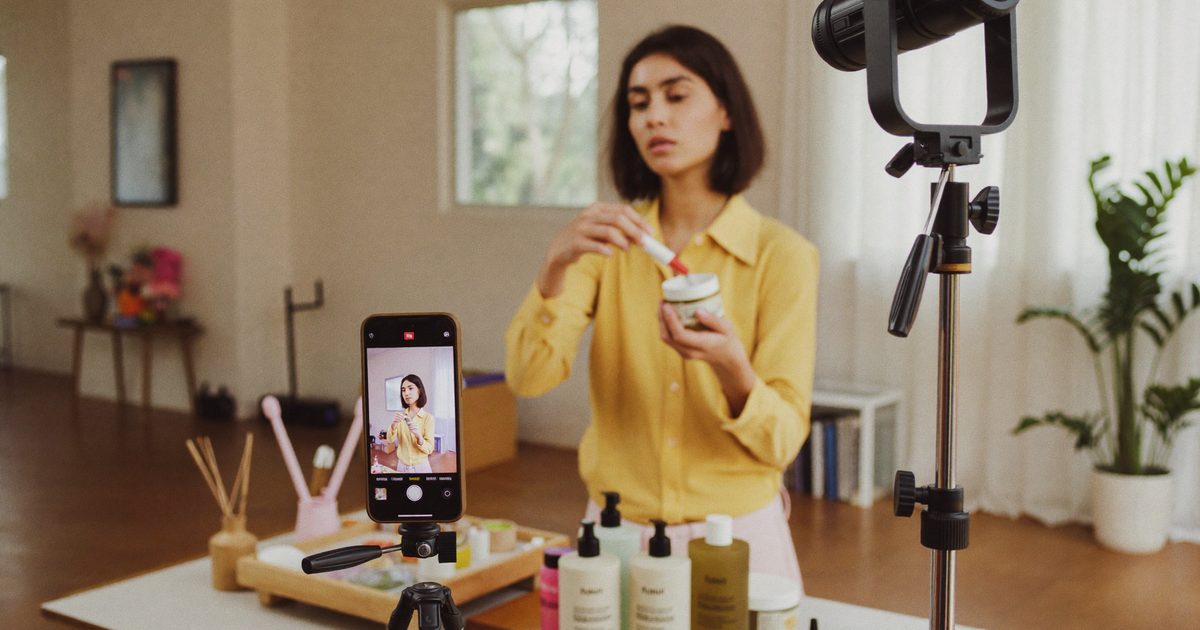
- Visual mandatories: Lighting (natural daylight preferred; no bathroom backlighting), camera distance (waist-up for most product categories), product placement (label visible in at least one shot), and any brand colour or packaging requirements. For brands shipping from Mumbai or Delhi to creators nationwide, we also specify that the unboxing, if part of the brief, should show the original packaging, not a bag the creator left out for three days.
- What to avoid: This section prevents the brief from being purely prescriptive while still protecting the brand. Common entries include: do not compare to competitor brands by name (ASCI Rule 4), do not make medicinal claims if the product is a cosmetic, do not film children without written parental consent. For food and beverage brands, we add a note against making health claims that require FSSAI-level substantiation.
- Deliverables and format: Resolution (minimum 1080p, 4K preferred), aspect ratio, raw file or edited, whether music is to be added or left clean for the brand to add. We also specify that creators retain their audio, royalty-free music layered over creator voiceover after the fact is one of the most common causes of mismatch between emotion and soundtrack.
Budgeting Brief Rounds into the Campaign Cost
A realistic D2C UGC campaign at Rs.60,000–Rs.90,000 typically involves eight to twelve creators. At that scale, at least two creators will need revision rounds, not because they did a poor job, but because brief interpretation varies. We build one free revision per creator into our production agreements and brief creators on this explicitly: "If your first submission does not match the hook or visual mandatories, we will send one set of revision notes before the final approval deadline."
What this structure achieves is a clear paper trail. If a creator submits footage with a competitor product visible in the background (it happens more than you would expect), the brief is the document that confirms the expectation. Without it, revision conversations become subjective and slow.
For campaigns in the Rs.1.5–3 lakh range, where the brief might go to twenty or more creators, we add a short video walkthrough, a two-minute Loom where someone from our team explains the hook options and demonstrates the correct product placement angle. This reduces misinterpretation rates significantly without adding significant production overhead.
Writing Briefs That Travel Across Languages
One of the most underestimated challenges in Indian D2C UGC is multilingual briefing. A brand selling protein supplements might want reels in Hindi, Kannada, and Telugu simultaneously. Writing a single English brief and asking creators to "translate naturally" produces content where the Tamil creator and the Punjabi creator are effectively in different campaigns, different emotional registers, different vocabularies, different cultural reference points for the same product.
Our approach is to write language-specific brief variants for campaigns that span more than two languages. The core message and visual mandatories stay identical. The hook options are rewritten natively, not translated. A confession hook that lands in colloquial Hindi ("Yaar, main toh poori galatfehmi mein tha") sounds stilted in literal Kannada. We have native speakers on our creator network who help us pressure-test these variants before distribution.
The brief is not a constraint on creativity, it is the floor that keeps creators from falling through. Everything above that floor is entirely theirs.
Brief Sign-Off and Version Control
This is the administrative section that most agencies skip, and it is the one that causes the most downstream problems. Every brief we issue has a version number and a sign-off timestamp from the brand. When a brand wants to change the core message after ten creators have already filmed, and this happens, especially with first-time UGC buyers, the version log shows clearly what was agreed and when.
For D2C brands running Meta performance campaigns, brief changes mid-batch are particularly damaging because they produce a heterogeneous creative set. If half the creatives end on a discount CTA and half end on a brand awareness moment, Meta's algorithm will optimise toward whichever performs better, but the creative learning phase is extended because the signals are inconsistent. We explain this to brands during onboarding, but having the brief as a signed document gives us a basis to push back constructively when mid-batch changes are requested.
After the Brief: The Feedback Loop That Makes the Next One Better
The brief for campaign two should always be materially different from campaign one. That sounds obvious, but in practice most brands reuse their first brief with minor edits because it "worked." What "worked" as a brief often means it produced usable footage, not necessarily optimal footage.
We run a short retrospective after every campaign: which hook options did creators default to (the ones they ignored often indicate something was off about how the option was framed), which visual mandatory produced the most queries from creators (a sign the instruction was ambiguous), and which deliverables came back in the wrong format most often. These observations go directly into the brief template for the next campaign.
Over a three- or four-campaign relationship with a brand, the brief gets tighter, the revision rate drops, and the creative output starts to show a coherent brand voice across a diverse creator pool, which is the actual goal. A well-written brief is not a one-time document. It is a living record of what a brand has learned about how to communicate through real people.
If you are building a D2C UGC campaign and want to see what a production-ready brief looks like in practice, we walk through this with every brand we take on. Review our approach at our work, or if you are ready to start, our consultation page has the details.