Most brands that fail at UGC don't fail because they picked the wrong creator or spent too little money. They fail because they started without a strategy, they sent out a product, waited for content, boosted whatever arrived, and then wondered why results were flat. A UGC content strategy is simply the plan that sits between your product shelf and your customer's thumb-scroll. This guide walks you through building that plan from scratch, even if you have never commissioned a single piece of creator content before.
We'll go platform by platform, budget bracket by budget bracket, with concrete decisions at each step. By the end, you'll know exactly what to brief, where to publish it, and how to measure whether it's actually working.
Step 1: Define the Job Before You Pick the Format
Before you think about whether you want a reel, a review, or a talking-head testimonial, answer one question: what is this content supposed to do? There are really only four jobs UGC content can perform:
- Awareness, introduce the product to people who have never seen it (top-of-funnel reels, short-form demos on Instagram and YouTube Shorts)
- Consideration, answer the "is this right for me?" question (honest review videos, comparison content, before/after transformations)
- Conversion, push someone who is already interested to buy (creator testimonials with a discount code, WhatsApp Status creatives with a swipe-up link)
- Retention, keep existing customers engaged and turn them into advocates (unboxing-style thank-you content, loyalty program reels)
A 30-second awareness reel is built completely differently from a 90-second consideration video. The hook, the pacing, the call to action, all different. Getting the job definition right is the single most important strategy decision you will make, because it determines every other choice downstream.
Step 2: Match Platform to Job (Indian Context)
India's social media landscape has a few platform-job pairings that consistently outperform others in 2025–26:
- Instagram Reels, best for awareness and consideration across urban Tier 1 and Tier 2 audiences (Mumbai, Delhi, Bengaluru, Hyderabad, Pune). Short-form UGC here should be under 30 seconds for pure awareness, 45–60 seconds for consideration content with a strong hook.
- YouTube Shorts + long-form YouTube, uniquely powerful for consideration and conversion in India because YouTube has high-intent search traffic. A creator doing a genuine 4-minute review of your skincare product in Hindi or Telugu reaches buyers who are already searching for solutions.
- WhatsApp Status, underutilised by most brands. If you have a D2C WhatsApp number or a broadcast list, creator-style "personal recommendation" videos shot vertically perform exceptionally well as conversion nudges at very low cost. This is not a public ad format; it works through personal broadcasting.
- Snapchat, relevant if you are targeting 18–24 audiences in metros; creator story formats work here for awareness.
- LinkedIn, useful for SaaS or B2B UGC (employee advocacy, customer case studies in talking-head format), but not typically the home for product-demo UGC.
One practical rule: never commission content for a platform you are not prepared to run paid amplification on. Organic reach alone will not give you the data you need to judge whether the creative is working.
Step 3: Budget Realistically for the Indian Market
A common beginner mistake is treating UGC as free marketing. It is lower cost than traditional production, but it is not zero. Here is a realistic INR breakdown for a starting monthly strategy:
- Micro-creator fees (10K–100K followers, genuine engagement): Rs. 3,000–12,000 per deliverable. For a starter pack of 6–8 reels/videos per month, budget Rs. 30,000–60,000 in creator fees.
- Product seeding cost: if you are sending product instead of paying, factor in COGS plus courier (often Rs. 150–400 per shipment).
- Paid amplification: set aside at least Rs. 15,000–25,000/month to boost the best-performing 2–3 creatives via Meta or Google Ads. Without this, you are flying blind on creative performance.
- Editing and captions: if creators deliver raw footage, budget Rs. 500–1,500 per edit for basic subtitle and hook overlays. Many agencies bundle this.
Total viable starting budget: approximately Rs. 60,000–90,000/month to run a real strategy with measurable outcomes. Below that threshold, you are likely testing rather than executing, which is fine, but manage expectations accordingly.
Step 4: Build a Brief That Actually Gets Used
The brief is where most brand-side UGC strategies break down. Brands either over-brief (sending a 10-page PDF that creators ignore) or under-brief (sending just a product and a vague ask). A working UGC brief has exactly five components:
- The one problem your product solves, not a list of features. One specific, relatable problem. For example: "Our hair serum stops frizz within 5 minutes of application, even in humid weather."
- The hook suggestion, a starting line or scenario the creator can adapt. "Open with you stepping outside on a rainy day and showing the before-frizz look."
- Mandatory mentions, exact claims the creator must or must not make. Under ASCI's Influencer Disclosure Guidelines (updated 2023), creators must label paid partnerships with #ad or #sponsored clearly in the caption or as an on-screen label, not buried in a block of hashtags. Build this into your brief explicitly, and remind creators that ASCI complaints can land on both the brand and the creator.
- Deliverable specs, platform, duration, orientation (9:16 vs 1:1), whether captions are needed, raw file or edited.
- Deadline and usage rights, state clearly that you want rights to run the content as a paid ad. Most Indian micro-creators accept this with a modest usage fee (Rs. 1,000–3,000 extra per asset); not clarifying this upfront leads to disputes later.
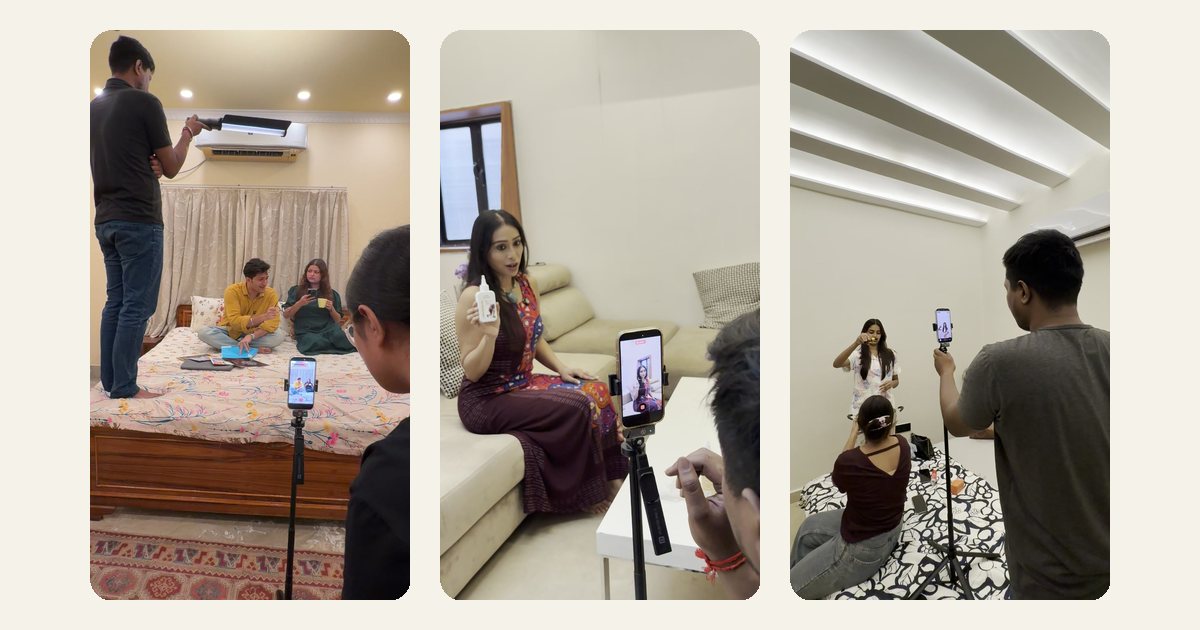
In our production work at The UGC Agency, we brief creators to deliver the hook in the first 2 seconds, not the product name, not a greeting. The question "what is this video about?" should be answered for the viewer before their thumb moves.
Step 5: Build a Content Calendar, Not a One-Time Shoot
A strategy is not a one-time creative shoot. Brands that see compounding results treat UGC like editorial publishing: consistent, varied, and tied to a calendar. A simple monthly cadence for a D2C brand might look like this:
- Week 1: 2 awareness reels (problem-hook format, organic posting + Rs. 2,000 boost each)
- Week 2: 1 consideration video (creator review, 60–90 seconds, YouTube Shorts + Instagram)
- Week 3: 1 conversion-focused reel (discount code, strong CTA, run as paid Meta ad)
- Week 4: 1 retention/community piece (customer re-order testimonial or unboxing, organic only)
This gives you 5 live assets per month, a mix of organic and paid, coverage across the funnel, and enough data to make optimisation decisions by month two. Language diversity matters here too: if you sell across India, even one video per month in Hindi, Tamil, or Telugu alongside English will meaningfully expand your addressable audience at relatively low additional cost (brief the same script to a creator in that language).
Step 6: Measure the Right Numbers
For beginners, three metrics tell you almost everything you need to know about whether your UGC strategy is working:
- Hook retention rate, what percentage of viewers watch past the first 3 seconds? Below 40% on Instagram Reels means your hook is not landing. This is the number to fix first before spending on distribution.
- Cost per link click (CPLC), when you boost a UGC creative, what does it cost to get someone to click through to your product page? A CPLC under Rs. 8–12 for a fashion or beauty brand in India is a healthy benchmark at micro-creator scale. If you are paying Rs. 25+, the creative or the targeting needs work.
- Creator-attributed conversions, for content with discount codes or unique UTM links, track actual purchases back to each creator. This tells you which creator profiles and video styles convert, not just which ones look nice.
Review these numbers after every 30-day cycle and use them to decide which creator profiles to re-book, which formats to retire, and where to shift your paid amplification budget. This review loop, brief, produce, distribute, measure, adjust, is the actual engine of a profitable UGC strategy. The content is the fuel; the loop is the engine.
If you are ready to move from planning to execution and want a partner who handles creator sourcing, briefing, production, and amplification under one roof, explore our plans at The UGC Agency, everything from a starter pack to full monthly retainers built around your specific funnel goals.