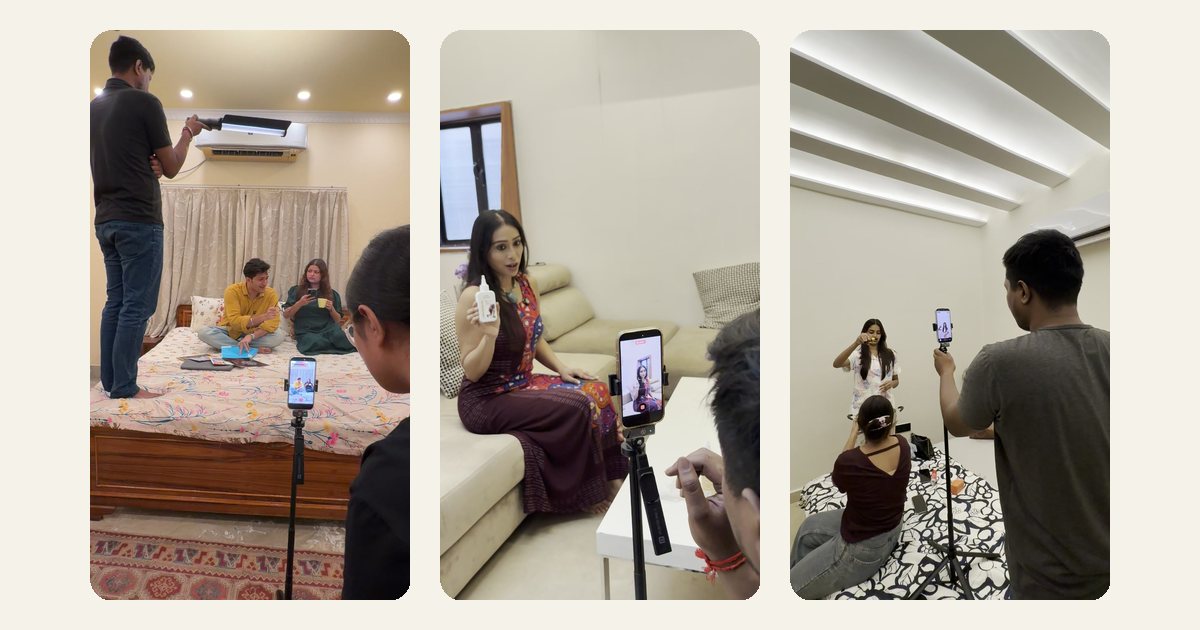
A skincare brand recently received a surge of creator-submitted videos after launching an open brief. Most clips looked great, natural lighting, relatable testimonials, authentic reactions. But buried in the batch were three videos where creators had casually mentioned a competitor product by name and one where a creator made a therapeutic claim ("cures acne completely") that no brand, under ASCI guidelines, can legally stand behind. That is the brand safety problem nobody talks about enough: UGC is only as safe as the system you build around it.
The good news is that brand safety and creator authenticity are not opposites. The brands we work with that get the best results do not choose one over the other, they build a structured workflow that lets genuine creator voices come through while ensuring every piece of content can safely go live on a Meta campaign, a YouTube pre-roll, or an Amazon product listing. Here is exactly how to do that.
Step 1: Define Your Non-Negotiables Before You Brief a Single Creator
Brand safety starts upstream, not in the review queue. Before reaching out to any creator, document two lists:
- Hard stops, claims, visuals, or comparisons that are categorically off-limits. For a food brand this typically means medical efficacy claims. For a financial product, any implied return guarantees. For a personal care brand, before-and-after framing that implies treatment (this directly implicates ASCI's Guidelines for Advertising of Cosmetics and Personal Care Products).
- Brand guardrails, softer rules like tone, language mix, competitor mention policy, logo visibility requirements, and any category-specific disclaimers (e.g., "Results may vary" for weight-loss adjacent products).
These two lists go into every creator brief as a dedicated section, not a footnote. We brief creators with a simple phrase: "This is what will get your video rejected outright, and this is what will require a re-shoot." When creators know the rules before filming, you lose far less money to reshoots.
Step 2: Tier Your Creator Pool by Risk Profile
Not every creator carries the same compliance risk. A nano-creator (5,000–25,000 followers) producing a casual unboxing for organic Instagram Reels carries different stakes than a mid-tier creator (200,000+ followers) whose video is being used in a paid Meta campaign reaching audiences across Delhi, Mumbai, and Bengaluru.
Build a simple three-tier system:
- Tier A (Organic-only, low-stakes): Minimal brand guidelines, fast approval. Used for social proof content, brand awareness, or seeding on platforms like Moj or Josh where creative speed matters more than precision.
- Tier B (Paid-eligible, standard review): Requires explicit compliance checklist sign-off. Creator must submit a written statement confirming they have no undisclosed brand relationships that conflict with the content (ASCI's influencer disclosure rules under the Digital Advertising Guidelines require disclosure of material connections, creators must tag #ad or #sponsored).
- Tier C (High-stakes or regulated categories): Mandatory legal review before any spend. This applies to fintech, health supplements, insurance, FMCG products making comparative claims, and alcohol-adjacent categories. In these categories, brands have faced ASCI complaints and ASA (Advertising Standards Authority)-equivalent action for creator posts that looked organic but made unsubstantiated claims.
Step 3: Structure the Creative Brief to Protect Authenticity
Here is where most brands go wrong: in the name of brand safety, they over-brief. They send a 12-page document with exact scripts, forced transitions, mandatory keywords, and specific camera angles. The resulting video looks exactly like what it is, a press release delivered by someone who looks nervous.
The framework that actually works is what we call a "boundaries + freedom" brief:
- Fixed elements (non-negotiable): Product must be shown in use. Brand name must be mentioned at least once naturally. Disclosure hashtag must appear in caption. No competitor names. No efficacy claims beyond the approved claim set.
- Guided elements (suggested, not scripted): Recommended hook formats (question-based, problem-reveal, reaction). Suggested proof points the creator can personalise. Language preference (Hindi-dominant, bilingual, or regional, Tamil for a Chennai campaign, for instance).
- Free elements (entirely the creator's voice): Storytelling approach, visual style, pace, humour, cultural references, personal experience framing.
This structure means creators have genuine creative ownership of the content that makes UGC feel authentic, while the compliance-sensitive parts remain controlled.
Step 4: Run a Two-Layer Review Process
A single review step is almost always insufficient for brands running paid campaigns. We recommend a two-layer structure:
- Layer 1, Creative review (internal or agency): Check for brand guideline adherence, tone consistency, visual quality, and disclosure compliance. This happens within 24–48 hours of submission. Feedback is structured: reject outright (hard-stop violation), request specific edit (re-record one line, remove a phrase), or approve with minor caption change.
- Layer 2, Compliance spot-check (for Tier B and Tier C content): A checklist-based pass against ASCI rules for the relevant category. For health and wellness categories, this should include checking the approved claim list against what the creator actually said, even paraphrasing can shift meaning enough to constitute a non-compliant claim.
ASCI processed over 8,000 complaints in 2023-24, with influencer and digital content accounting for a growing share. The regulator's focus on undisclosed paid promotions and unsubstantiated health claims has sharpened, brands, not just creators, are held accountable for content they amplify with paid spend.
One practical note: if you are running a campaign across Hindi, Tamil, Telugu, and Marathi with regional creators, build the review checklist in the language of the content, not just in English. A claim that reads as a neutral personal opinion in Tamil may map to a regulated statement when translated. Having a native-language reviewer in your process is not optional for regulated categories.
Step 5: Build a Living Compliance Library
Brand safety is not a one-time setup. As your UGC volume grows, say, from 10 videos a month to 80, the complexity compounds. Build and maintain:
- An approved claim bank: A document (even a shared Google Sheet works) listing every claim that has been legally cleared for use, in the exact phrasing that is cleared. Creators and briefing teams pull from this. Nothing outside the bank goes into a brief as a "suggested talking point."
- A rejection log: Every video rejected and why. This becomes training material for future briefs and helps identify patterns, if 40% of rejections are from creators misunderstanding the "no comparative claim" rule, that is a brief clarity problem, not a creator quality problem.
- A creator compliance score: A simple rating (1–5) for each creator in your pool based on their submission accuracy. High-compliance creators get faster turnaround and priority for paid campaigns. Lower-scoring creators stay in organic-only pools until they demonstrate consistency.
For brands spending between Rs. 4–8 lakh per month on UGC-led campaigns, this library pays for itself many times over by preventing a single high-profile ASCI complaint or platform ad disapproval that can freeze an entire campaign mid-flight.
Step 6: Disclose Properly, Every Time, Without Exception
ASCI's Influencer Advertising on Digital Media Guidelines (effective 2021, updated since) require that any material connection between a creator and brand, payment, gifting, free product, discount codes, be disclosed prominently and in a language the audience understands. For a Hindi-language Reel, the disclosure must be in Hindi, not buried in English at the end of a long caption.
Practical implementation:
- Require creators to place the disclosure label in the video itself (on-screen text or verbal mention), not just the caption, especially for Reels and Shorts where captions are often collapsed.
- For Instagram, use the branded content tool (Paid Partnership label) wherever possible, it creates a clear, platform-native disclosure that also unlocks whitelisting for paid amplification.
- For YouTube, verbal disclosure in the first 30 seconds is standard. Creator must also check the "includes paid promotion" flag in YouTube settings.
- For Amazon content (video reviews, A+ UGC modules), follow Amazon's own community guidelines on disclosure, which operate separately from ASCI.
The disclosure step feels administrative, but it is actually a trust mechanism. Audiences in India, particularly in Tier cities across India where ad literacy is high, respond more positively to clearly disclosed content than to content that feels like a covert promotion. Transparency is not a compliance cost; it is a creative asset.
What the Balance Actually Looks Like in Practice
Brand safety does not mean scrubbed, corporate-feeling content. It means structured creative freedom. A well-briefed creator who knows exactly what she cannot say will spend her creative energy on what she can say, and that is where the authentic, high-performing content comes from. The brands that treat compliance as a creative constraint rather than a creative killer are the ones running 60–80 video UGC pipelines with consistent platform approvals, low rejection rates, and genuine audience trust.
At Rs. 60,000 and up, a structured UGC programme, with tiered creators, a living compliance library, and a two-layer review process, is absolutely achievable for D2C and FMCG brands. If you want to see how we structure this for brands in your category, book a free consultation and we can walk through what a compliant, high-authenticity UGC pipeline looks like for your specific product and audience.