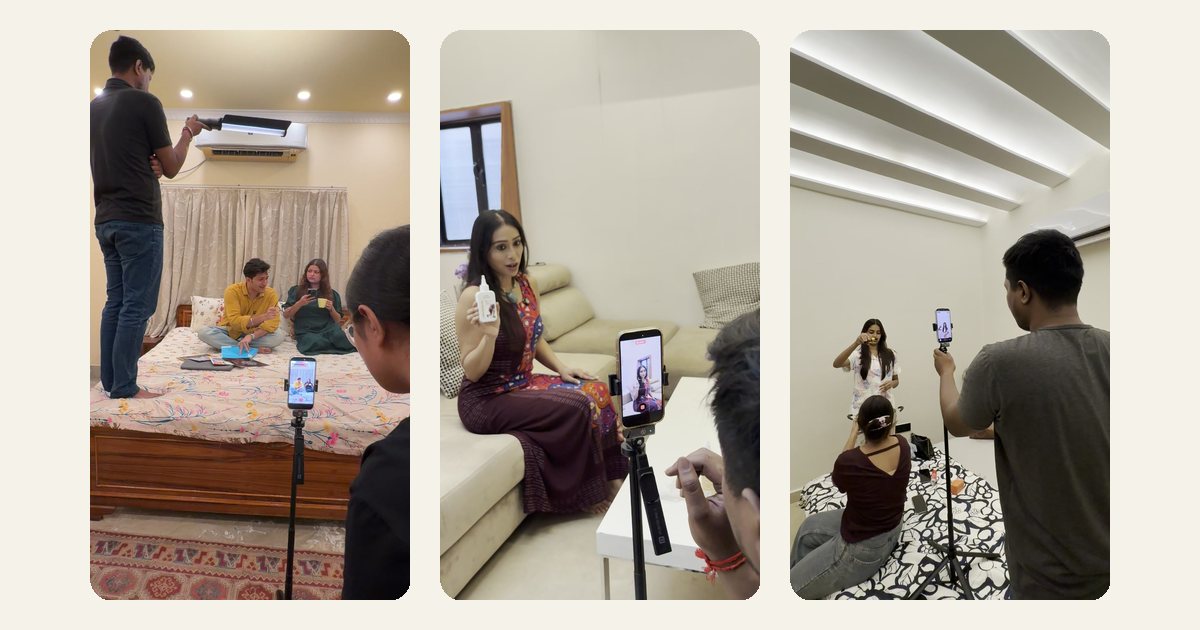
Most D2C brands figure out UGC the hard way: they run one round of creator videos, see a spike in ROAS, double the spend, and then watch performance collapse three weeks later because they are cycling the same four clips. The problem is not the format, it is the absence of a system. What separates brands doing Rs.2–3 crore a month on Meta from those stuck at Rs.20–30 lakh is usually not budget; it is the operational architecture behind how UGC is briefed, iterated, and retired.
This is an advanced playbook for brands that have already validated UGC and now need to scale it without the wheels coming off. We will cover creative architecture, testing frameworks, ASCI compliance at scale, vernacular expansion, and the metrics that actually predict longevity, not just first-week ROAS.
Build a Creative Architecture, Not a Creative Library
A library is passive. An architecture is a living system with defined roles for each asset type. At the top level, you have your hero UGC, one to three high-production creator videos that carry the brand's core value proposition. These are evergreen, re-edited quarterly. Below that are challenger creatives, new hooks, new angles, new creators testing whether a different narrative outperforms the hero. At the base are reactive creatives, fast-turnaround content responding to a trending audio, a competitor claim, or a seasonal spike.
- Hero assets: 60–90 seconds, full testimonial arc, shot with proper lighting and clean audio. Budget Rs.8,000–15,000 per video. Refresh every 60–90 days or when CTR drops below 1.2%.
- Challenger assets: 20–45 seconds, testing a single variable, hook phrasing, creator demographic, problem framing. Budget Rs.3,000–6,000 per video. Run minimum 3 challengers per active hero.
- Reactive assets: 15–30 seconds, briefed and delivered in 5–7 days. Budget Rs.1,500–3,000. These do not need to win at scale; they need to arrive while the moment is alive.
We brief creators differently depending on which tier they are producing for. Hero briefs run to two pages with references, emotional beats, and specific claims to include. Reactive briefs are sometimes a voice note and a trending audio link. Conflating the two is where most brands waste money.
Run Structured Creative Tests, Not Intuition Bets
Scaling UGC without a testing framework means you are paying for opinions. The discipline is to isolate variables and accumulate learnings that compound across campaigns.
The highest-leverage variable to test first is the hook, the first three seconds. We have repeatedly seen hook changes shift thumb-stop rate by 30–50% on otherwise identical videos. A useful hook testing pattern: brief three to five creators on the same product story but give each a different opening line. Run all five in a single ad set with equal budgets for seven days. The winner's hook gets grafted onto future briefs.
- Variables worth testing: hook phrasing, creator gender/age, problem vs. aspiration framing, Hindi vs. English vs. regional language, with vs. without text overlays, duration (20s vs. 45s vs. 60s).
- Variables to hold constant: product shown, core claim, CTA phrasing (until you have enough data to test CTA separately).
- Minimum spend per variant: Rs.3,000–5,000 before drawing conclusions. Lower spends give noisy data on smaller accounts.
Document every test result in a shared sheet with the variable, winner, confidence level, and the account context (product, audience, placement). After 20–30 tests you will start seeing patterns, for example, a skincare brand might learn that problem-framing hooks consistently beat aspiration hooks for their 25–34 female audience on Reels but not on Stories. That insight is worth more than any individual winning creative.
ASCI Compliance Is a Risk Management Problem, Not a Checklist
The Advertising Standards Council of India updated its influencer disclosure guidelines in 2023, and the scrutiny on D2C brands specifically has increased. At scale, ASCI compliance is not something you handle ad-hoc, it needs to be baked into the production workflow.
- Mandatory disclosures: Any paid creator content must carry a clear disclosure, "#Ad", "#Sponsored", or "Paid Partnership" visible on screen for the full duration or clearly placed in the caption. Buried disclosures in a string of hashtags are non-compliant.
- Health and wellness claims: For nutraceuticals, ayurvedic products, and fitness supplements (a huge segment of Indian D2C), creators cannot claim to cure, treat, or guarantee results. Phrases like "helped me feel lighter", "I noticed a difference" are acceptable; "clinically proven to reduce weight" from a non-clinical creator is not. CDSCO guidelines layer on top of ASCI here.
- Comparison claims: If your creator says "better than [competitor]", that claim needs substantiation on file. We advise briefs to use category comparisons ("better than traditional creams") rather than named-brand comparisons unless the brand has third-party lab data ready.
- Deepfake and AI-generated visuals: ASCI's 2024 guidance specifically flags AI-manipulated before/after images. If you are using AI enhancement tools on creator footage, review this guidance before publishing.
Build a one-page compliance brief addendum for creators that covers disclosures, prohibited claims for your product category, and what to do if they receive a complaint. Most creators in Tier cities across India, Lucknow, Indore, Coimbatore, have never seen one. Sending it once significantly reduces your exposure.
Vernacular Scaling Is Not Just Translation
One of the highest-ROI moves for a D2C brand that has cracked performance in English-language UGC is systematic vernacular expansion. But briefing a Tamil creator to "say the same thing in Tamil" is not vernacular strategy, it is translation, and it shows.
Genuine vernacular UGC requires rethinking the cultural reference points in the creative. A hair oil brand that uses "monsoon frizz" as the hook problem resonates in Mumbai and Kolkata. In Chennai, the same problem is more often framed around humidity from April through June, a different emotional trigger, different seasonal timing. A skincare brand that uses "shaadi season" framing in Hindi-belt audiences needs a different cultural hook for Tamil Nadu (Pongal gifting, temple function prep) or Kerala (Onam, wedding season is different months).
- Prioritise Hindi, Tamil, Telugu, and Kannada first, these four cover the bulk of digitally active, commercially relevant audiences for most D2C categories.
- Brief regional creators on the emotional problem, not the script. Let them find their own words. Scripted regional content sounds dubbed even when it is not.
- Do not repurpose the same product footage with a different voiceover. Shoot with the regional creator holding and using the product, the authenticity signal is in the handling, not just the language.
- Test vernacular creatives in separate ad sets with regional language targeting, not broad India targeting where they get outcompeted by English creatives with higher historical CTR.
Advanced Metrics: Beyond ROAS and CPM
Once UGC is a serious channel, the metrics that matter shift. ROAS tells you whether yesterday's batch worked. The following metrics tell you whether your creative programme is healthy enough to sustain performance next quarter.
- Hook rate (3-second view rate): Percentage of people who watch past three seconds. Below 25% on Reels usually means the hook has lost its novelty or is mismatched to the audience. Track this weekly per creative, not just per campaign.
- Hold rate (video completion / 3-second views): Measures whether the narrative holds after the hook. A high hook rate with a low hold rate means your creator is making interesting openings that do not deliver. Brief accordingly.
- Creative longevity (weeks to 20% ROAS decay): How long does a winning creative hold its performance before decay? Tracking this per creator type gives you reliable production cadence data. Some brands find that raw, lo-fi creator content decays faster than polished testimonials; others see the reverse. You need your own data.
- Cost per winning creative: Total production spend divided by number of creatives that beat your control ad. This is the real efficiency metric for your UGC programme, not cost per video.
The goal is not to produce more UGC, it is to produce fewer, better-tested creatives that stay in rotation longer. A brand spending Rs.1.5 lakh on 20 videos with no testing infrastructure will consistently underperform a brand spending the same amount on 8 videos with a structured test-and-learn loop.
Creator Relationship Management at Scale
When you move past occasional one-off briefs into a continuous production model, the quality of your creator relationships becomes a direct performance variable. Creators who understand your brand deeply produce better content with less revision, and revisions cost you time you do not have when running fast-moving performance campaigns.
- Build a tiered roster: Identify 3–5 "anchor" creators who get first access to new launches, slightly higher fees, and ongoing feedback. They become brand fluent over time. The broader pool of 15–30 creators handles volume and testing.
- Feedback loops matter: Share performance data with anchor creators after each campaign, which hooks won, what held attention, what did not. Creators who see their data improve their instincts. Most agencies do not do this. It is a significant competitive edge.
- Contracts for commercial usage: For any content you intend to run as paid ads, ensure your contract explicitly covers Meta/Google ad usage rights, duration (we recommend minimum 12 months), and whether content can be edited/cropped/subtitled. Disputes over this are one of the most common friction points we see when brands try to scale UGC programmes.
- Payment timelines affect quality: Creators on 45–60 day payment cycles deprioritise your briefs. If you want fast turnarounds and genuine effort, pay within 7–10 days of content approval. For a mid-size D2C brand doing Rs.8–12 lakh monthly in creator fees, this is operationally achievable and the quality differential is visible.
If your current UGC programme has the foundations but needs a more systematic approach to testing, compliance, or vernacular scale, we are happy to walk through what that looks like for your specific category and audience. Explore our recent production work to see how we have built these systems for brands in beauty, wellness, and D2C packaged goods, or book a consultation to map out the next phase for your brand.