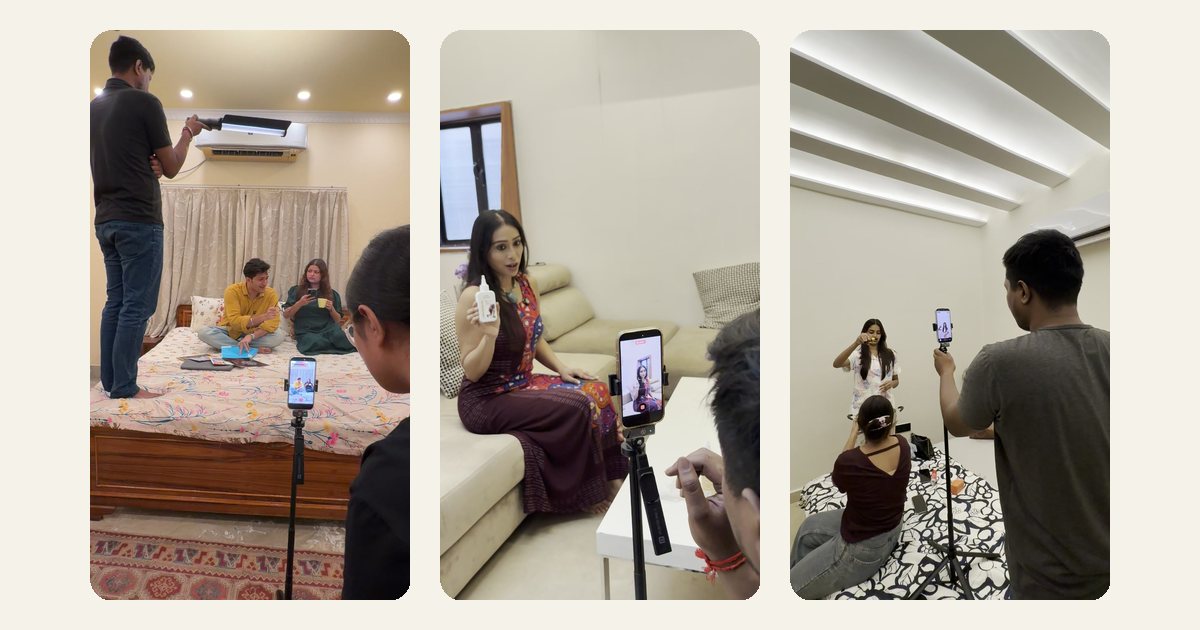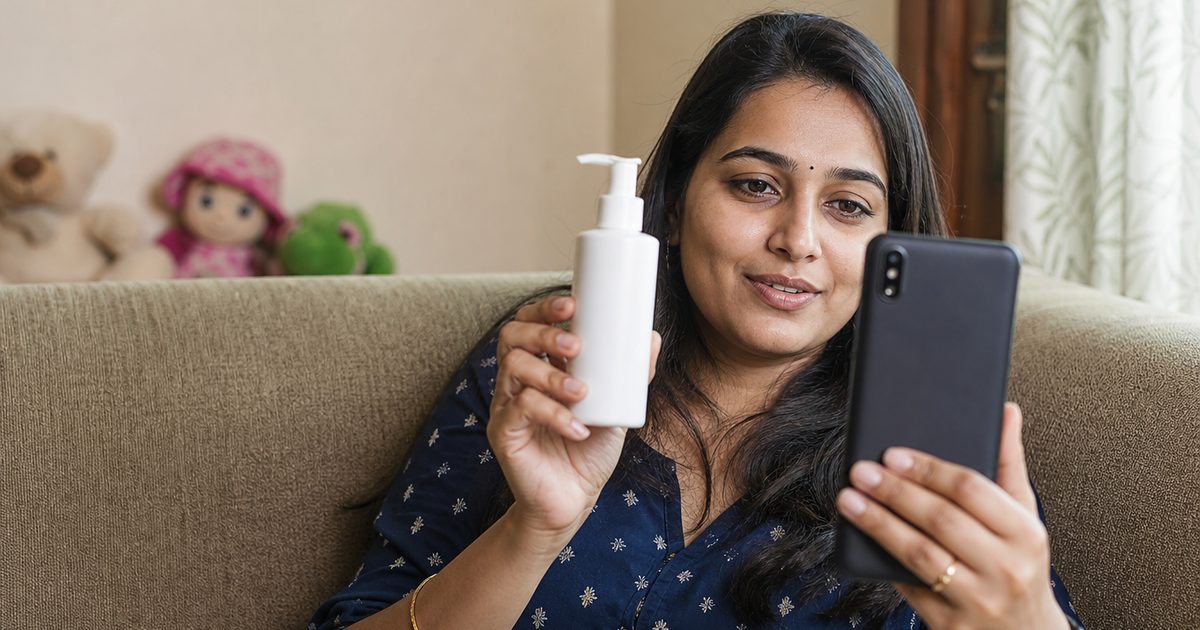
A new mother in Bengaluru spends roughly 20 minutes on Instagram Reels before buying a baby skincare product, not reading product descriptions, but watching other mothers apply the cream, show the packaging, and narrate what happened to their newborn's rashes after two weeks. That decision journey is the ROI story of UGC for baby products brands in one scene.
Baby products occupy a category where trust is non-negotiable. Parents don't just want a good deal; they want proof that something is safe. Studio photography and brand claims alone can't deliver that. This guide walks through exactly how to build a UGC programme for a baby products brand, from briefing creators to measuring what actually matters, with realistic numbers for the Indian market.
Step 1: Understand What Parents in India Actually Need to See
Before you brief a single creator, map the purchase anxiety specific to your product. For baby products in India, these anxieties cluster around:
- Ingredient safety: Parents in Tier cities across India actively check for parabens, sulphates, and artificial fragrance. Creators who narrate ingredients in plain Hindi or regional language ("ismein koi chemical fragrance nahi hai") convert significantly better than those who just read the label.
- Skin sensitivity proof: Eczema, heat rash, and cradle cap are common concerns in India's humid climate. Creators who show a before/after on their child's actual skin, even a minor improvement, give parents the visual confirmation they need.
- Quantity vs. price: At Rs. 399–Rs. 799 for a 100ml baby lotion, parents want to see how far the product stretches. A creator demonstrating a single pump covering both legs of a 6-month-old addresses a real objection.
- Local doctor or paediatrician context: Mentioning "hamare paediatrician ne recommend kiya", even informally, dramatically increases trust. Brief creators to share this authentically only if it is true for them.
Spend one hour reading comments on your top competitors' Instagram posts before you finalise your brief. The objections parents raise there are the objections your UGC needs to answer.
Step 2: Select the Right Creator Profile, Not Just Any Parent Influencer
The baby products category does best with nano and micro creators (5,000–80,000 followers) who are actual parents of infants or toddlers. Macro influencers can drive awareness but they rarely move the needle on purchase intent in this category because parents discount aspirational content when their baby's skin is at stake.
Specific profiles to look for on Instagram and YouTube:
- New parent accounts (0–18 months): Followers of these creators are in the exact purchase window, buying diapers, oils, shampoos, and skincare for the first time. A post that says "yeh meri 4-month ki beti ke liye use kar rahi hoon" carries immediate credibility.
- Mommy bloggers in Hindi, Tamil, Telugu, Bengali: Regional language content consistently outperforms English-only content for baby products in India. A Tamil creator in Chennai showing baby massage oil usage will convert Tamil-speaking parents in Coimbatore, Madurai, and the diaspora far better than a generic Hindi reel.
- Paediatrician-adjacent creators: Some paediatric nurses, lactation consultants, and child development educators run small Instagram accounts. These aren't influencers in the traditional sense, but a single honest product mention from one of them can be worth fifty standard creator posts for a brand like a nasal aspirator, feeding bottle, or baby probiotic.
Budget benchmark: for a baby skincare brand with a monthly UGC spend of Rs. 1.5 lakh, you can typically engage 8–12 nano creators (Rs. 5,000–12,000 per creator per deliverable) and get 15–20 pieces of usable content across formats, Reels, Stories, and 60-second YouTube Shorts.
Step 3: Brief Creators for Safety-First Storytelling (ASCI Compliance Built In)
Baby products are among the most scrutinised categories under the ASCI (Advertising Standards Council of India) guidelines. Any creator you engage must clearly disclose paid partnerships using the "#ad" or "#sponsored" hashtag or the platform's built-in paid partnership label. This is non-negotiable and protects both the brand and the creator from ASCI complaints.
Beyond disclosure, structure your brief around a three-part story arc:
- The problem moment (0–3 seconds): The hook must surface a real parental concern. "Mere bacche ki skin bahut dry ho rahi thi" is more effective than "look at this amazing product I got." Parents scroll fast; the problem hook stops them.
- The authentic use demonstration (4–30 seconds): Show, don't just tell. Application on actual baby skin, the texture, how much product is needed, the baby's reaction, these details cannot be faked and are exactly what converts. We brief creators to capture this in good natural light, not studio setups, because clinical lighting actually reduces trust in this category.
- The honest outcome (final 10–15 seconds): Ask creators to share a genuine result over 5–7 days of use, not a miraculous overnight transformation. Parents are sceptical; a measured, honest "after one week the dryness reduced noticeably" is more believable than a dramatic claim, and stays within ASCI's guidelines on result-based claims for cosmetics.
Never ask a creator to claim your baby product has been "dermatologically tested" or "paediatrician recommended" unless you can provide the creator with documentation proving it. ASCI complaints in the baby and mother care segment have increased sharply since 2023, and substantiation is now routinely requested.
Step 4: Choose the Right Formats for Each Platform
Not every content format works equally well for baby products across Indian platforms. Here is how to allocate your formats:
- Instagram Reels (30–60 seconds): The primary performance driver for baby skincare, diapers, and feeding accessories. Focus on demonstrating the product in use. Target placements in Meta Ads Manager using interest targeting around "parenting", "infant care", and life event targeting for "new parent" within 6–12 months.
- Instagram Stories (series of 3–5 slides): Excellent for showing a multi-day journey, Day 1 to Day 7 use, because the sequential format mirrors how parents actually evaluate a product. Stories also allow swipe-up links directly to product pages if the brand runs a creator's content as an ad.
- YouTube Shorts + long-form (6–10 minutes): Hindi and regional language YouTube channels covering "baby care tips" and "new mom hacks" attract parents who are earlier in the research phase. A 7-minute honest review of a baby massage oil will rank in YouTube search for queries like "best baby oil for winters in India" for months. The one-time investment in a detailed video pays back long after the Reel is buried in the algorithm.
- WhatsApp Status (organic seeding): Underused but effective in Tier 2 and Tier cities across India. Creators with strong local community ties, mom groups in Jaipur, Lucknow, Surat, often share their genuine recommendations via WhatsApp Status, reaching tight-knit parent networks that paid Instagram ads cannot easily penetrate. This works best as an organic add-on when creators are genuinely enthusiastic about the product.
Step 5: Set Up Tracking That Captures the Real ROI
Baby products have a purchase cycle that can span 2–4 weeks from first exposure to checkout, especially for first-time parents making a high-consideration buy. Standard last-click attribution will dramatically undercount UGC's contribution. Set up tracking this way:
- UTM parameters per creator: Give every creator a unique UTM link or discount code (e.g. MIRA10, PRIYA15). This lets you isolate traffic and conversions by creator, format, and language, critical when deciding whom to re-engage in the next campaign cycle.
- View-through conversion windows: In Meta Ads Manager, when boosting UGC as dark posts, set a 7-day click + 1-day view attribution window as the baseline. For baby products with longer decision cycles, compare it against a 7-day view window to see how much assisted revenue you are missing in standard reports.
- Repeat purchase rate: Baby skincare, diapers, and baby food are high-repurchase categories. Customers acquired via UGC, who arrived with trust pre-built, tend to show higher 90-day repurchase rates than customers acquired via discount-driven performance ads. Track cohorts separately using your e-commerce platform's (Shopify, WooCommerce, or a marketplace dashboard) customer lifetime value report.
- Cost per acquisition benchmarks: For D2C baby products in India, a well-run UGC ad campaign typically achieves a CPA of Rs. 350–Rs. 700 for products priced Rs. 500–Rs. 1,200. If your current Meta campaigns are running north of Rs. 900 CPA, replacing or supplementing your creative with genuine parent UGC is the fastest lever to pull before touching bid strategy or audience.
Step 6: Repurpose UGC Across Every Touchpoint
The cost efficiency of a UGC programme is multiplied when you extract value from every piece of content across multiple surfaces, not just the original post.
- Product detail pages (PDPs): Embedding a creator Reel or photo on the product page of a baby oil or moisturiser consistently improves conversion rates. Parents landing on a PDP who see a real mother applying the product on a real baby are more likely to add to cart than those who see only professional product shots.
- Meta retargeting creatives: Repurpose the 15-second outcome clip from a creator's Reel as a standalone retargeting ad for users who visited the product page but did not purchase. This touchpoint targets the "almost converted" parent with the most persuasive element, the honest result.
- Email and WhatsApp broadcast sequences: A new subscriber who signed up via a parenting blog deserves onboarding that feels human. Embedding a creator's testimonial GIF or short video clip in a welcome email or WhatsApp broadcast (via official Business API) delivers social proof without the friction of pushing someone back to Instagram.
- Amazon and Flipkart A+ content: Marketplace listings for baby products allow video embedding in A+ sections. A 45-second creator video showing real usage on an Amazon listing directly addresses the purchase hesitation of parents browsing there and requires zero additional ad spend after the content is created.
If you are a baby products brand spending Rs. 60,000 or more per month on digital advertising and still relying on studio creatives alone, a structured UGC programme is likely the single highest-return change you can make to your content mix. Talk to us about building one, we can map out a creator brief, platform plan, and measurement framework specific to your product and your audience in one session.