Skincare is the most brutally honest category in D2C. A foundation can hide texture on camera; a serum cannot hide the fact that it didn't work. That accountability is precisely why UGC performs so well here, real skin, real lighting, real results carry a credibility that a polished studio ad simply cannot replicate. But "post some creator videos" is not a strategy. What follows is a step-by-step build, from brief to media buy, grounded in how Indian skincare brands actually run UGC campaigns.
A note on scale before we start: the steps below apply whether you are spending Rs.1.5 lakh a month on creators or Rs.15 lakh. The sequence stays the same; only the volume and rigour change.
Step 1: Define Your Proof Points Before You Brief a Single Creator
Most weak skincare UGC traces back to briefs that ask creators to "talk about how amazing the product is." That produces vague testimonials. Instead, sit with your product team and extract three to five falsifiable claims, things a creator can demonstrate or measure.
- Before/after skin texture (photographable under natural window light at Day 0 and Day 28)
- Absorption speed (a 15-second rub-in showing no white cast, specific to Indian NC-40+ skin tones that often flag this problem)
- Fragrance-free or no-sting claim (creator applies near eye area on camera, powerful for sensitive-skin SKUs)
- Stackability (how it sits under SPF or under makeup, a real concern for working women in Chennai or Mumbai who layer products in humidity)
Each proof point becomes its own creative direction. A creator doesn't need to cover all of them, she covers one, fully, in under 60 seconds.
ASCI's 2023 guidelines on influencer disclosures and unsubstantiated claims apply here. Any before/after must reflect actual use by the specific creator, and claims like "clinically tested" require substantiation. Brief creators to use phrases like "works for my skin" rather than universal efficacy statements to stay compliant.
Step 2: Build a Creator Matrix, Not a Creator List
The reflex in Indian skincare marketing is to find large beauty influencers on Instagram. That's rarely where the ROI sits. We brief creators across a three-tier matrix defined by reach and content type:
- Nano creators (5K–50K followers): These are your highest-trust tier. A 22-year-old dermatology student in Pune reviewing your niacinamide serum to her 18,000 followers converts better than a 500K lifestyle creator because her audience trusts her specifically on skin topics. Cost per video: Rs.3,000–Rs.12,000.
- Mid-tier creators (50K–300K): Use these for reach and for formats like GRWM (Get Ready With Me) where the product fits naturally. Cost per video: Rs.15,000–Rs.60,000.
- Regional-language creators: This is the most underused lever in Indian skincare. A Tamil creator in Coimbatore making Reels in Tamil for an SPF brand targeting South India will out-perform a Hindi creator in reach-to-engagement ratio almost every time. Same logic applies to Bengali, Marathi, Kannada. Cost is often 30–40% lower than Hindi equivalents at the same follower count.
For a typical month-one test, we recommend a mix of 8–12 nano creators and 2–3 mid-tier creators rather than one large influencer partnership. The resulting creative diversity also gives you far more raw material for paid amplification.
Step 3: Write Briefs That Produce Usable Footage
A creator brief for skincare UGC needs five specific components, and a production note that many brands miss:
- Hook direction: Give two or three opening-line options. "My skin was doing THIS before I tried this serum" outperforms "Hi guys, I'm reviewing a new product" because it sets up a problem immediately.
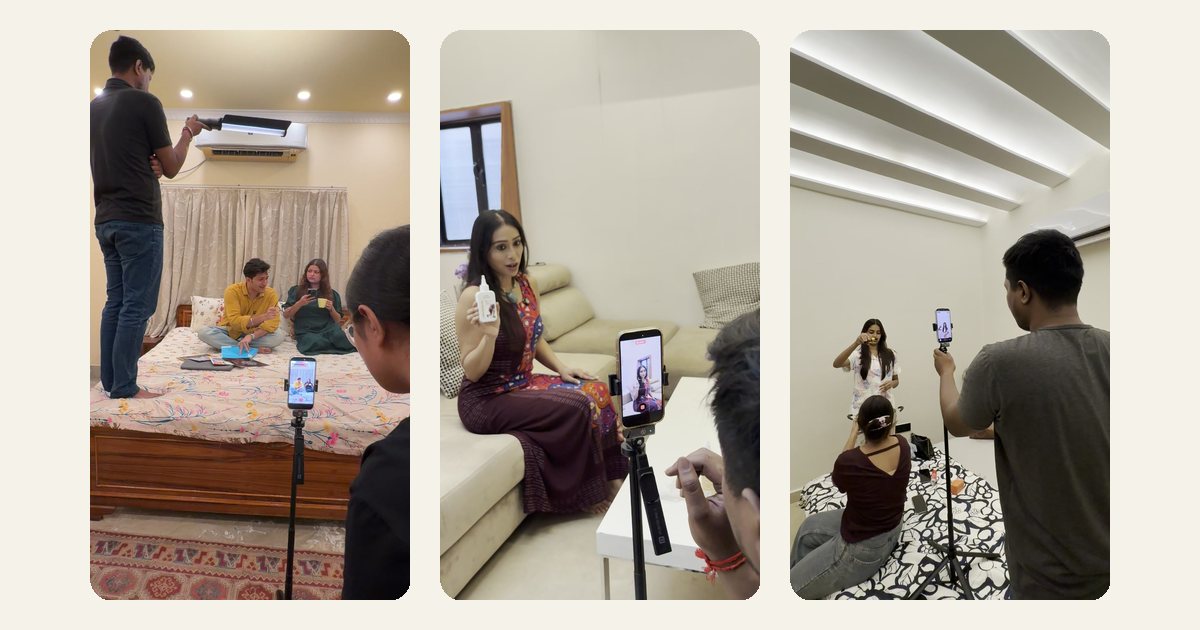
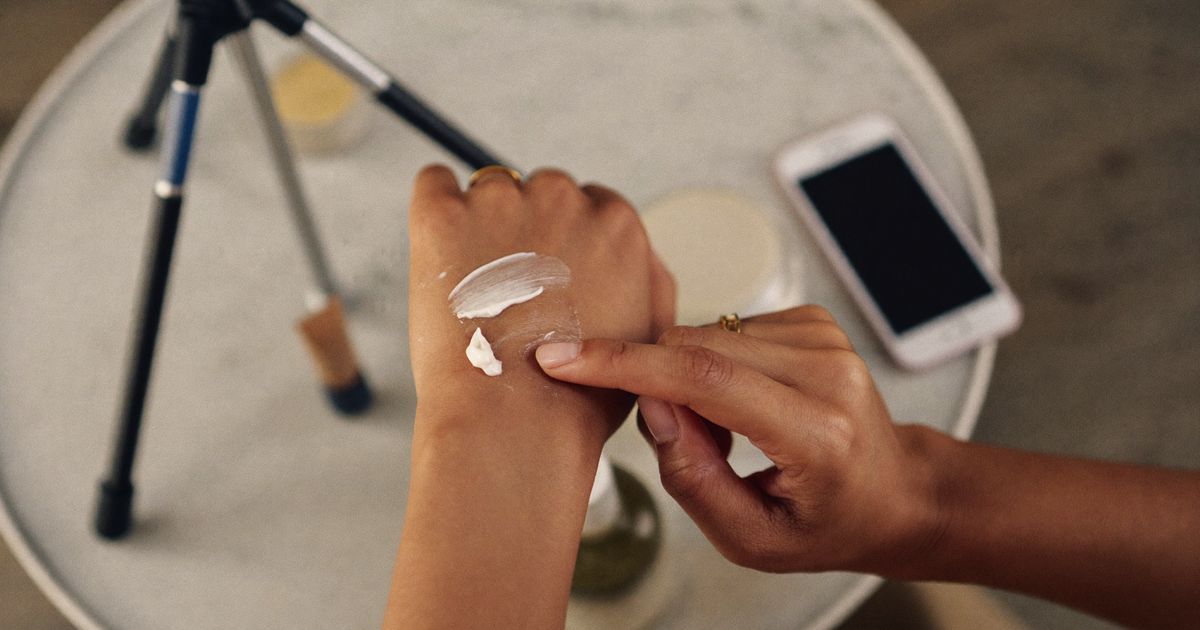
- Required visual moments: List them. Pump/dispense of product, texture on fingertip, application on face, close-up of skin after 30 seconds. These are non-negotiable shots for the editor.
- Lighting spec: Ask for natural window light, no ring lights. Ring lights create an artificial softness that trained eyes, and algorithms, read as "ad." Natural light shows real skin, which is the whole point.
- Duration target: 45–60 seconds for Instagram Reels and YouTube Shorts; 20–30 seconds for Meta feed ads. Brief for the longer version; you can cut down in post.
- What NOT to say: Specifically list any claims that are legally sensitive (e.g., "removes dark spots in 7 days" without clinical backing) or anything that conflicts with ASCI guidelines. Creators aren't lawyers; it's your job to make the guardrails explicit.
The production note: ask creators to film in portrait (9:16), uncompressed or at the highest quality their phone allows, and to share the raw file, not the Instagram-compressed export. This matters when you run the content as paid ads; Meta and Google both reward higher-resolution uploads with better delivery.
Step 4: Set Up a Usage-Rights and Whitelisting Framework Early
This step is frequently skipped until it becomes urgent. When a creator's video performs well organically, you'll want to run it as a paid ad, and unless your contract explicitly grants usage rights and whitelisting permission, you're legally exposed.
For Indian brands working with creators under Rs.30,000 per video, a simple amendment to the engagement letter is enough. Specify: the brand receives a 12-month, non-exclusive licence to use the content in paid advertising on Meta, Google, and YouTube. Also include a whitelisting clause, the creator grants permission to run ads from their handle, not just the brand's page. Whitelisted ads (running from the creator's handle) consistently outperform the same content running from a brand handle in our Meta campaigns; the cost-per-click difference in the skincare category is often 20–35%.
Step 5: Structure Your Testing Calendar Around Skin Seasons
Indian skincare buying behaviour is strongly seasonal, and your UGC calendar should reflect it rather than running evergreen content year-round.
- March–May (summer): SPF, oil-control, matte finish. Highest search volume for "best sunscreen India." UGC angle: sweat-proof, no white cast on deeper skin tones.
- June–September (monsoon): Fungal acne, humidity-proof skincare, minimal routine. Creators in Mumbai, Kolkata, and Chennai are the most credible voices here because their climate is genuinely extreme.
- October–November (festive): Glow serums, bridal prep, gift sets. This is when mid-tier and macro creators deliver their best ROI because gifting is a social discovery behaviour.
- December–February (dry/winter): Moisturisers, barrier-repair products, lip care. North Indian creators (Delhi, Lucknow, Chandigarh) are the natural fit; their winter is real.
Plan your creator briefs 6–8 weeks ahead of each season shift. Content takes time to film, edit, review, and approve, and ASCI compliance review adds another layer if you're working with a registered influencer platform.
Step 6: Amplify Winners, Not Everything
The temptation is to put media spend behind every video you commissioned. That dilutes budget and produces mediocre average results. The correct approach is a structured test-and-amplify loop:
- Post all commissioned content organically on the creator's handle and the brand's own Instagram and YouTube Shorts.
- After 5–7 days, identify the top 20–25% by watch-through rate (not just likes). For Reels, this means 3-second plays and full-watch percentage. For Shorts, average view duration.
- Move those top performers into paid campaigns on Meta as dark posts (using whitelisting) and as YouTube Shorts ads. Starting spend: Rs.500–Rs.1,000 per day per creative, for 5 days.
- At day 5, pause underperformers, scale the one or two with the best cost-per-click or cost-per-add-to-cart.
This loop means you're always spending behind proof, not hope. Most Indian skincare brands we've worked with find their winning creative within the first 3–4 weeks of this process, then run that creative profitably for 8–12 weeks before fatigue sets in.
What a Realistic Monthly Budget Looks Like
To make this concrete: a skincare brand launching a UGC strategy from scratch, targeting a pan-India audience with a Hindi + Tamil language split, should budget roughly:
- Rs.60,000–Rs.80,000 on creator fees (8–10 nano + 2 mid-tier)
- Rs.10,000–Rs.15,000 on production coordination and brief development
- Rs.30,000–Rs.50,000 on paid amplification of winning creative
Total: Rs.1–1.5 lakh per month for a structured first quarter. By month three, assuming consistent testing, you'll have identified your top-performing creator profiles, your highest-converting proof points, and the seasonal angles that drive your lowest cost-per-purchase. That data compounds, it's the foundation for every campaign that follows.
If you want a tailored plan for your specific brand, SKU range, and budget, book a consultation with our team. We build UGC strategies for skincare brands across India and can walk you through creator selection, brief templates, and paid amplification frameworks specific to your category and price point.