A sofa photograph looks very different from a sofa lived-in. Home decor brands in India have always understood this, showrooms exist precisely so buyers can imagine themselves inside a space. What has changed is that this imagination-trigger no longer requires a showroom: it requires the right video, shot in the right home, by the right person. That shift is the entire foundation of why user-generated content works so well for home decor, and why brands from Mumbai apartment-essentials labels to Jaipur handcraft exporters are leaning into it.
If you are new to UGC, meaning you have never briefed a creator, never used a usage rights agreement, and are not sure how a 30-second Reel translates into actual sales, this guide is written for you. We will explain the mechanics from scratch, using examples grounded in the Indian market.
What "User-Generated Content" Actually Means for a Home Decor Brand
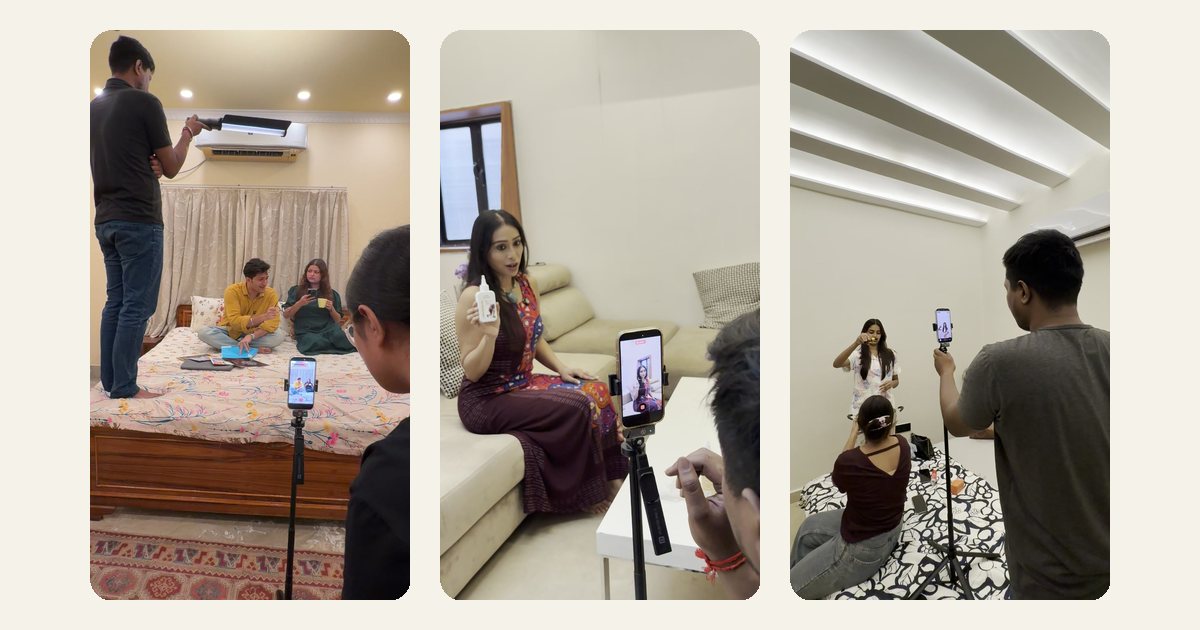
UGC, in practical terms, is video or photo content produced by real people (creators or genuine customers) that shows your product inside an actual living space, not a studio, not a white-cyclorama backdrop. For home decor specifically, this distinction matters enormously. A curtain filmed against a plain wall tells a buyer almost nothing. The same curtain filmed in a 2BHK in Bengaluru, with natural afternoon light and a cane chair in the corner, answers the buyer's real question: Will this look good in my home?
There are two main types of UGC for home decor:
- Creator-produced UGC: You engage a creator, typically someone with a home-decor, lifestyle, or interiors presence on Instagram or YouTube, send them the product, and brief them to film it in their actual home. You receive the raw or edited footage and run it as your own ad or organic post.
- Organic customer UGC: A customer independently posts about your product, tags your brand, and you request permission to repurpose it. This is harder to scale but carries extra credibility because the incentive is zero.
For scaling, meaning running paid ads with consistent creative volume, creator-produced UGC is the practical route. Organic repurposing supplements it.
Why Home Decor Is Uniquely Well-Suited to UGC
Most product categories benefit from UGC, but home decor benefits disproportionately because of a specific buying psychology: context anxiety. A buyer adding a Rs.4,500 macramé wall hanging to their cart is not anxious about the product quality alone, they are anxious about whether it will look right in their specific wall, with their existing colour palette. No amount of professional studio photography resolves this, because studio photography literally removes the context that matters.
A creator video filmed in a real Pune apartment, where the macramé hangs above a rattan shelf with some plants, directly addresses context anxiety. The buyer sees a real room, imperfect walls, real lighting conditions, and makes a much more confident decision. Lower return rates and higher repeat purchases follow as a downstream effect.
Indian buyers also tend to make home decor decisions with family input. A sharable Reel that a buyer can forward to their mother or spouse before purchasing is itself a conversion tool. Creator content formats naturally on Instagram and WhatsApp Status in ways that professional ad creatives often do not.
Platforms and Formats That Actually Work in India Right Now
Not all platforms are equal for home decor UGC in 2026. Here is a practical map:
- Instagram Reels (9:16): The primary distribution channel. A 20–45 second room-tour or "how I styled this" format works extremely well. For paid Meta ads, this exact format, creator face on camera, real home as backdrop, outperforms static images for home decor categories, particularly for audiences in Tier-cities across India (Mumbai, Delhi, Bengaluru, Hyderabad, Chennai).
- Instagram Stories (9:16): Better for retargeting. A creator's saved story highlight showing the product in a "before/after styling" format serves as persistent social proof that buyers visit before purchasing.
- YouTube Shorts: Useful for longer consideration journeys, think "affordable home decor haul under Rs.5,000" or "how I decorated my first flat in Delhi on a budget." These tend to have longer shelf lives than Reels and compound in search over months.
- WhatsApp Status repurposing: Several D2C home decor brands we work with now ask their sales or customer success team to post creator clips to WhatsApp Status. It is an underused touchpoint for direct-to-buyer communication, especially with customers who have already bought once.
TikTok is not available in India as of this writing, so any strategy built around it is not applicable here. The creative styles that made TikTok home decor content popular, quick-cut room reveals, fast styling transitions, have migrated almost entirely to Instagram Reels, which is where your effort should go.
Finding the Right Creators: A Beginner's Framework
You do not need a celebrity or a macro-influencer with 500,000 followers. In fact, for home decor specifically, micro-creators (10,000–80,000 followers) often produce better-performing content because their audience trusts them as peers rather than aspirational figures.
When evaluating a creator for a home decor brief, look for:
- A real home on their feed: If most of their content is shot in cafés, gyms, or outdoors, they are not the right fit. You need someone whose living space is already part of their identity.
- Audience city match: A creator based in Kolkata or Ahmedabad whose audience skews to the same city is valuable if you are testing hyper-local delivery or regional product lines (for example, a brand selling Bengali kantha-stitch cushion covers).
- Aesthetic alignment over pure follower count: A mid-century modern brand should not brief a maximalist creator regardless of numbers. The cognitive dissonance reads on screen.
- Language capability: For Hindi-speaking markets (UP, MP, Rajasthan, Bihar), a creator who naturally speaks Hindi on camera will outperform a brand-translated voiceover. Same applies to Tamil or Kannada for respective state markets. We brief creators to speak in the language their audience expects, never to switch to English to sound "premium."
Creator fees for a home decor UGC deliverable (one 30–45 second vertical video with usage rights for paid ads, 6-month license) typically range from Rs.8,000–Rs.35,000 for micro-creators in Indian metros, depending on their following, niche authority, and production quality. Gifting-only arrangements are possible for newer brands, but creators with strong home decor audiences rarely accept gifting alone once they have grown past 15,000 engaged followers.
ASCI Compliance: What You Must Know Before Running Creator Content as Ads
India's Advertising Standards Council of India (ASCI) guidelines, updated in 2021 and extended in 2023, require that any creator content that involves a commercial arrangement must carry a clear disclosure. For home decor brands running creator content as Instagram Reels or Meta ads, this means:
- The creator's original organic post must carry #Ad or #Sponsored in the caption, placed prominently (not buried in a long hashtag list).
- When you repurpose creator content as a paid Meta ad from your brand's own ad account, the "Paid partnership" label or your brand's ad account name in the "Sponsored" tag effectively signals the commercial nature. However, if the creator is posting from their account and you are boosting that post, the ASCI disclosure on their caption still applies.
- Claims made in creator videos must be verifiable. If a creator says your cushion covers are "100% organic cotton," you need documentation supporting that. Vague superlatives ("the best quality I've ever seen") are low-risk but specific performance or material claims are not.
The most common compliance mistake we see from first-time home decor brands is gifting a creator, having them post without any disclosure because it "feels more authentic," and then boosting that post as an ad. ASCI enforcement has increased since 2023. The disclosure costs nothing; the penalty is not worth the perceived authenticity gain.
Building a Scalable UGC System: From First Video to Ongoing Pipeline
A single creator video is a test. A pipeline of 8–12 creator videos produced monthly is a scaling system. Here is how to build the latter without it becoming a full-time operational burden:
- Start with a structured brief template: Every creator gets the same document, product background (2 sentences), the specific room it is meant for, the one key benefit to communicate, the do-not-say list (competitor names, unverified claims), the deliverable format (vertical 9:16, 30–45 seconds), and the usage rights terms. Inconsistency in briefs is the most common reason early UGC programs produce unusable content.
- Batch your production cycles: Ship products to 4–6 creators simultaneously, set a consistent delivery deadline (typically 12–14 days from receipt), and review all content in one session. This prevents the drip of one video every few weeks that never accumulates into a proper creative library.
- Repurpose methodically: Each creator video can be cut into a 15-second highlight for Stories ads, a thumbnail for a YouTube Short, and a still frame for a Google Display ad. One piece of source content, four or five derivative assets.
- Track what converts, not just what gets views: For paid Meta campaigns, a Rs.3,000 CPM and a 1.8% CTR is a signal. Run creator content in a creative testing framework, minimum Rs.500/day per creative for 5–7 days, before deciding which videos deserve larger budgets.
For a home decor brand in India running Meta ads at a modest scale (Rs.1–2 lakh/month in ad spend), a UGC creative budget of Rs.40,000–Rs.60,000/month (covering 4–6 creator deliverables) is a sustainable starting ratio. The content produced also serves organic channels, so the cost does not sit entirely against paid.
Common Mistakes First-Time Brands Make
- Sending products without a brief and hoping creators "figure it out", they will film whatever is easiest for them, which is rarely what converts for you.
- Choosing creators based on aesthetic Instagram grids without checking if they actually create video content regularly.
- Skipping usage rights documentation and then finding the creator has deleted their post, or worse, has reposted your ad creative to sell for another brand.
- Expecting one video to "go viral" and treating UGC as a one-shot experiment rather than a cumulative content strategy.
- Over-scripting to the point where the creator's natural speech disappears, audiences detect read-from-a-card delivery immediately, and it destroys the authenticity that makes UGC valuable in the first place.
If you are a home decor brand ready to move from concept to an actual creator pipeline, briefing, production, licensing, and paid distribution handled end-to-end, our team at The UGC Agency works specifically with D2C brands in this space. You can explore what a structured UGC programme looks like for your brand at our consultation page.