FinTech brands in India face a trust problem that no amount of polished banner advertising can fully solve. When someone is deciding whether to link their bank account to a new payments app, take a personal loan through a lending platform, or invest via a robo-advisory, they want to hear from a real person, not a brand spokesperson in a studio. This is precisely where user-generated content (UGC) becomes one of the most powerful tools a FinTech marketer can deploy.
This guide is written for FinTech founders, growth marketers, and social media managers who have heard the phrase "UGC" thrown around but are not yet sure how it applies to a regulated, trust-sensitive category like financial services. We will walk through what UGC actually means in this context, which formats work, how to stay on the right side of ASCI guidelines, and how to build a programme from scratch, even if you have never briefed a creator before.
Why FinTech Is Uniquely Suited to UGC
Most product categories benefit from social proof, but FinTech is almost entirely built on it. The Reserve Bank of India's own research into digital payments adoption consistently shows that word-of-mouth and peer recommendations are among the top reasons first-time users try a new app. When a 24-year-old in Pune sees his college friend casually split a dinner bill using a payments app and explain why he switched from cash, that single moment does more persuasion work than a ₹10 lakh Instagram campaign.
UGC scales exactly that kind of moment. Instead of waiting for organic word-of-mouth to happen, FinTech brands can work with real users and vetted creators to produce authentic, first-person videos and posts that mimic the natural trust transfer of a personal recommendation, and then amplify those assets through paid media.
The Formats That Actually Work in FinTech
Not every UGC format is equally effective when the product involves money. Here are the formats we see consistently outperform in this category:
- "I switched" stories: A creator or real customer explains what they were using before, what frustrated them, and why they made the switch. This format is powerful for lending apps, neobanks, and investment platforms competing against incumbent banks. A 45-second Instagram Reel or YouTube Short in Hindi or the regional language of the target city (Bengali for Kolkata, Marathi for Pune) outperforms the same script in English for most Tier-2 and Tier-3 audiences.
- Screen-recorded walkthroughs: A creator opens the app on their own phone and walks the viewer through a specific task, applying for a ₹50,000 personal loan, setting up a SIP, or completing KYC. The casual, live-phone format is far more reassuring than an animated demo video, because it signals the app works on a real device.
- Outcome stories: "I used this app to pay my electricity bill three seconds before the due date and got cashback" is a specific outcome story. It has a problem (almost missed payment), a tool (the app), and a happy result (cashback). These work extremely well in short-form, 20 to 30 seconds is enough.
- Myth-busting and explainer content: A creator who is not a financial influencer but a relatable young professional addressing common fears, "Is my money safe in this app?", "What happens if the startup shuts down?", can reduce the anxiety that stops downloads from becoming active users. This format is less about selling and more about clearing the last objection before sign-up.
- Comparison content: Side-by-side comparisons with traditional options (e.g., bank FD vs. a liquid fund on an investment app) where the creator does their own calculation on screen. We brief creators to avoid making specific return promises, more on that below.
ASCI Rules You Cannot Ignore
FinTech is a regulated category, and the Advertising Standards Council of India (ASCI) has guidelines that apply directly to UGC-style content when it is amplified as advertising. Breaching these is not a minor oversight, SEBI has issued notices to apps whose influencer campaigns made unsubstantiated return claims.
The non-negotiables:
- Declare the commercial relationship. Any creator who is paid, in cash, free subscription, or any other benefit, must clearly disclose this with labels like "#Ad", "#Sponsored", or "#Paid Partnership". ASCI's updated guidelines from 2021 are explicit: vague disclosures buried in long hashtag strings do not qualify. The label must be prominent and at the beginning of the caption or spoken aloud in the first few seconds of video.
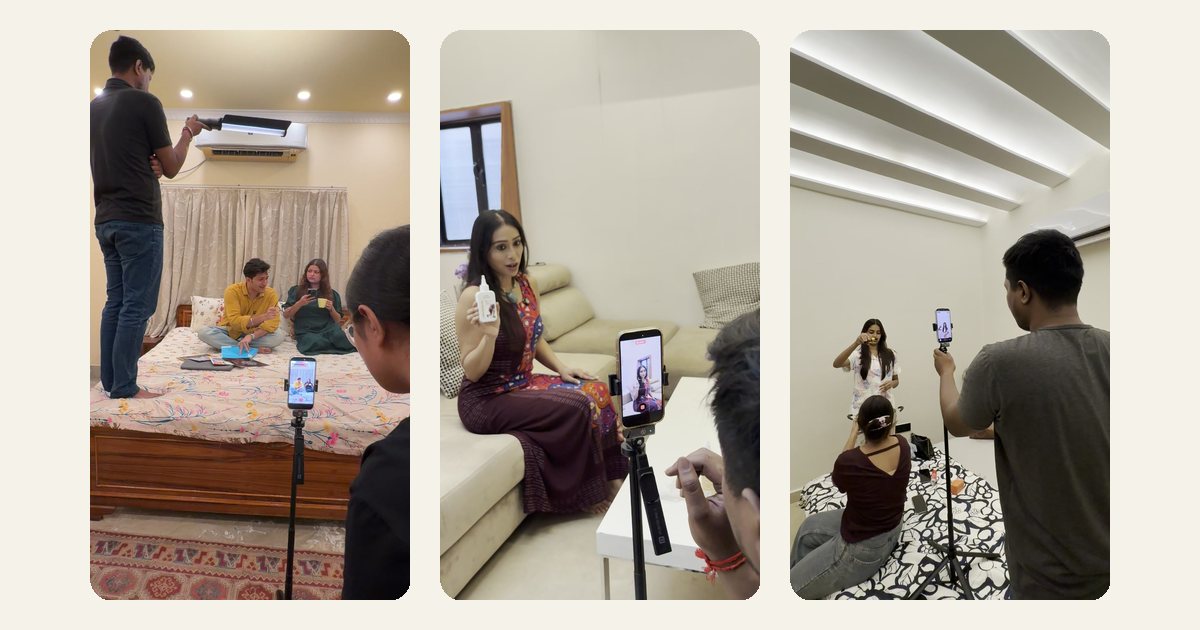
- No guaranteed returns. Creators must not say "I earn 12% guaranteed" or imply any fixed return from market-linked instruments. Phrases like "I've been averaging around X%" followed by the standard disclaimer are safer. In our production work, we make every creator read a short compliance brief before the shoot and include the required disclaimer text as a lower-third graphic.
- No false urgency around financial products. "Apply today before rates go up" is a common e-commerce UGC trope. For lending or investment products, this kind of framing can violate ASCI's rules on misleading advertising and may additionally attract RBI scrutiny.
- KYC and eligibility disclaimers. If the content implies ease of access ("get your loan in 5 minutes!"), the brand is responsible for ensuring that creators do not create false impressions about eligibility. A quick on-screen disclaimer, "subject to credit evaluation", is usually sufficient and should be built into the brief.
The safest briefing principle: a UGC creator for a FinTech brand should tell their honest experience, not make promises. Real stories about real experiences are both compliant and more persuasive than scripted hype.
How to Source Creators for FinTech UGC
The creator does not need to be a finance expert. In fact, audiences are often more receptive to a regular salaried professional in their 20s or 30s sharing how they manage money than to a certified financial planner explaining the same thing. Here is how to think about creator selection:
- Match the product's target user, not a finance niche. A payments or lending app targeting salaried millennials in Bengaluru should look for creators whose primary audience is that demographic, tech workers, young parents, working couples, not necessarily creators who talk about investing or personal finance as their main content topic.
- Micro and nano creators first. For FinTech, credibility matters more than reach. A creator with 8,000 followers in Mumbai who posts about day-to-day urban life will often outperform a finance influencer with 200,000 followers, because the former's audience actually trusts their lifestyle recommendations. A batch of five to ten micro-creators at ₹5,000–₹15,000 per deliverable is a reasonable starting point for a first UGC test in India.
- Platform-specific considerations. YouTube Shorts and Instagram Reels are the primary formats for video UGC. For B2B FinTech (corporate expense management, payroll SaaS, invoice financing), LinkedIn posts and short document carousels by real business owners can carry significant weight. WhatsApp Status is used organically but is difficult to track; brands sometimes run referral campaigns that are designed to spread via Status shares, rather than treating it as a traditional UGC distribution channel.
Building a Scalable UGC Programme: A Practical Starting Point
If you are starting from zero, here is a simple phased approach that works within a modest budget:
- Phase 1, Seed content (Month 1): Brief three to five creators to produce one video each covering a specific use-case of your product. Keep each brief to one core message. Spend between ₹30,000 and ₹60,000 total. Run these as dark posts (boosted without appearing on your own page) in Meta's ad manager targeting your acquisition audience. Measure cost-per-link-click and cost-per-install relative to your existing creatives.
- Phase 2, Iterate on hooks (Month 2): Take the best-performing video and produce three variations with different opening lines, a problem-first hook, a result-first hook, and a curiosity hook. This does not require reshooting; have the original creator record three alternate 5-second openers. This test is inexpensive (₹3,000–₹5,000 per additional opener) and consistently reveals which hook resonates with your specific audience.
- Phase 3, Language and regional expansion (Month 3 onwards): Once you have a proven creative formula, replicate it in regional languages. A script that works in English in Bengaluru can be re-briefed to a Tamil-speaking creator in Chennai and a Marathi-speaking creator in Nagpur. This regional expansion is how FinTech apps move from early-adopter urban audiences to a genuinely large national user base.
Measuring What Matters
UGC performance in FinTech should be tracked across two stages because the product has a longer consideration cycle than an e-commerce purchase.
At the top of the funnel, standard video metrics apply: thumb-stop rate (the percentage of people who watch past the first 3 seconds), view-through rate, and click-through rate. A thumb-stop rate above 30% generally signals a strong hook. At the bottom of the funnel, track app installs, completed KYC flows, and first transactions, not just downloads. A creator video that drives 500 installs but only 20 activated accounts is less valuable than one that drives 200 installs with 100 activations. FinTech brands that track only top-of-funnel metrics consistently over-attribute performance to content that does not actually convert.
For lending or investment products, cohort retention at 30 and 60 days after the UGC-driven install is also worth tracking. Audiences that convert through authentic, expectation-setting content tend to show better retention because the creator has already managed their expectations accurately, no puffery, no inflated promises.
If your FinTech brand is ready to build a UGC programme that is both compliant and genuinely effective, the team at The UGC Agency works with financial services and payments brands across India. See our pricing and packages or book a free consultation to talk through your specific acquisition goals.