Beauty is one of the few categories where the purchase decision genuinely hinges on seeing a product work on a real person, not a retouched model under studio lights. A kajal that makes eyes pop on a 22-year-old from Pune, a face serum that visibly calms redness on a 35-year-old from Chennai, a hair oil that controls frizz in Kolkata's monsoon humidity: these testimonials are worth more than any production-budget campaign. The brands consistently winning in Indian beauty, Sugar Cosmetics, Minimalist, Plum, Mamaearth, have all figured out how to systematically build that customer proof at scale. Here is the exact playbook they use, and how you can replicate it for your brand.
The critical word is systematically. Brands that win with customer content do not just hope UGC appears; they design an operation around collecting it, clearing it legally, and deploying it across channels with surgical intent.
Step 1: Build a Creator Brief That Targets Real Results, Not Just Aesthetics
The first mistake most beauty brands make is treating UGC creators like miniature ad agencies, briefing them on brand colours, fonts, and aspirational lifestyle instead of the specific proof point the content needs to deliver. In our production work, the briefs that generate the highest-converting videos for beauty clients focus on three questions:
- What was the problem before? (Oily T-zone, hyperpigmentation, damaged ends, be specific)
- What does the application process actually look like? (Show the finger-tip texture, the pump mechanism, the before-blending skin)
- What is the observable result at 24-48 hours? (Not "I feel amazing", name what changed)
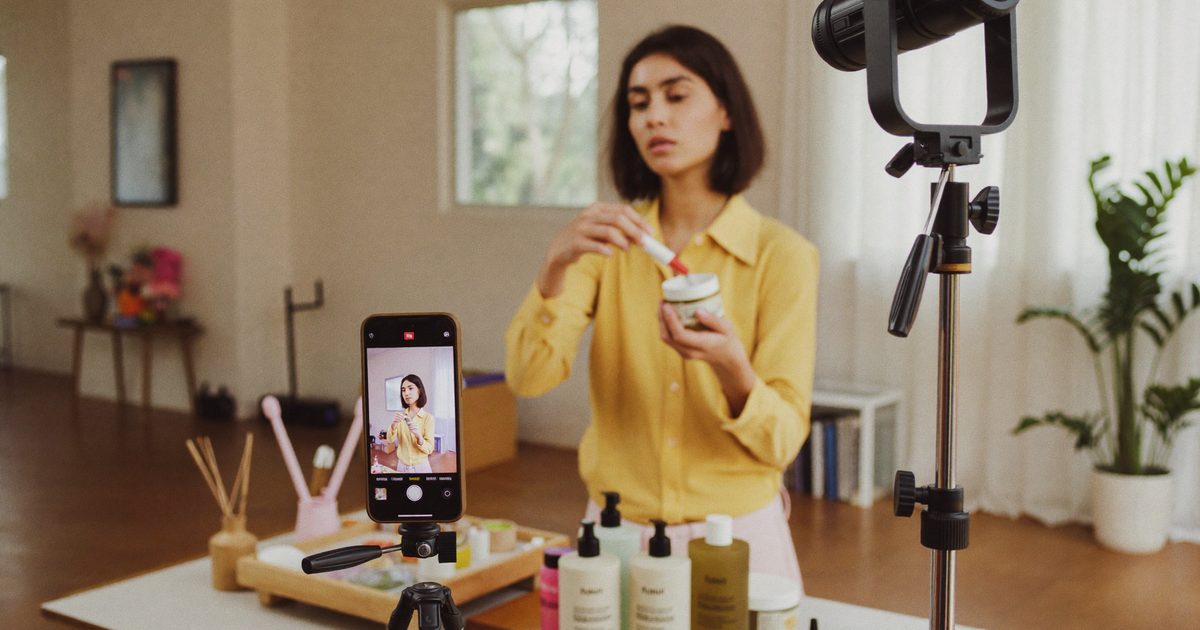
We brief creators to shoot in natural daylight, ideally near a window between 9 AM and 11 AM, because that light reveals texture and pigment most honestly. Bathroom ring-light videos often look polished but lose the skin-truth that makes a viewer trust the claim. Give creators a shot list: close-up of the product label (for compliance), a 5-second skin or hair texture shot before application, the application sequence, and a 24-hour check-in clip. This structure gives your post-production team everything needed for multiple cuts, a 15-second Reels hook, a 45-second full demo, and a 6-second Meta ad.
Step 2: Activate Customer Reviews as a Content Source (Not Just Social Proof)
Your Nykaa, Amazon, and brand-website reviews are a goldmine that most marketing teams ignore as a content source. Brands like Minimalist have turned 4-star and 5-star written reviews into direct video content by identifying reviewers who mention specific, verifiable claims, "reduced my acne marks in three weeks", "my hair stopped shedding after the first wash", and reaching out to convert them into on-camera testimonials.
The operational steps look like this:
- Export reviews weekly from your e-commerce back-end or use a tool like Yotpo or Okendo if integrated.
- Flag reviews that contain a measurable claim (timeframe + result), a mention of skin type or hair concern, or a before-and-after journey.
- Send a templated DM or email offering a gift voucher of Rs. 500–1,000 or a free product bundle in exchange for a short recorded video version of their review.
- Collect a written release form, a simple one-page WhatsApp-forwarded PDF works, before publishing anywhere.
The release form matters especially in the context of ASCI (Advertising Standards Council of India) guidelines. ASCI requires that any testimonial used in advertising must reflect the genuine experience of the person giving it, and that any material connection between the brand and the reviewer must be disclosed. If you are converting an organic review into a paid-for video testimonial, that video must carry a disclosure like #Ad or #Gifted when published on social channels.
Step 3: Run Language-Native Campaigns Across Your Key Markets
Beauty is hyper-local in India. A fairness or glow narrative lands very differently in Tamil Nadu than it does in Punjab. Skincare routines differ by climate, a lightweight gel moisturiser has a natural pitch in humid Mumbai; in dry-winter Delhi, a barrier cream story performs better. Brands that win operationally build creator pools segmented by language and region, not just by follower count.
Practical execution:
- Cast creators who speak natively in Hindi, Tamil, Telugu, Bengali, or Kannada, whichever markets drive your revenue, and brief them in that language. Do not just translate an English script; have the creator adapt the messaging to local idiom.
- Use Instagram Reels and YouTube Shorts for discovery, and leverage Instagram Collab posts to share reach between the creator's audience and your brand page simultaneously.
- For regional markets where Meta reach is strong but creator supply is thin (certain Tier-cities across India), Moj and Josh remain viable platforms for Hindi-belt and South Indian audiences; cost-per-creator is lower and engagement rates are often higher than on Instagram for similar audience sizes.
A budget of Rs. 1.5–2.5 lakh per month can realistically fund 8–12 regional language creator videos if you work with mid-tier creators (10K–100K followers) rather than concentrating spend on a single celebrity endorsement. The content library this builds over three months becomes a compounding paid-media asset.
Step 4: Design a Repurposing Pipeline Before You Shoot
One UGC shoot should yield at minimum five distinct content assets. Brands that treat each creator collaboration as a single Instagram post are leaving most of their investment on the table. Design the repurposing plan before the shoot brief goes out:
- Reels / Shorts (15–30 sec): Lead with the hook, usually the problem statement or the most dramatic before/after moment.
- Meta / Google display ads: Pull a 6-second clip showing the result and a verbal claim. Pair with static card showing the product.
- Website PDP (Product Detail Page): Embed the full 60-second version as social proof alongside the buy button. Brands using video on PDPs consistently report higher conversion rates than those relying solely on static imagery.
- Email campaigns: A GIF or MP4 thumbnail of the creator in a nurture sequence, linked to the full video on YouTube or Instagram.
- WhatsApp Business broadcasts: A 30-second vertical clip sent via your WhatsApp catalogue broadcast to opted-in customers. Beauty brands with D2C WhatsApp lists see strong CTR on video-first broadcast messages, particularly around launches or restocks.
The technical requirements for each destination differ, Meta ads need specific aspect ratios and file sizes; PDPs need fast-loading compressed video; WhatsApp has a 16MB cap for broadcast media. Brief your creator to shoot in 9:16 vertical with headroom at the top (so safe zones don't cut off faces), and shoot clean audio with a clip-on lapel mic or a quiet room. Post-production handles the rest.
Step 5: Measure What Actually Predicts Revenue, Not Vanity
The metrics that matter for beauty UGC are not likes or saves. The ones that predict whether customer content is actually winning for your brand:
- Add-to-cart rate on PDP pages with UGC video vs. without, split-test with and without embedded testimonial video.
- Cost per purchase on Meta using UGC creative vs. studio creative, in beauty categories, well-briefed UGC regularly achieves 30–50% lower CPP than equivalent studio-shot ads, particularly for skincare and haircare.
- Return rate on products where UGC was the last touch before purchase, customers who buy after watching a real-user demo tend to have lower return rates because expectations are set honestly.
- Content velocity, how many net-new UGC assets enter your library per month. Brands that sustain 15+ new assets per month maintain creative freshness in paid campaigns without audience fatigue.
The goal is not viral. The goal is a library of honest, specific, legally-cleared beauty content that converts a sceptical first-time buyer, and does it again next month with fresh faces and fresh claims.
Step 6: Protect the Operation, Rights, Disclosures, and ASCI Compliance
Beauty is one of the most regulated categories under ASCI guidelines because of the prevalence of unverifiable skin and hair claims. Before any customer content goes live in a paid ad, run it through this checklist:
- Does the creator or customer have a signed release granting the brand rights to use the content in paid advertising across digital channels for a defined period (recommend 12 months with renewal option)?
- Is any claim in the video, "reduces pigmentation", "controls hair fall in 4 weeks", substantiated by your product's clinical or lab data? If not, remove the specific claim or add a disclaimer.
- Is the commercial relationship disclosed on the creator's own channel when they post? (#Ad, #Sponsored, or #Gifted as appropriate under ASCI influencer guidelines.)
- Have you avoided banned claim categories in beauty? ASCI specifically restricts absolute claims like "eliminates" or "permanently removes" for cosmetic products without drug-licence-level evidence.
Building a compliance step into your content approval workflow, not as an afterthought but as a gate before the asset is cleared for paid use, protects you from ASCI complaints and from creator disputes down the line.
If you are ready to build a systematic UGC engine for your beauty brand, from creator briefing through compliance-cleared repurposing, our team at The UGC Agency can scope a programme built around your catalogue and target markets. Start with our consultation to map out what a 90-day content library looks like for your brand.