Gaming product briefs are some of the hardest we receive at the agency, not because the category is complex, but because the audience is unforgiving. An Indian gamer who watches fifty hours of YouTube content a week can smell a scripted ad within the first three seconds. That instinct shapes everything about how we approach UGC production for gaming brands: peripherals, accessories, mobile titles, PC components, gaming chairs, headsets, and everything in between.
Here is a frank walkthrough of how we actually structure this work, from brief to final cut, for brands targeting India's gaming demographic.
Understanding Who You're Making This For
The Indian gaming audience is not monolithic. Before we brief a single creator, we ask the brand to be specific about their primary buyer persona, because the content that converts for each segment looks completely different:
- Mobile-first casual gamers (largely tier-2 and tier-cities across India, playing BGMI, Free Fire, Ludo King on mid-range Android phones) respond to value proof, show them the product solving a real friction point, subtitled in Hindi or their regional language.
- PC/console enthusiasts (metro cities, Bengaluru, Hyderabad, Pune; spending Rs.50,000+ on setups) want technical credibility. They will scrutinize frame rates, build quality, cable management. Creator authenticity matters enormously here.
- Aspiring streamers and content creators are a fast-growing micro-segment, teenagers in Mumbai, Delhi, Kolkata who want to build a setup on a Rs.15,000–30,000 budget. "Budget build" content converts exceptionally well for this group.
We typically ask a brand selling a gaming headset, for example, to pick one primary segment before we cast creators. Trying to hit all three in a single piece of UGC almost always produces content that resonates with none of them.
Creator Selection: The Specificity Trap
The instinct is to look for gaming creators with the largest followings. We push back on this consistently. A creator with 80,000 YouTube subscribers who exclusively covers mid-range PC builds will outperform a 500,000-subscriber lifestyle influencer who mentions gaming occasionally, because the former's audience trusts their hardware opinions.
Platforms we actively scout for gaming UGC talent in India:
- YouTube, still the primary research destination for gaming purchases. Long-form unboxing and setup tours (8–15 minutes) drive purchase intent; Shorts drive awareness.
- Instagram Reels, setup aesthetics, RGB lighting showcases, before/after desk transformations. Visual-heavy products (chairs, monitors, keyboards) perform particularly well here.
- Moj and Josh, underutilised by most gaming brands but highly effective for Hindi-medium content targeting smaller cities. BGMI highlight clips with product placements have seen strong engagement on both platforms.
- Discord community posts and Reddit (r/IndianGaming), not paid UGC placements, but authentic community reviews seeded through creator relationships can generate significant organic traction.
We deliberately avoid creators whose gaming content appears only during sponsored posts. The community notices, and ASCI's 2023 guidelines requiring clear "#Ad" and "#Sponsored" disclosures mean the association is visible regardless.
The Brief Structure That Actually Works
Gaming audiences have low tolerance for obviously rehearsed content. Our briefs are structured to give creators creative latitude within a tight factual guardrail, not a script.
A standard brief for a gaming peripheral has four layers:
- Non-negotiable claims, specifications the creator must mention accurately (e.g., "7.1 virtual surround", "50ms wireless latency"). We cross-check every technical claim against the product spec sheet. Under ASCI rules, any performance claim in paid content must be substantiated; we document this before the brief goes out.
- Suggested narrative hooks, these are optional, but we offer 3–4 angles the creator can choose from. For a headset, this might be: "the moment during a BGMI match when directional audio saved the round," or "showing the difference between playing with and without the product." We never prescribe which one to use.
- Visual must-haves, specific product shots the brand needs (packaging, close-up of the feature detail, in-use footage). We list these as a checklist rather than a storyboard.
- What to avoid, explicit competitor comparisons (legal risk), unverifiable superlatives ("best headset in India"), and pricing claims without sourced backup. For brands selling at Rs.2,999 or Rs.7,999 price points, we also flag the need for an honest acknowledgment of what the product does not do, since gaming audiences find "perfect for everything" claims immediately suspicious.
The most conversion-effective gaming UGC we have produced was a 4-minute YouTube video where the creator said, mid-review: "Look, the mic quality isn't great for streaming, but for Rs.3,500, the audio in-game is genuinely solid." That honesty produced more purchase-intent comments than three polished ads for the same product.
Format Choices by Platform and Objective
Gaming UGC is not one-size-fits-all. We typically recommend a content matrix across formats depending on campaign objective:
- YouTube long-form (8–15 min), best for purchase consideration. Setup tours, full unboxings, "3 weeks later" follow-up reviews. Creators need to be compensated fairly for editing time; expect Rs.15,000–40,000 per video for mid-tier creators (50k–300k subscribers) depending on production complexity.
- YouTube Shorts / Instagram Reels (30–60 sec), top-of-funnel awareness. Best used for visually striking moments: RGB colour schemes, satisfying cable management, a clean desk reveal. These are repurposed into Meta ads with minimal additional editing.
- Screen-recorded gameplay clips with commentary, highly authentic, requires minimal production cost, and demonstrates in-use performance far more credibly than any studio setup. A creator showing their actual BGMI rank improvement framed around a product (mouse, monitor, headset) is a format that converts well for performance-focused gaming accessories.
- Comparison formats, "Old setup vs. new setup" or "Rs.5,000 vs. Rs.15,000 headset for gaming" consistently generate high watch time and share rates in the Indian gaming community. These work especially well for mid-tier brands competing on value.
Language and Localisation Are Not Optional
This is where many gaming brands leave conversions on the table. We brief creators to produce content in the language their audience actually communicates in, not just Hinglish by default.
- Tamil gaming content on YouTube (channels covering BGMI, Valorant, and PC builds in Tamil) drives some of the highest engagement rates we have tracked for gaming peripherals in South India.
- Telugu gaming creators based in Hyderabad and Vijayawada have highly engaged audiences for PC hardware. A Rs.7,999 headset review in Telugu from a credible local creator routinely outperforms a pan-India Hindi review of the same product for conversion within Andhra Pradesh and Telangana.
- Bengali gaming content is growing rapidly, especially on Moj and YouTube Shorts, an underutilised opportunity for brands targeting Kolkata and the broader Bengali-speaking market.
We typically recommend at least two language variants for any gaming UGC campaign with a national distribution ambition: one Hindi or Hinglish version and one regional variant based on where the brand's strongest sales data sits.
The Production and Approval Workflow
Our internal workflow for gaming UGC has one non-obvious step most brands skip: a technical accuracy review before the content goes live. Gaming audiences will quote specs back at creators in the comments; factual errors damage creator credibility and, by association, brand trust. We run every script or talking-point outline through the brand's product team before the creator shoots.
Post-shoot, editing for gaming UGC typically involves:
- Cutting to the moments of genuine reaction, the "oh, that's actually crisp" moment when a headset is first tested, rather than polished scripted delivery.
- Keeping subtitles on by default. Most Reels and Shorts are watched without sound in India, including by gaming audiences browsing between sessions.
- Ensuring the ASCI-required disclosure appears in the first frame of paid content (not buried at the end), and that the creator's caption includes "#Ad" or "#Collab" as a clearly visible hashtag, not hidden in a string of twenty others.
The final deliverable to the brand typically includes three aspect ratios (16:9 for YouTube, 9:16 for Reels/Shorts, 1:1 for feed posts) cut from the same raw footage, plus a standalone 15-second version for paid Meta and Google ad placements.
What Makes a Gaming UGC Ad Actually Convert
Across the gaming product campaigns we have run, a few patterns show up consistently in the content that drives click-through and purchase:
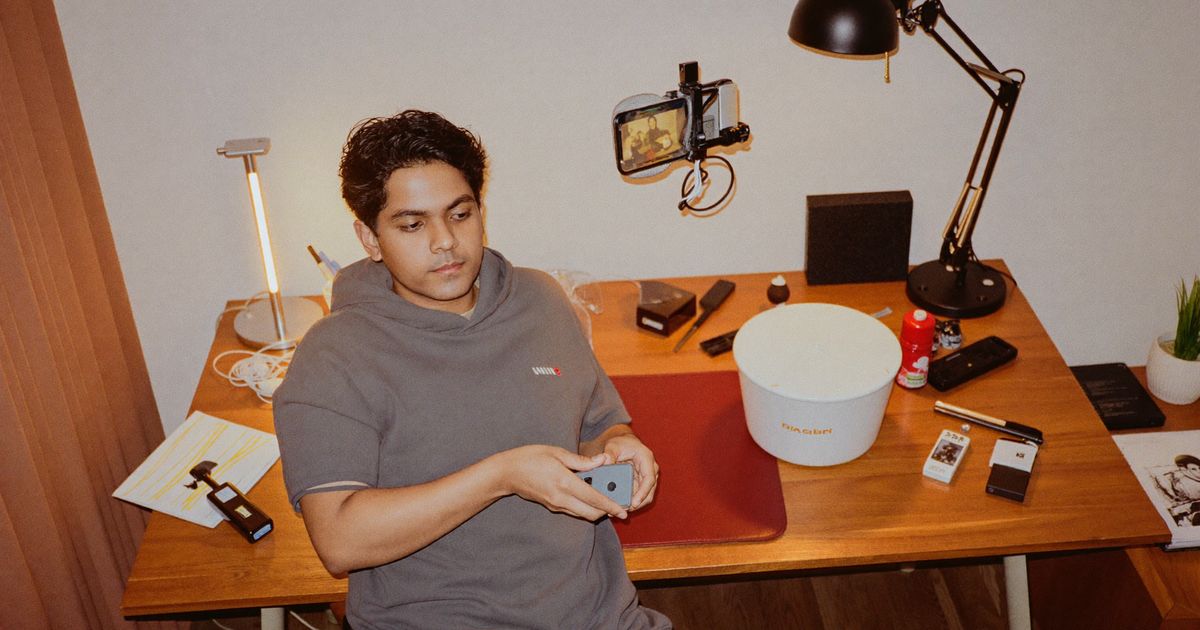
- A credible creator with a visible gaming context, their setup is in the background, their game library is real, they reference games by name. The context signals they are the peer, not the salesperson.
- A specific use-case rather than a feature list, "I could finally hear footsteps in BGMI from the third floor" outperforms "7.1 surround sound for immersive audio."
- An honest acknowledgment of limitations, this counterintuitively increases conversion rates in the gaming category, where the audience is highly research-driven and skeptical of marketing claims.
- A clear, low-friction call to action, link in bio to a product page, not a brand homepage. Every unnecessary click loses a purchaser. For campaigns running Meta retargeting alongside the UGC, the landing page URL should match the product shown in the video exactly.
If you are building a gaming product launch or want to run a regional-language UGC campaign for gaming hardware or accessories, we can structure the entire production process, casting, briefing, shoot, edit, and delivery in multiple formats and languages. Book a consultation to walk through what a campaign for your specific product and target city would look like.