Shampoo that makes hair "15x stronger." A fairness cream that "visibly lightens in 7 days." FMCG claims in India have a long history of overselling, and Indian consumers have grown sharp enough to notice. That is precisely why user-generated content works so differently for fast-moving consumer goods than for, say, a SaaS tool or a fashion label: the credibility gap UGC closes in FMCG is enormous, and closing it the right way requires a structured process rather than just handing a product to a creator and hoping for the best.
Below is a step-by-step production framework we follow when briefing creators for FMCG UGC, from audience mapping to final edit, with specific guidance on formats, platform fit, ASCI compliance, and what tends to actually drive add-to-cart behaviour on Indian e-commerce and social feeds.
Step 1: Map the Purchase Trigger Before Writing a Single Brief
FMCG purchases are repeat, habitual, and low-involvement, which means the UGC job is not to educate but to interrupt a habit and swap the incumbent product. Before briefing any creator, the brand team needs to answer two questions:
- What is the current alternative? For a new shampoo brand, the rival may be Head & Shoulders or the local kirana's loose hair-oil. The UGC must acknowledge that world, not pretend it doesn't exist.
- What is the real objection? For a Bangalore-based skincare brand, the friction may be "I'm scared of chemical ingredients." For a Kolkata snack brand, it may be "won't taste as good as homemade." Surface this from product reviews on Amazon, Meesho, or Flipkart, the 3-star reviews are a goldmine.
Once you have the trigger and the objection, you can write a brief that actually guides the creator's narrative. Without this, creators default to praise-and-pack-shot, which is indistinguishable from a standard brand ad and performs accordingly.
Step 2: Choose the Right Creator Profile for the Product Category
FMCG UGC does not always need a nano or micro-influencer, it needs the right authority archetype for the category. Here are the profiles that consistently outperform for Indian FMCG verticals:
- Hair & skin care: Women aged 22–35 in Tier 1 and Tier cities across India who already document routines on Instagram Reels or YouTube Shorts. Authenticity signals include visible skin texture (no heavy filter) and vernacular narration, a Tamil-speaking creator reviewing a hair serum in Tamil converts better with Tamil-speaking audiences than a Hindi dub.
- Food & beverage: Home cooks and "foodie moms" on Instagram and YouTube perform well. A Mumbai-based creator showing how she uses a cooking oil in her dal tadka speaks more directly to purchase intent than a chef in a studio kitchen.
- Health supplements and wellness: Credentialed creators, dietitians, fitness coaches, carry disproportionate weight given ASCI's strict rules in this space (more on that below). Avoid "results in 30 days"-style creators unless the brand has clinical data to back the claim.
- Home care (detergents, dishwash, surface cleaners): Everyday users doing genuine usage demos at home, not polished unboxings. A 60-second Reel showing actual visible stain removal on a worn kurta outperforms a studio whiteboard demonstration.
Budget-wise, for a 1-month FMCG UGC campaign targeting Meta and YouTube Shorts in India, expect to allocate Rs. 15,000–40,000 per deliverable (creator fee + production) for nano/micro creators, with whitelisting rights adding Rs. 8,000–15,000 per asset if you intend to run it as paid media.
Step 3: Write Briefs That Constrain Format, Not Words
A common mistake in FMCG UGC briefs is over-scripting. Scripted UGC reads as scripted; it performs like an ad. Instead, structure the brief around three non-negotiable moments and let the creator fill in the connective tissue:
- The context hook (0–3 seconds): Must feature a relatable friction, a bad hair day, a stained shirt, a mid-afternoon energy dip. No brand logo, no product shot in the first three seconds.
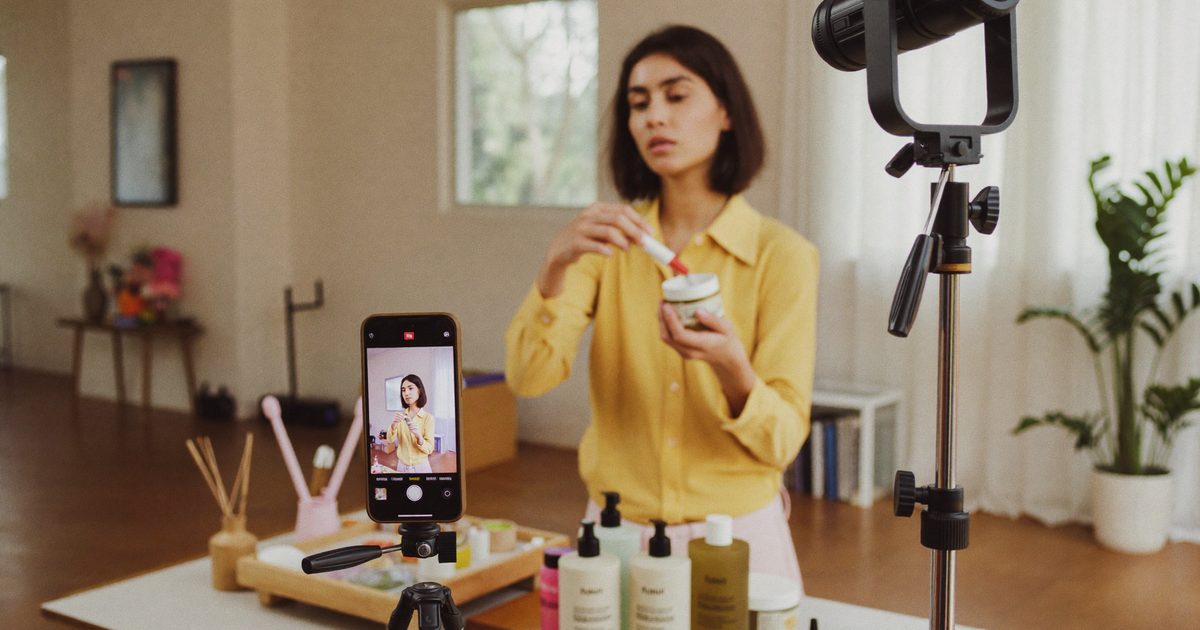
- The usage moment (3–20 seconds): Real product use, real environment. For a face wash, this means lather on an actual face in actual bathroom lighting, not a glamour shot. Specify this in the brief; creators will default to aesthetic framing otherwise.
- The specific result + one honest caveat (20–45 seconds): The creator describes a tangible outcome they personally noticed. And, critically, one genuine caveat ("it does take about two weeks to see a difference" or "the scent is strong, which I personally like but it's worth knowing"). The caveat is not a bug; ASCI guidelines require advertising claims to be substantiated, and a caveat reads as honesty rather than a disclaimer.
We brief creators to avoid absolute superlatives ("best shampoo I've ever used", "cured my acne") unless the brand has the data to support it. Under ASCI's guidelines for health and beauty claims, unsubstantiated comparative and performance claims are among the most frequently flagged categories for Indian digital ads.
Step 4: Shoot for Platform-Native Formats First
For FMCG, the highest-ROI platforms in India right now are Instagram Reels, YouTube Shorts, and Meta Feed/Story ads. Each has distinct requirements that should drive the shoot, not the edit:
- Instagram Reels (9:16, 30–60 seconds): Hook-driven, fast cuts, text overlays with the key benefit mid-video. For Reels, the product should be visually identifiable within the first 2 seconds even if the audio is muted, roughly 60% of Reels are watched without sound at first scroll.
- YouTube Shorts (9:16, up to 60 seconds): Unlike Reels, Shorts viewers tolerate a slightly longer setup. This makes Shorts better for FMCG products that require a usage demonstration, a dishwash liquid, a baby lotion, a multi-step skincare product.
- Meta Feed / Stories (dark post or boosted): When briefing for paid media, shoot a 15-second cut specifically for Stories, do not just trim the Reel. The pacing and CTA placement are different. We always shoot the Stories cut as a separate take at the same session to avoid re-engaging the creator for reshoots.
For vernacular reach, which matters enormously if the brand distributes beyond the four metros, brief the same creator to record a second take in their primary regional language. One Hindi Reel and one Kannada or Bengali Reel from the same creator at the same shoot session roughly doubles qualified reach for Bengaluru and Kolkata distribution without doubling production cost.
Step 5: Structure the Usage Demo for Maximum Credibility
The usage demo is the single highest-converting segment of FMCG UGC, and the segment most brands get wrong by being too clean. Here is what a high-credibility demo actually requires:
- Real environment, not a prop set: The kitchen counter should have other things on it. The bathroom shelf should have other products. Antiseptic cleanliness reads as staged to the Indian consumer who shops in a 400-square-foot apartment.
- Before/after shown in the same frame when possible: For food products, cook it and plate it. For a stain remover, show the stain and the result side by side. This is especially important for Meesho and Flipkart video ads where the viewer may be making a first purchase.
- Hands in the shot: Studies on Indian e-commerce video content consistently show that hands-on product interaction, scooping, pouring, applying, drives higher watch-through than face-to-camera testimonials alone. Use both.
- Quantity cue: FMCG buyers care about per-use cost, especially at Rs. 99–299 price points where value anxiety is real. A brief line like "this bottle has lasted me about six weeks of daily use" does enormous work for conversion without any additional claim.
The most common edit we make in post-production is trimming a creator's intro. They spend 8 seconds saying their name and channel handle. Those 8 seconds are scroll-death on a feed. The product should be visible or the problem should be stated before the creator says hello.
Step 6: Review for ASCI Compliance Before Publishing or Boosting
ASCI's self-regulatory framework applies to digital advertising in India, including paid influencer content and brand-owned boosted posts. For FMCG UGC specifically, the most common compliance failures are:
- Missing disclosure, any creator paid in cash or product must include #Ad or #Sponsored (ASCI mandates the label be prominently visible, not buried in hashtag stacks).
- Unsubstantiated health claims, phrases like "boosts immunity", "clinically proven", "dermatologist tested" require documentation. If the brand cannot produce it, the line must be cut.
- Before/after imagery for health or weight-related products, ASCI prohibits misleading before/after visuals that imply outcomes the product cannot guarantee.
Before boosting any FMCG UGC asset as a paid Meta or Google ad, run it through a one-page ASCI checklist. We include a compliance sign-off step in our production workflow specifically because paid amplification of non-compliant UGC carries more risk than organic posting, it reaches audiences at scale and is more likely to attract regulatory attention.
Step 7: Test, Tag, and Build a Performance Loop
High-converting UGC is not a one-shot project, it is a feedback system. After publishing, track these metrics by asset, not by campaign:
- Hook retention rate (0–3 second view-through): If under 60% on Reels, the opening friction moment is not landing. Rebrief the creator with a sharper scenario.
- Swipe-up or link-click rate on Stories: Benchmarks for Indian FMCG on Meta Stories typically run 1.5–3%. Below 1%: the CTA or landing page has friction. Above 3%: identify which angle drove it and replicate.
- Comment sentiment tagging: Read the comments. Indian viewers will tell you exactly what objection still persists ("but does it work on oily skin?", "available in Hyderabad?"). Those comments become the brief for the next round of UGC.
After two or three rounds, patterns emerge: a particular creator type outperforms, a specific usage scenario drives more saves, a vernacular cut outperforms the Hindi original. That institutional knowledge is what separates FMCG brands doing UGC at scale from those reshooting the same brief every quarter and wondering why results plateau.
If you are working on an FMCG UGC campaign and want a production framework tailored to your category, distribution channels, and compliance requirements, book a free consultation, we will walk through the brief structure, creator selection, and platform strategy for your specific product.