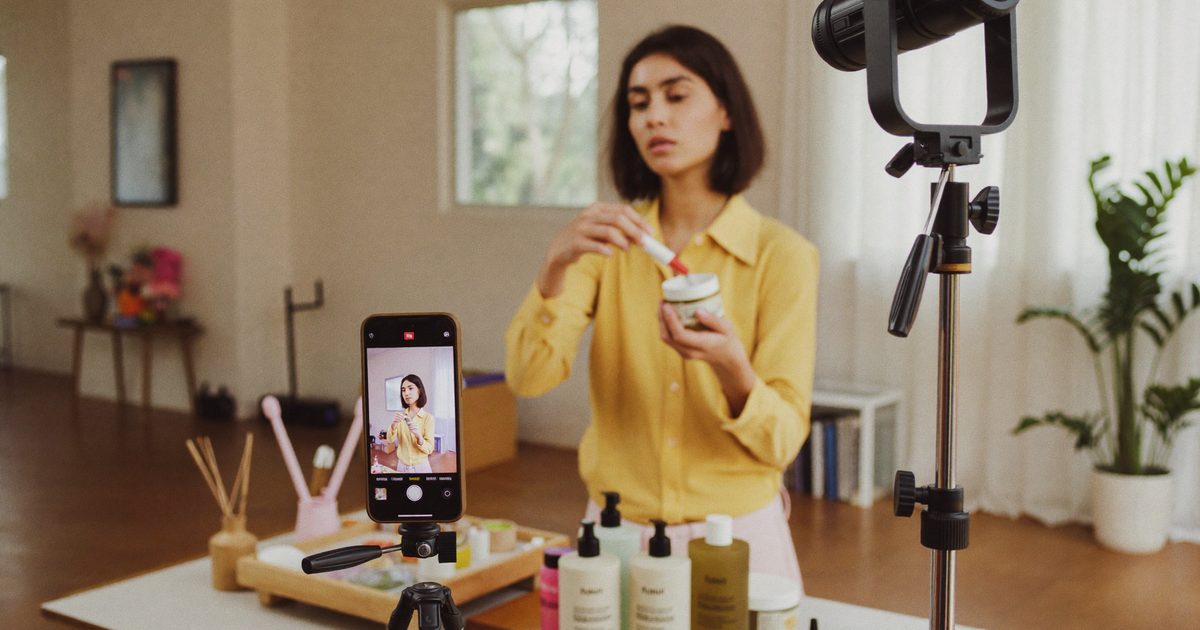
A skincare brand from Bengaluru sends us twelve products, a rough idea of their target customer, and a brief that says "make it feel real." What happens next, the casting choices, the shot structure, the exact words we ask creators not to say, determines whether that content drives purchases or gets scrolled past in two seconds on Instagram Reels. This is how we actually approach it.
High-converting UGC for e-commerce is not accidental authenticity. It is structured storytelling that mimics authenticity, built on a framework your production team can repeat at scale. Here is the full process we follow at The UGC Agency, from brief to final file.
Step 1: Define the Conversion Job Before You Brief a Single Creator
The first mistake most brands make is treating UGC as "awareness content" and then wondering why it does not sell. Before we write a creator brief, we pin down exactly what the video must accomplish: is it driving an Add-to-Cart from a cold Instagram audience, a purchase from someone who already visited the product page, or a trust-seal for a Google Shopping retargeting ad?
Each job requires a different structure. For cold traffic on Instagram or YouTube Shorts, the hook must surface the problem within the first three seconds, not the product. For retargeting, we can open on the product directly because the viewer already knows it exists. We map this to a one-line conversion brief that every creator sees before filming:
- Cold traffic hook: "Open on the problem this product solves, no brand name in the first five seconds."
- Retargeting hook: "Open on the product, say the brand name, address the most common objection in the first ten seconds."
- Post-purchase UGC: "Film as if texting a friend, unprompted, casual, result-first."
This single step cuts revision rounds in half because creators are not guessing what the brand wants.
Step 2: Cast for Category Credibility, Not Just Follower Count
For e-commerce UGC, content that will run as paid ads, not organic influencer posts, follower count is nearly irrelevant. What matters is whether the viewer believes this person would actually use the product. We call this category credibility.
A creator with 8,000 Instagram followers in Mumbai who posts daily about home cooking is more valuable for a cookware brand than a lifestyle macro-influencer with 400,000 followers whose feed is a mix of travel, fashion, and fitness. The former's audience trusts her kitchen opinions. The latter's audience is not primed for purchase in that category.
Our casting checklist for e-commerce UGC:
- Does the creator's existing content signal genuine use of this product category?
- Do they post in the regional language or code-mix relevant to the brand's target geography? (A Tamil-speaking creator based in Chennai is a separate asset from a Hindi-speaking creator in Delhi, both may be needed for the same campaign.)
- Is their video quality sufficient for paid placements? We require natural light or basic ring-light setups, no heavy filters, no vertical-only selfie footage for horizontal placements.
- Have they done paid UGC before? First-timers often need an extra revision pass; we factor that into timelines.
Step 3: Write a Brief That Constrains the Right Things
A creator brief for high-converting UGC is not a script. Scripted deliveries die on screen, viewers spot them in seconds. The brief should constrain structure and prohibit specific mistakes, while leaving room for the creator's natural voice.
Our standard brief for an e-commerce product includes:
- Mandatory hook options (pick one): We give creators two or three proven hook angles, problem-first, result-first, or comparison, and let them choose what feels natural to deliver.
- Must-mention claims: The two to three product claims that are factual, provable, and ASCI-compliant. (ASCI's guidelines require that performance claims be substantiated, we flag any claim the brand cannot back with lab data or verified testimonials, because running unsubstantiated claims in paid ads is a compliance risk, especially for food, health, and beauty categories.)
- Prohibited phrases: We explicitly ban phrases like "best in India," "100% results guaranteed," "doctors recommend" (unless the brand has supporting documentation), and anything that reads like a TV commercial voiceover.
- B-roll list: A specific list of shots we need for editing, close-up of product texture, hands-on usage shot, packaging reveal, before/after where applicable. These are shot separately from the talking-head footage and assembled in post.
- Length and aspect ratio: We specify 45–60 seconds for Reels/Shorts performance ads, 15–20 seconds for cut-down story placements, both shot in 9:16.
The brief is where 80% of the output quality is decided. A vague brief produces reshoots. A tight brief produces first-take usable footage, which is the only way UGC production stays cost-effective at Rs.60,000–Rs.2,00,000 per campaign.
Step 4: Structure the Video for Platform-Specific Watch Behaviour
The structural formula we use most consistently for e-commerce UGC on Indian platforms:
- 0–3 seconds: Hook, a visual or verbal statement of the problem or result. No logo, no intro.
- 3–15 seconds: Context, who the creator is, why they tried this product, what their situation was.
- 15–40 seconds: Demonstration, the product in actual use, with specific sensory or functional detail. This is where most UGC fails: creators describe the product instead of showing it working.
- 40–55 seconds: Outcome + social proof, measurable result ("my skin stopped breaking out after two weeks"), comparison to previous product, or a secondary endorsement ("my sister asked me what I switched to").
- 55–60 seconds: Soft CTA, where to buy, offer if any, no hard sell.
For Hindi-speaking audiences, we find that a conversational, slightly informal register, the kind of Hinglish you hear between friends in Delhi or Pune, outperforms both formal Hindi and pure English in trust metrics. For South Indian markets (Tamil Nadu, Karnataka, Kerala), creators filming in the regional language consistently get lower CPAs than English-language equivalents for the same product, a pattern we see repeated across beauty, home care, and food supplement categories.
Step 5: Edit for Paid Performance, Not Organic Virality
Raw creator footage almost never runs as-is. Our editing pass for paid e-commerce ads focuses on specific technical improvements that lift performance:
- Trim the first frame aggressively: Any hesitation, filler word, or visual setup before the hook is cut. We often start in the middle of the creator's first sentence.
- Add captions: Over 70% of Instagram Reels in India are watched without sound, based on our campaign data. Open captions, not the auto-generated subtitle overlay, are embedded directly at the edit stage.
- Cut B-roll over the demonstration section: Talking-head footage across a 40-second demonstration is weak. We intercut product close-ups, texture shots, and usage footage to maintain visual pace.
- Add a text hook overlay: A single bold text line at 0–3 seconds that mirrors the spoken hook reinforces message recall for users who scroll quickly. This is especially effective on Meta feed placements.
- Export multiple lengths: Every piece of UGC is exported at three lengths, 60s (full), 30s (mid-funnel cut), and 15s (retargeting). The 15s version is made from the best 15 seconds of the 60s version, not re-filmed.
Step 6: Test Systematically Before Scaling Spend
Once the edited videos are live in Meta Ads Manager or Google's video campaign interface, we run a structured creative test before recommending a budget increase. For most of our e-commerce clients, brands selling products in the Rs.500–Rs.5,000 range online, the test protocol is straightforward:
- Run three to five creator variants against the same audience with equal daily budgets (typically Rs.500–Rs.1,000 per variant per day).
- Measure Hook Rate (3-second video plays ÷ impressions) and ThruPlay Rate (watched to 15s ÷ impressions) within the first 72 hours, these predict downstream conversion better than direct ROAS at the testing stage.
- At day 5, kill the bottom half by Hook Rate. Let the survivors run another 5–7 days before evaluating purchase ROAS.
- The winning variant informs the brief for the next production round, specifically, what hook angle and what demonstration style drove watch time.
This loop, brief, shoot, edit, test, feed results back into brief, is what separates a single piece of UGC from a repeatable production system. It is also why brands that treat UGC as a one-time deliverable rarely see compounding returns: the data from each round is the most valuable asset, not the video itself.
If you want to build this kind of system for your e-commerce brand, from brief templates to creator sourcing to paid testing, the team at The UGC Agency can walk you through exactly how we would set it up for your category and budget. Book a free consultation and we will start with a production audit of what you are already running.