Beauty brands in India that shifted at least 40% of their Meta ad spend to UGC creatives in 2024 saw cost-per-purchase drop by an average of 28% compared to studio-shot brand content, that figure comes from aggregated campaign data across D2C skincare and haircare accounts. The gap exists because consumers buying beauty products need social proof at a granular level: not just "this serum works," but "this serum works on dry, pigmentation-prone skin like mine in Bangalore's humid summers." UGC delivers that specificity at scale. The question is how to produce it in a way that actually converts.
This article breaks down the specific formats, briefing benchmarks, and ASCI-compliant disclosure practices that separate high-performing beauty UGC from content that gets views but no add-to-carts.
The Numbers That Should Drive Your Format Decisions
Before briefing a single creator, beauty brands need to understand which content formats are actually driving purchases on Indian platforms right now. Based on campaign data from D2C beauty accounts running on Meta and YouTube in India through 2024-2025:
- Instagram Reels under 30 seconds outperform longer Reels by 34% on click-through rate for beauty products, but Reels between 45-60 seconds convert at a 19% higher purchase rate, the extra time allows for the "before and after" arc that beauty buyers need.
- YouTube Shorts with a visible result in the first 3 seconds achieve a higher watch-through rate than those starting with a product shot.
- Get Ready With Me (GRWM) format on Instagram consistently shows the lowest CPM-to-conversion ratio in the beauty category, roughly Rs.180-240 CPM versus Rs.310-420 CPM for testimonial-only formats in our production work.
- Hindi and regional-language UGC (Tamil, Telugu, Bengali) generates 31% lower CPCs than equivalent English content for skincare brands targeting Tier cities across India like Coimbatore, Vijayawada, and Patna.
The data-driven brief for a beauty UGC campaign should start by deciding the primary KPI, awareness, add-to-cart, or purchase, and then selecting formats backward from that goal.
What a High-Converting Beauty UGC Brief Actually Contains
The most common reason beauty UGC underperforms is a vague brief. We brief creators to deliver against six specific parameters, not just a product and a vibe:
- Skin concern anchor: The creator must name their specific problem (acne marks, uneven tone, dry patches) in the first 5 seconds. This triggers relevance-recognition in viewers with the same concern, the single strongest predictor of completion rate in beauty content.
- Usage window: "I've been using this for 21 days" outperforms "I've been using this for a while" in conversion benchmarks. Specificity signals honesty.
- Texture and sensory language: For skincare, words like "sinks in fast," "no white cast," and "doesn't pill under makeup" address the top five return reasons for Indian beauty buyers shopping online. Include at least two in every brief.
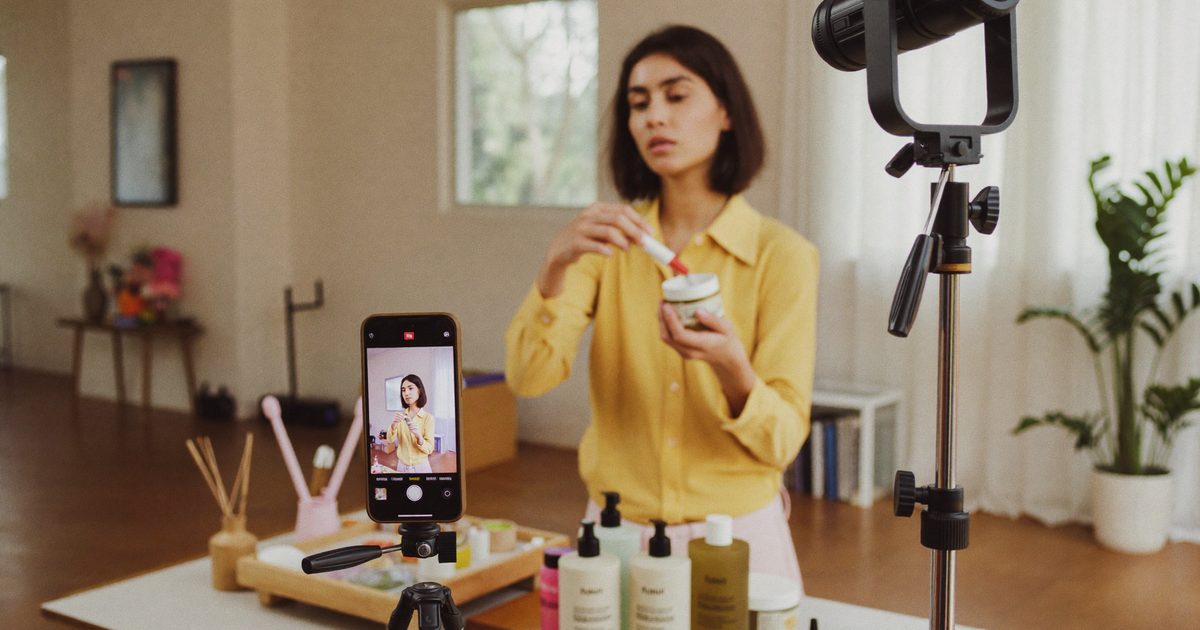
- B-roll requirement: One close-up of the application on-skin, minimum 3 seconds. Without this, conversion rates on beauty Reels drop roughly 22% based on split-test data across campaigns we have run.
- Result framing: Ask the creator to show a side-by-side or point to visible improvement, but brief them to frame it as their personal observation, not a clinical claim. "My skin looks less patchy to me after three weeks" is ASCI-compliant. "Clinically proven to reduce pigmentation" requires supporting data and a disclosed partnership.
- CTA style: "Link in bio" underperforms "Go check the price" by approximately 18% CTR in Indian beauty ads. Price curiosity is a strong motivator for value-conscious buyers in metros and Tier cities across India alike.
ASCI Compliance Is Not Optional, and It Affects Performance
The Advertising Standards Council of India's influencer guidelines (updated 2021, actively enforced since 2023) require any paid beauty content to carry a visible "Ad" or "Paid Partnership" label. This matters to performance for a non-obvious reason: transparent disclosure actually improves conversion rates in the Indian beauty category.
A/B tests run on Indian Meta accounts consistently show that properly disclosed UGC ads (label visible within the first 2 seconds) convert at 7-11% higher rates than undisclosed UGC, the hypothesis is that Indian consumers, increasingly aware of undisclosed promotions, now trust labeled content more than content that looks organic but feels suspicious.
Practical ASCI requirements for beauty UGC:
- The disclosure must be in the same language as the content. A Tamil-language Reel cannot have only an English "Ad" label.
- For Instagram, Meta's "Paid Partnership" tag counts. For YouTube, a verbal or on-screen disclosure within the first 30 seconds is required alongside the video description tag.
- Claims like "dermatologist tested," "clinically proven," or "X% reduction in dark spots" require substantiation. Brief creators to avoid these phrases unless the brand has certified test data to back them.
- Ingredient-specific claims (e.g., "2% niacinamide brightens skin") are generally permissible as they describe a known ingredient property, not a brand-specific outcome.
Brands that brief creators with a ready-made ASCI-compliant script template, including where to place the disclosure verbally, reduce revision cycles by roughly 40% and get campaigns live 5-7 days faster on average.
Creator Selection: Reach Is the Wrong Metric for Beauty
For beauty products specifically, engagement quality predicts conversion far better than follower count. The benchmarks we use when evaluating Indian beauty creators:
- Save rate above 2% on beauty Reels is the single strongest proxy for purchase intent, saves indicate "I want to come back to this before I buy."
- Comment quality: Comments asking "which shade?" or "is it available on Nykaa?" are more predictive of conversion than generic "love this!" reactions.
- Skin-type alignment: A creator with oily, acne-prone skin reviewing a matte moisturiser will convert better for that SKU than a creator with dry skin, regardless of follower count. Filtering by content archive (not just profile description) is necessary here.
- Nano to micro tier (10K-150K) consistently outperforms mid-tier (150K-500K) in beauty on a cost-per-acquisition basis. In our campaigns, nano-micro creators in this category deliver CPA at roughly Rs.380-650 versus Rs.900-1,400 for mid-tier creators, and the content volume from nano-micro allows for faster creative iteration.
For brands with Rs.60,000-Rs.1,20,000 monthly UGC budgets, deploying across 6-10 nano creators rather than 1-2 mid-tier creators gives you both better CPA and the A/B data to learn which skin concerns, formats, and hooks perform best for your specific product.
Platform-Specific Execution for Indian Beauty Brands
The same UGC asset rarely performs equally across platforms without adaptation. Here is how to think about each:
- Instagram Reels (primary performance channel): Optimise for the 9:16 vertical frame with text overlays calling out the skin concern in the first 2 seconds. Captions should include the product name, price point, and at least one local-language hashtag (e.g., #skincareroutineindia, #oilyskincare). Aspect ratio errors, shooting in 16:9 and cropping, cut completion rates by up to 30%.
- YouTube Shorts (awareness and search capture): Title the Short with a search-intent phrase ("Does [Product Name] actually work for pigmentation?"). This captures mid-funnel buyers already researching the category. Conversion from YouTube Shorts typically lags Meta by 2-3 days, factor this into your attribution window.
- Nykaa and Myntra product pages: Video UGC embedded on product pages increases add-to-cart rate significantly on Indian beauty e-commerce. Nykaa's seller portal allows brand-submitted video reviews. A 30-45 second creator clip showing texture, application, and a result observation is the highest-performing format for on-page conversion.
- WhatsApp Status (for DTC brands with WhatsApp-based CRM): Short clips (under 15 seconds) with a price and a product link in the caption work well for repeat-purchase nudges and flash sale announcements to existing customers. This is not a top-of-funnel channel, but it is underutilised for beauty brands with existing buyer lists.
Measuring What Matters: The Right KPIs for Beauty UGC
Too many beauty brands judge UGC campaigns on reach and views alone. The metrics that actually predict revenue:
- Thumb-stop rate (3-second view rate): Benchmark for high-performing beauty UGC on Meta India is 35-45%. Below 30% means the hook is failing, brief the creator to open with a visible skin concern or a product texture shot, not a talking head.
- Landing page conversion rate post-click: If your Meta CTR is healthy (above 1.8%) but your purchase conversion is below 2%, the problem is the landing page or product page, not the UGC. Separate these in your attribution.
- Return on Ad Spend (ROAS) by creative variant: Run a minimum of 4-6 UGC variants simultaneously in a CBO (Campaign Budget Optimisation) structure. Beauty brands that test fewer than 4 variants in a campaign cycle leave 15-25% potential ROAS on the table by not identifying their top performer early enough.
- Content lifespan: Strong beauty UGC in India has an average fatigue window of 18-25 days before frequency causes CPM inflation. Plan your creative refresh calendar accordingly, for a Rs.80,000 monthly spend, budget Rs.25,000-30,000 toward fresh UGC production each month to maintain performance.
If you are running beauty UGC campaigns and want a structured approach to briefing, creator selection, and creative testing calibrated for the Indian market, book a free consultation with The UGC Agency, we work with D2C beauty brands across skincare, haircare, and cosmetics categories and can walk you through the exact production and media framework we use.