Automotive buyers in India do something almost no other category sees: they research for months, visit showrooms twice, watch forty YouTube walkarounds, and still make the final call based on a twenty-second Reel from someone who owns the car. That last-touch peer signal is where UGC earns its keep, but only if it is engineered correctly. If your brand is already running UGC and seeing mediocre returns, the problem is almost certainly in the brief, the creator selection, or the format mix, not in the channel itself.
This playbook is for brands that have gone past "let's try UGC" and are ready to run it as a serious performance asset in the automotive category, two-wheelers, four-wheelers, EV accessories, lubricants, tyres, and everything in between.
Map the Automotive Purchase Funnel to Specific UGC Formats
The biggest mistake advanced teams make is using the same content format across every funnel stage. Automotive has a long, research-heavy journey, and each stage demands a different UGC trigger.
- Awareness (6–12 weeks before purchase): Lifestyle Reels and YouTube Shorts showing the vehicle in realistic Indian driving contexts, congested Bengaluru traffic, Mumbai coastal roads, Rajasthan highway runs. At this stage, aspiration matters more than specs.
- Consideration (2–6 weeks out): Long-form YouTube walkarounds (8–15 minutes), Instagram Carousels with detailed feature comparisons, and "month-two ownership" style talking-head videos. This is where creators should answer the real objections, service cost, mileage in Indian city traffic, boot space for a typical family trip to Tirupati.
- Decision and post-purchase: Short testimonial Reels (under 30 seconds), Stories-style daily-use clips, and community UGC that shows buyers celebrating delivery day. This content repurposes brilliantly in Meta retargeting.
We brief creators to shoot awareness content first, then record a structured "30 days later" follow-up. A single creator engagement yields two format tiers rather than one.
Choosing Creators by Vehicle Segment, Not Just by Follower Count
Automotive UGC lives or dies on creator credibility. A 200k lifestyle creator who has never discussed cars will generate weaker conversion than a 25k creator who regularly posts about weekend rides or family road trips. In India, the segmentation looks roughly like this:
- Two-wheelers and entry four-wheelers (sub Rs.10 lakh): Creators in Tier-cities across India, Coimbatore, Nagpur, Bhubaneswar, Jaipur, land better. Their audience mirrors the buyer profile, and their production setup (a phone and natural light in a residential colony) reads as authentic rather than staged.
- Premium and EV segment (Rs.15 lakh+): Metro-based creators with demonstrated interest in tech, sustainability, or long-distance travel. They need to show they can hold a rational conversation about range anxiety or charge infrastructure, not just call the car "amazing."
- Auto accessories and aftermarket (tyres, lubricants, dash cams): Car enthusiast communities on YouTube, channels with 10k–80k subscribers that review modifications, consistently outperform mass-market creators because the audience already trusts their product opinions.
When running creator outreach for automotive, ask for proof of ownership or regular usage in the briefing form. A creator who actually owns a car in the segment you are targeting will deliver twenty percent better watch-through on YouTube and noticeably higher comment engagement on Reels.
Briefing for Objection Handling, Not Just Feature Showcasing
Feature showcases ("look at this sunroof") perform poorly in lower-funnel automotive UGC. Indian automotive buyers carry specific anxieties that generic content never addresses. Brief your creators to hit these objections directly:
- Service availability: "How's the service centre in [city]? What did your first service actually cost?" This one question, answered honestly, reliably outperforms feature content in our Meta campaign testing.
- Fuel and running costs: Show a real monthly fuel expense screen capture or a petrol station receipt. Precise numbers convert better than vague claims.
- Family use cases: Boot space for a Durga Puja shopping haul in Kolkata, or whether a family of four fits comfortably on a 5-hour Pune-Nashik drive, is a legitimate decision factor that OEM advertising never covers.
- EV-specific: Charging at home (does the standard socket work? what is the tariff?), highway charging stops, and real-world range in AC-on summer conditions in Chennai or Hyderabad.
ASCI guidelines require that UGC creators disclose paid partnerships clearly, in India this means a visible "#ad" or "#sponsored" label in the caption, not buried in a list of hashtags. For automotive specifically, mileage and performance claims must reflect real-world conditions, not idealised test results. Brief creators to say "in my experience in [city] traffic" rather than quoting ARAI figures as personal observation.
Production Techniques That Elevate Automotive UGC Beyond Amateur
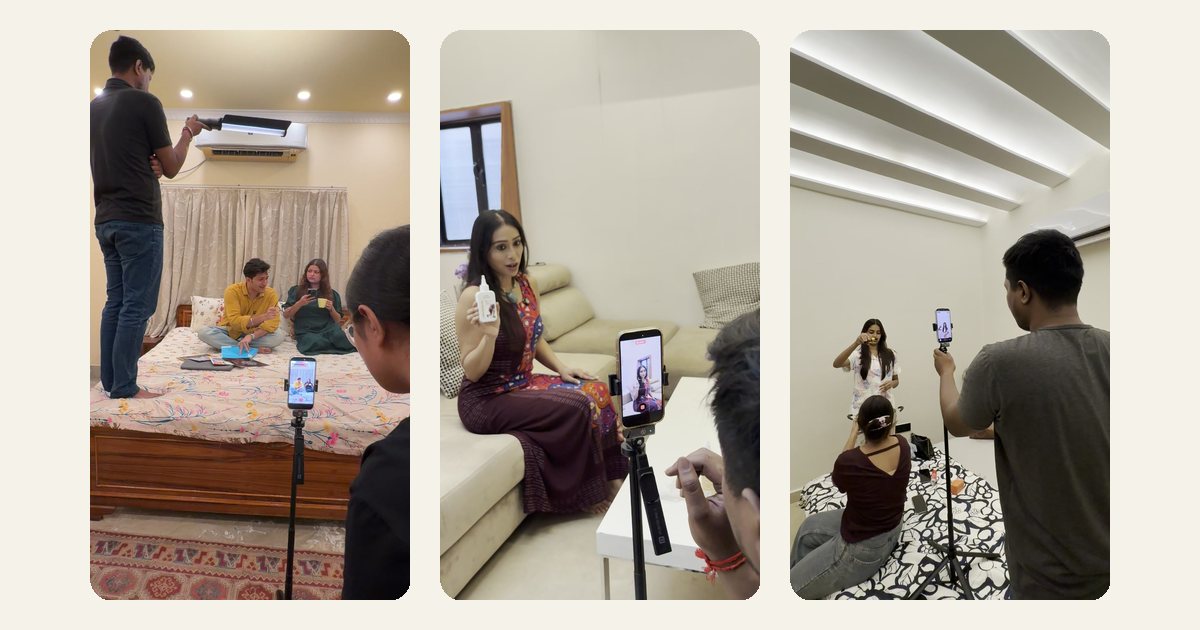
Advanced teams should push their automotive creators toward a handful of production habits that consistently improve performance without requiring a film crew:
- Golden hour exterior shots: The 30 minutes after sunrise and before sunset make budget phones produce cinematic colour on any car. Brief the exact timing based on the creator's city and season. A Maruti in Chandigarh at 6 AM in October looks like a catalogue image.
- Cockpit POV: A phone mounted on a dashboard or suction-cup holder captures the driving experience in a way no external shot can. Combine with honest voice-over commentary, traffic sounds and a candid "this is what my daily commute feels like" is more valuable than a cleaned-up studio review.
- Before/after for accessories: For categories like seat covers, dash cams, or alloy wheels, a split-screen showing the install and the result in under 15 seconds is the most efficient format. It answers both "does this work?" and "is it hard to fit?" in a single clip.
- Hindi + regional language versions: If you are running the same creator content in Tamil Nadu and Uttar Pradesh, you are leaving conversion on the table. Budget for at least a Hindi and one regional language version, Tamil or Telugu for South India, Bengali or Marathi for East/West. Dubbing a 30-second clip costs Rs.800–2,500 through freelance platforms like Voyzapp; the CPL improvement typically pays for it inside a single campaign.
Distribution and Paid Amplification for Automotive UGC
Organic reach alone will not deliver purchase intent at scale for a high-consideration category like automotive. Structure your paid amplification this way:
- Meta (Instagram + Facebook): Run authentic UGC clips as Reels ads with original creator audio intact. Stripping the audio and adding a brand track is a common mistake, it kills the peer-signal cue that makes UGC work. Target by city pincode clusters (near your dealerships), relevant behavioural interests, and lookalikes from your test-drive lead list.
- YouTube pre-roll: The 8–15 minute walkaround videos work as mid-roll ads on automotive review channels. A creator's walkaround appearing inside another auto reviewer's channel creates a trust-by-association effect that paid production rarely replicates.
- WhatsApp via creator: Automotive buying in Tier-2 India still runs partly through dealer WhatsApp groups and family consultation chains. Some creators will share a personal review clip to their WhatsApp Status (viewable by their 500–2,000 contacts) as part of the deliverable, this is worth negotiating into the brief explicitly.
- Retargeting with post-purchase UGC: Segment users who visited your configurator or pricing page and serve them delivery-day testimonial clips. The emotional "I finally bought it" format works as social proof at the exact moment a prospect is closest to converting.
Measuring Automotive UGC Beyond Vanity Metrics
If you are optimising automotive UGC on likes and shares alone, you will make the wrong creative decisions. The metrics that actually predict downstream purchase intent:
- Comment quality score: Manually sample 50 comments per video and classify them as consideration questions ("what is the actual mileage?"), intent signals ("anyone know the EMI for this?"), or sentiment. A video with 500 comments that are mostly intent signals outperforms a video with 5,000 generic emoji comments.
- Test-drive or brochure request rate: Tag your UGC links with UTM parameters and track how many viewers hit a test-drive or dealer-contact CTA. This is the only funnel metric that connects UGC spend to real pipeline.
- Watch-through rate by video segment: Use YouTube Analytics chapter data or Meta Video breakdown to find the exact moment viewers drop off. For automotive walkarounds, drop-off at the price or EMI mention is diagnostic, it tells you whether the pricing conversation is working or creating friction.
- Cost per qualified lead from UGC vs. search: In automotive, search leads often cost Rs.400–1,200 per lead. Well-optimised UGC campaigns targeting consideration-stage audiences can bring this to Rs.180–500. Track this comparison monthly so you can make a budget case internally.
If your automotive UGC program has stalled at surface-level metrics and inconsistent creative results, a structured audit of your briefing process, creator selection, and paid distribution will usually surface the bottleneck within a week. At The UGC Agency, we run these audits for brands in the automotive category and deliver a production-ready brief template alongside a distribution playbook specific to your segment, reach out if you want a sharper framework for your next campaign cycle.