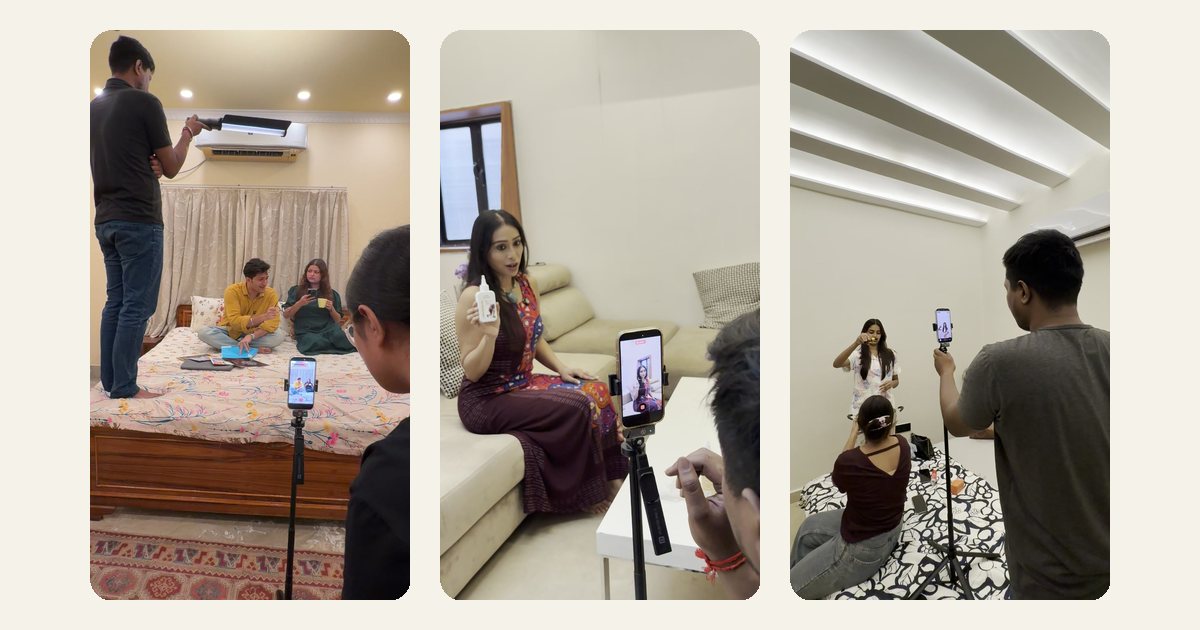
There is a structural tension at the heart of digital advertising: the more money brands pour into a channel, the more that channel's audience learns to tune it out. Indian consumers have now spent a decade being marketed to on Meta and Google, and the result is a population that is simultaneously more reachable than ever and more resistant to conventional ad formats. The brands scaling D2C ad performance in this environment are not simply outspending the competition — they are producing content that earns attention instead of interrupting it.
Understanding the Trust Gap
The trust gap is the distance between what a brand says about itself and what a potential customer believes. In 2016, a well-produced Instagram ad for a skincare brand could generate real purchase intent because the format was novel and audiences were not yet calibrated to filter it. In 2026, that same ad looks promotional before the viewer has processed a single word of the copy. The gap has widened because every brand has access to the same targeting tools and the same creative templates, and audiences have adapted accordingly.
Why UGC Addresses the Root Cause
UGC addresses the trust gap not by making ads look better but by making them look like something else: a peer recommendation. A real customer in a believable setting, talking about a specific experience with a product, activates a different kind of attention than a polished brand video. The viewer's brain processes it as social proof rather than advertising. This distinction is not just psychological — it shows up in scroll-stopping rates, click-through rates, and ultimately in purchase rates.
The Difference Between UGC That Builds Trust and UGC That Does Not
Not all UGC closes the trust gap. Creators who are clearly reading from a script, who use brand-mandated superlatives, or who show no genuine familiarity with the product signal inauthenticity as effectively as any corporate ad. The markers of authentic UGC are specificity (a real problem, a real result, a real context), imperfection (natural lighting, casual delivery, visible environment), and relevance (the creator's background matches the viewer's). Brands that brief for authenticity rather than polish consistently outperform those that brief for production quality.
Scaling Without Sacrificing Authenticity
The practical challenge is producing enough authentic UGC to scale paid social without the content losing the quality that makes it work. This is where a structured UGC programme differs from ad hoc creator outreach. A managed programme maintains a pool of creators who understand how to deliver genuine on-camera responses, builds briefs that leave room for natural delivery, and has a review process that catches brand compliance issues without stripping out the personality that makes content convert. Volume and authenticity do not have to trade off against each other when the production system is built right.
What Scaling Looks Like in Practice
For D2C brands at an early stage, scaling UGC might mean moving from two ad creatives in rotation to six, and testing each against the others. For brands at a more mature stage, it means 15 to 20 pieces of content per month, systematically tested across cold and warm audiences, with each batch briefed based on what the previous batch taught. The cost per acquisition does not scale linearly with the number of creatives — it typically decreases as the testing surface increases and the best-performing angles are identified and amplified.
Takeaway
Scaling D2C ad performance in a high-skepticism environment means finding the format that feels least like an advertisement while still driving purchase intent. UGC is that format when it is produced, tested, and managed with discipline. The brands building this capability are gaining a compounding advantage over those still relying on brand-produced creative alone.
Ready to build a UGC programme designed for performance? Book a strategy call and we will show you how it works for your category.