Customer acquisition cost is one of the most watched numbers in any D2C business, and the conversation about how to reduce it almost always gravitates toward media buying — better targeting, smarter bidding, lower CPM placements. These levers matter, but they have limits. Targeting can only get you in front of the right person; it cannot make them believe your product is right for them. That job belongs to the creative — and the relationship between creative quality and CAC is more direct than most brands account for in their optimisation work.
The Mechanics of How Creative Affects CAC
CAC = (total ad spend) / (number of customers acquired). Most efforts to reduce CAC focus on reducing the numerator (spend) or improving targeting efficiency to reach fewer but more relevant people. But there is a third lever: increasing the denominator by improving the rate at which impressions convert into customers.
Creative quality affects CAC through two compounding mechanisms. First, better creative earns more organic engagement (comments, shares, saves), which lowers CPM because platforms reward content that their users respond to positively. Second, better creative converts a higher percentage of the audience that does see it, improving the return on each impression. Both effects push CAC downward simultaneously — and they compound over time as the algorithm accumulates positive signals from high-performing creative.
What Makes Social Content Convert on Social Platforms
Conversion on social media begins before the click. A viewer who reaches the product page in a high-intent state — having watched most of the video, felt genuine curiosity about the product, and already had their primary objection addressed by the creator — converts at a dramatically higher rate than a viewer who clicked impulsively and arrives with no context.
Content that builds this pre-click intent has specific characteristics:
- A hook that is immediately relevant to the viewer's situation or problem, not just attention-grabbing in a general sense.
- A demonstration or testimony that shows the product solving a real, relatable problem — not just showing the product in an attractive setting.
- At least one honest, specific claim that a real person could reasonably make about their experience with the product.
- A call to action that is aligned with the viewer's likely readiness to act — 'learn more' for cold audiences, 'shop now' for retargeted audiences who already know the brand.
UGC and the CAC Advantage: How It Works in Practice
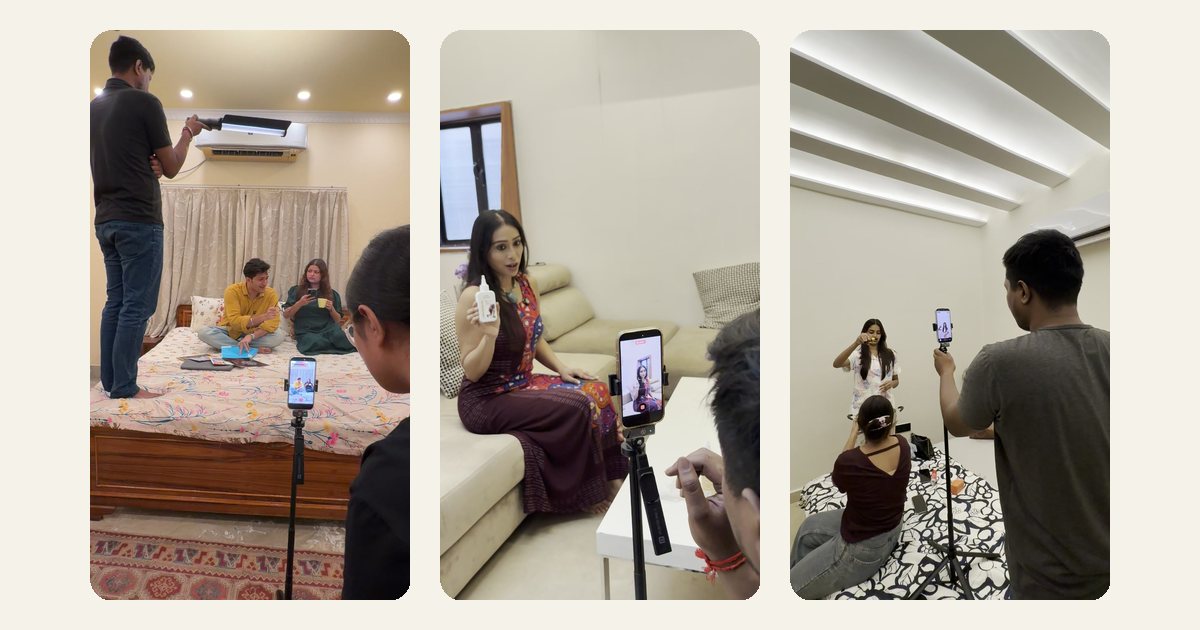
For Indian D2C brands running paid social campaigns, UGC consistently outperforms traditional brand creative on CAC reduction for several reasons. Authentic creator content earns more organic engagement, which improves ad quality scores and lowers CPM. It addresses the social proof gap that prevents first-time buyers from converting. And it is cheaper to produce per unit than studio content, which means brands can maintain higher creative variety — a key driver of sustained performance as creative fatigue sets in on any individual ad.
The CAC reduction from UGC is not always dramatic in any single week of testing, but it compounds. A brand that replaces traditional creative with UGC and commits to a monthly creative refresh cycle typically sees CAC trend measurably downward over three to six months as the algorithm feeds on increasingly high-quality performance signals.
The Role of Landing Page Alignment
Converting social content cannot carry the full weight of CAC reduction if the landing page experience breaks the trust established by the ad. One of the most common sources of post-click conversion loss is a mismatch between the tone, claims, and visual style of the UGC ad and the brand website. An authentic, conversational creator video followed by a hyper-polished, claim-heavy product page creates a jarring tonal shift that raises doubt at the worst possible moment.
Brands that embed UGC content on their product pages — testimonial videos, review clips, creator demonstrations — bridge this gap and extend the trust signal from the ad into the conversion environment. This integration is one of the highest-return optimisations available to D2C brands that have already invested in UGC creative production.
Takeaway
CAC is ultimately a creative efficiency problem as much as a media efficiency problem. Social content that genuinely converts — by building trust, addressing objections, and presenting real-person proof — reduces CAC by making every impression more valuable. UGC is the format that most reliably delivers this outcome for Indian D2C brands operating in competitive paid social environments.
Want to understand what converting social content looks like for your specific category and audience? Book a strategy call and we will map out a creative strategy designed to move your CAC in the right direction.