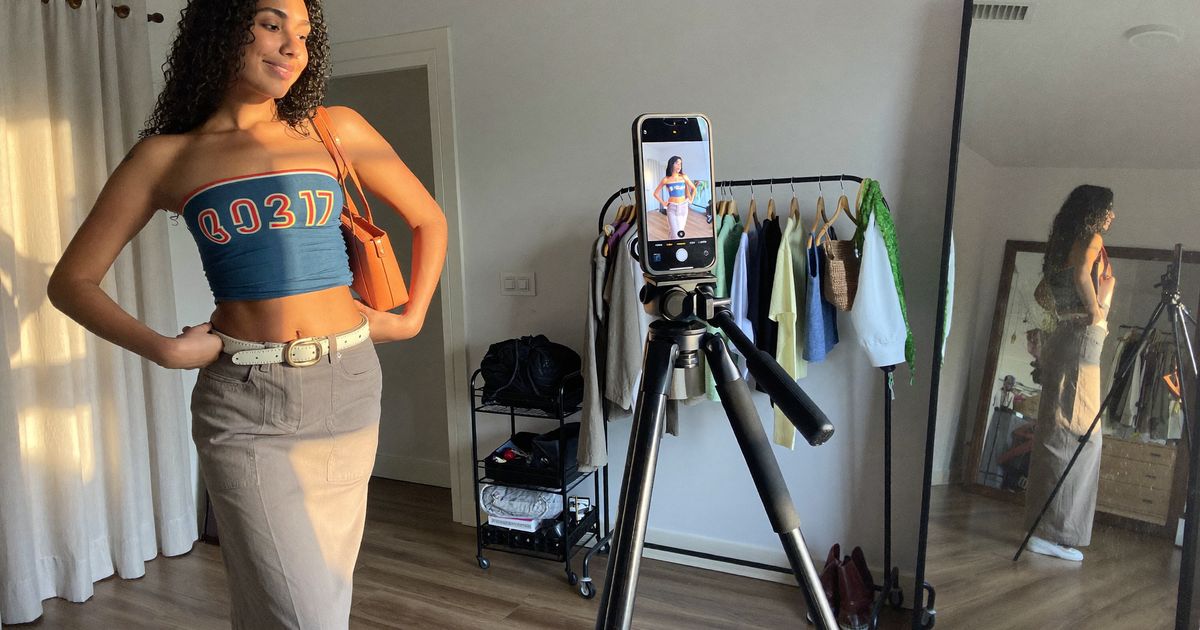
Fashion brands have a problem that other categories don't: customers buy with their eyes, but most brand-produced visuals look nothing like what the product actually looks like on a real body in real light. A Rs.3,000 kurti photographed in a studio against a white backdrop sells differently from the same kurti filmed by a size-16 woman in Bengaluru showing how it fits at the waist and moves when she walks. That gap, between polished brand imagery and lived experience, is exactly where a UGC content engine lives.
If you run a fashion label or work in marketing for one and have never systematically built a creator-driven content pipeline before, this guide will walk you through every layer: what a UGC content engine actually is, how to structure it for fashion specifically, and what it costs and produces at realistic Indian scale.
What "Content Engine" Actually Means
A content engine is not a one-off influencer campaign. It is a repeatable system where creator briefs go in one end and a steady volume of usable video assets comes out the other, week after week, collection after collection. For fashion brands, this matters because:
- Collections turn over fast. Festive, summer, wedding season, casual Friday drops, you need fresh creative for each, not a single annual shoot.
- Multiple SKUs need coverage. A brand selling 40 styles cannot rely on one hero video. Each colour, each silhouette, each fit range benefits from its own creator-produced content.
- Paid ads require volume to test. Running Meta or Google Shopping campaigns without a library of creative variants means you exhaust your best-performing ad in weeks and have nothing to replace it with.
The engine has four moving parts: a creator roster, a brief library, a production workflow, and a content bank. Build these once, and adding a new collection becomes a matter of updating the brief rather than starting from scratch.
Building Your Creator Roster for Fashion
Fashion UGC requires creators who can do one thing above almost everything else: wear and move in clothing on camera in a way that feels natural. Acting ability matters less than physical comfort in front of a lens.
For the Indian market, think in terms of three roster tiers:
- Nano creators (1,000–10,000 followers on Instagram or YouTube Shorts): These are your highest-volume tier. They are affordable, typically Rs.2,500–Rs.6,000 per deliverable for fashion UGC, and their content feels genuinely personal. A nano creator in Jaipur filming ethnic wear in her own home looks nothing like an ad. That authenticity is the asset.
- Micro creators (10,000–100,000 followers): Use these for formats that benefit from a little more production polish, try-on hauls, outfit-of-the-day reels, unboxing-style reveals. Budget Rs.8,000–Rs.25,000 per deliverable depending on platform and usage rights.
- UGC-only creators (no public following required): This is an underused category in India. These are people, often in tier-cities across India like Nagpur, Coimbatore, or Lucknow, who create specifically for brand use rather than to build their own audience. They are not influencers. You are not paying for reach. You are paying for a video asset with usage rights, and it is often the most cost-efficient format in the roster.
For fashion specifically, diversity of body type, skin tone, and city context is not just a values choice, it is a commercial one. A churidar filmed by a creator in Chennai who speaks Tamil in the caption connects with a different buyer than the same product shown in a Delhi studio. We brief creators to specify their city and, where relevant, their size in on-camera hook lines, because this improves comment engagement and saves-to-purchase conversion.
Writing Briefs That Produce Usable Fashion Content
Most UGC briefs fail fashion brands because they are too vague ("show how much you love this dress") or too prescriptive ("say exactly these three sentences in this order"). Neither works. A good fashion brief gives the creator a clear job to do while leaving room for their natural delivery.
Every brief in a fashion engine should specify:
- The hook format: Is this a problem-solution open ("I could never find a kurta that fits my shoulders until…"), a visual-first open (outfit laid flat, then worn), or a reaction open (creator reacts to unboxing the parcel)? Name it explicitly.
- The key visual moment: For clothing, this is usually a slow 360-degree turn, a close-up of fabric texture, or a movement shot (walking, sitting, twirling). Tell the creator which one you need.
- The claim boundary: ASCI guidelines require that advertising claims be truthful and not misleading. If your brief asks a creator to say "this fabric is 100% breathable" or "best quality in India," you need substantiation. Brief creators to speak from personal experience only: "I wore this for six hours in Mumbai heat and didn't feel uncomfortable" is defensible. "The best cotton kurta available" is not.
- The usage context: Will this appear in Instagram feed ads, YouTube pre-roll, or WhatsApp Status promotions? Aspect ratio and caption style differ. A 9:16 reel filmed for Stories looks cropped and wrong in a 1:1 feed placement.
A brief is not a script. It is a job description. Tell creators what problem the video solves for the viewer, what one visual moment must be captured, and what they must never say. Everything else is theirs.
The Production Workflow: From Sample Dispatch to Final Asset
Here is a practical week-by-week flow that works for Indian fashion brands operating at a medium pace (one collection per month, 8–15 video assets per collection):
- Week 1, Briefing and casting: Write collection-specific briefs. Match briefs to creators on your roster based on the garment's fit range and aesthetic. Ship product samples by Delhivery or BlueDart with a printed one-page brief inside the parcel.
- Week 2, Filming window: Creators have 5–7 days to film and submit raw footage or a first cut via a shared Google Drive folder or a platform like Billo (which has India pricing) or a direct WhatsApp submission workflow for smaller rosters.
- Week 3, Review and edit: A single editor can take raw creator footage and cut 8–12 final assets in two to three working days for fashion content. This includes adding subtitles (Hindi and English), audio ducking, and a logo end card. Keep edits light, heavy post-production defeats the authenticity of UGC.
- Week 4, Testing and deployment: Push 3–4 variants into Meta Ads Manager as separate ad creatives within the same ad set. Let the platform spend Rs.500–Rs.1,000 per variant over five days before reading performance signals. The winning variant goes to scaled spend; the others inform next month's briefs.
What to Measure and When to Adjust
Fashion UGC engines produce two types of value: paid performance (click-through rate, cost per add-to-cart, ROAS) and organic equity (saves, shares, DM inquiries from organic posts). Measure both separately.
For paid ads on Meta, the metric that predicts scaling viability fastest is thumb-stop rate, the percentage of people who watch past the first three seconds. For fashion reels, a thumb-stop rate above 30% in the first 48 hours signals a hook that is working. Below 20% means the opening two seconds need to change, not the product.
Common failure modes in Indian fashion UGC and their fixes:
- Low saves on organic posts: Usually means the styling context is missing. Viewers save fashion content when they can imagine wearing the outfit themselves. Briefs should include a "style it with" moment where the creator pairs the garment with shoes, accessories, or an occasion ("this is what I'd wear to a family function in this").
- High CTR, low add-to-cart: The content is creating curiosity but the product page isn't closing. This is a landing page problem, not a UGC problem, but knowing this from data saves weeks of reshooting.
- Creator drop-off mid-roster: Happens when turnaround times are unclear or payment is delayed. Pay within 7 days of asset approval, track deadlines in a shared sheet, and your retention rate across seasons stays high.
Scaling the Engine Across Languages and Markets
One of the most underused levers in Indian fashion UGC is language-specific creative. A brand selling pan-India should not run identical Hindi-only content in Tamil Nadu and Bengali-speaking West Bengal. The product might be identical; the hook line, the occasion reference, and the music choice should not be.
Scaling language variants does not require a separate full production run. It requires:
- One regional creator per language market who films the same brief natively (Tamil in Chennai, Marathi in Pune, Bengali in Kolkata)
- Subtitles added at the editing stage in the target language
- Geo-targeted ad sets in Meta Ads Manager that serve language-specific creatives to the right states
At current creator rates, adding a Tamil and Bengali variant to a Hindi-language content run adds roughly Rs.8,000–Rs.15,000 per collection, a small cost relative to the reach efficiency improvement in those markets.
If you are building a fashion brand and want a production pipeline that delivers consistent creative volume without managing freelancers one by one, speak to our team, we run creator rosters, brief libraries, and end-to-end UGC production for fashion and apparel brands across India.