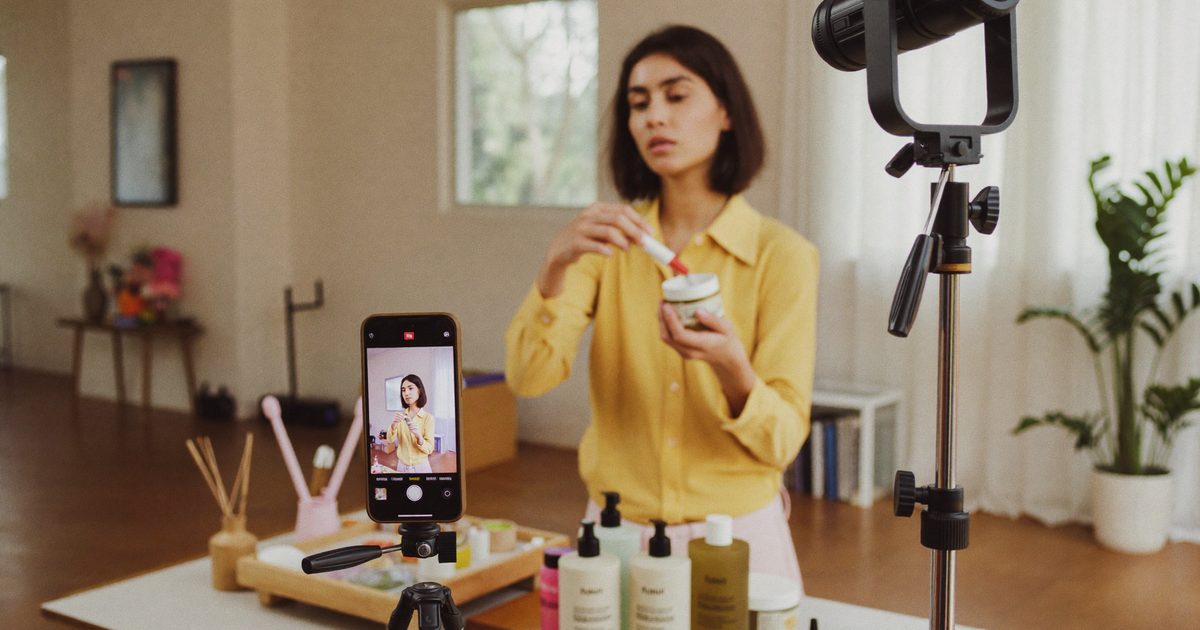
Baby product brands face a trust problem that most D2C categories do not. A parent buying a skincare item for their six-month-old is not primarily motivated by trend or aspiration, they are managing anxiety. That shift in psychological stakes changes everything about how UGC should be sourced, structured, and scaled. If you have already run a few UGC campaigns and generated decent ROAS, the next level is building a content engine: a repeatable system that produces high-trust video at volume without burning out your creator roster or violating ASCI's increasingly strict guidelines on baby product advertising.
This playbook is for brands that are past the "let's try UGC" phase. You already know testimonial videos work better than studio shoots. The challenge now is supply reliability, format diversity, and compliance, specifically in a market where new parents in Mumbai, Bengaluru, and Tier-cities across India like Indore and Coimbatore are consuming Reels and YouTube Shorts in Hindi, Tamil, Telugu, and Bengali simultaneously.
Audit Your Existing Creator Pool Before Scaling
Most baby brands that contact us have between 10 and 30 creators in their roster, usually nano and micro parents discovered through Instagram DMs. Before adding more creators, run a structured audit of what you already have:
- Content-to-brief alignment: What percentage of delivered videos actually followed the shot list and key message? If it is below 70%, your briefs are the problem, not your creators.
- Trust signals present: Does the video show the real baby using the product, a visible reaction, or a before/after context? Or is it a talking-head endorsement with the product held up like a prop?
- Language coverage: Hindi content gets the volume, but Tamil and Telugu parents on YouTube have significantly higher watch completion rates for product-specific content. If your roster is 90% Hindi, you have an untapped performance gap.
- ASCI compliance check: Under ASCI guidelines (and the updated endorsement rules in effect from 2023), any creator who received free product or payment must disclose it. For baby products specifically, health claims, "improves sleep", "prevents rash", "builds immunity", require substantiation or must be removed. Audit every published video for undisclosed partnerships and unsubstantiated claims before you run paid amplification on it.
The audit takes two to three days but typically reveals that 30–40% of existing content has a compliance or quality issue that disqualifies it from Meta/Google whitelisting.
Build a Tiered Creator Architecture
A content engine needs predictable supply. Random creator discovery does not scale. Structure your roster into three tiers with different roles:
- Tier 1, Anchor Creators (3–5 creators): Parents with 20K–150K followers in the baby/parenting niche. Retainer arrangement of Rs. 15,000–35,000/month for two to three videos each. These creators produce your highest-production content, full reviews, comparison formats, "day in our life" integrations. Their content anchors your organic brand page and provides hero assets for Advantage+ campaigns.
- Tier 2, Volume Creators (15–30 creators): Nano parents (1K–10K followers) or parents with no public following who are simply good on camera. Compensate with a combination of product hampers (valued at Rs. 1,500–4,000) and a flat Rs. 3,000–6,000 per approved video. These creators produce your workhorse formats, unboxing reactions, bath-time or feed-time demos, 30-second problem/solution Reels.
- Tier 3, Community Contributors: Real customers who submit content via a review prompt in your post-purchase email or WhatsApp Business flow. No monetary compensation. The content is rougher but carries the highest trust signals because it is genuinely unprompted. Even 5–8 good clips per month from this tier are worth more in social proof than 20 polished Tier 2 videos.
The ratio of effort to value shifts as you move down the tiers. Most brands over-invest in Tier 1 and ignore the community tier entirely. A healthy engine draws from all three simultaneously.
Design Format-Specific Briefs, Not Generic Shot Lists
Generic briefs ("show the product, say what you like about it, mention the brand") produce generic content. For a baby product engine, we brief creators against specific formats tied to specific funnel positions:
- Problem-first hook (TOFU): Creator opens with a specific pain, diaper rash at 2 AM, a baby who refuses a bottle, cradle cap that won't clear. Product is introduced as the solution they found. This format performs best as a Meta cold audience Reel or YouTube in-stream pre-roll. Brief length: 30–45 seconds. Hook must land in the first 2 seconds.
- Ritual integration (MOFU): Creator shows the product as part of an established daily routine, morning massage, bedtime routine, feeding prep. This format works for warm retargeting. It answers the "how does this actually fit my life?" question without making a hard claim. Works particularly well in Hindi with regional city backgrounds (a Lucknow kitchen, a Chennai balcony) because it signals cultural relatability to the audience.
- Comparison/switch story (BOFU): Creator explains what they were using before, why they switched, and what changed. This is your highest-converting format for cart abandoners and product page visitors. Keep it under 60 seconds. The comparison should be honest, naming a product category ("I was using a standard baby wipe") is better than naming a competitor, which creates legal exposure.
- Long-form deep-dive (YouTube): 4–8 minute review covering ingredients, how to use, results over 2–4 weeks. This format drives SEO, "best baby massage oil India", "Himalaya vs Mamaearth baby shampoo" type queries. If your brand is not investing in at least two of these per quarter, you are ceding mid-funnel YouTube real estate to competitors and affiliate review sites.
Build a Compliance Layer Into Production, Not Post-Production
ASCI's guidelines on baby products are particularly conservative because the end-user cannot consent. Three areas that regularly trip up brands during Meta ad review or cause ASCI complaints:
- Health and developmental claims: Phrases like "supports brain development", "boosts immunity", or "helps baby sleep longer" require clinical substantiation under ASCI's health claims guidelines. If your brief asks creators to say these things, you are outsourcing your compliance risk to a nano-creator who has no idea what the rules are. Remove these phrases from your briefs entirely. Replace them with experience language: "I noticed she seemed calmer after her bath" is a personal observation, not a health claim.
- Disclosure: The #ad or #sponsored hashtag must appear at the top of any caption where product was gifted or paid for, not buried at the bottom after eight lines of copy. For video, a verbal disclosure within the first 20 seconds is best practice. We now include a mandatory disclosure script line in every brief for Tier 1 and Tier 2 creators.
- Age and safety representations: If a creator shows a baby in a sleep position or carrier configuration, it must be age-appropriate and safe. ASCI and consumer advocacy groups have filed complaints against brands whose creator content showed unsafe infant positioning even when it was incidental to the product being shown. Brief creators on this explicitly.
The safest rule of thumb: if a paediatrician would raise an eyebrow at the claim or the visual, it does not belong in paid amplification. Organic posting carries lower scrutiny; paid Meta or Google content faces both platform policy and ASCI exposure simultaneously.
Amplification Strategy: What to Whitelist and What to Leave Organic
Not every piece of creator content deserves ad spend. An engine that amplifies indiscriminately burns budget. Use a scoring rubric before whitelisting any video:
- Hook retention: Run the video as a dark post for Rs. 500–1,000 over 48 hours against a cold audience. If 3-second view-through is above 35%, it is worth scaling. Below 20%, retire it.
- Comment sentiment: Manual read of the first 15–20 comments. Tags, saves, and questions like "which variant did you use?" are strong signals. Negative comments about safety or authenticity are disqualifying, do not amplify a video that has already attracted suspicion.
- Format-platform fit: Ritual integration and comparison formats whitelist well for Meta. Long-form deep-dives should stay on YouTube and be supported by Google UAC or Discovery campaigns, not Meta. Mixing them up wastes budget.
For a mid-sized baby brand spending Rs. 3–6 lakh/month on Meta, a practical split is: 60% of spend behind 3–4 whitelisted creator videos, 25% behind static or carousel ads derived from creator content (still-frames, quote pulls), and 15% behind testing new creator variables. This structure avoids the common failure mode of having all spend concentrated on one creative that will fatigue within 8–12 days.
Measurement That Actually Improves the Engine
Most brands measure UGC the same way they measure brand campaigns, reach, impressions, overall ROAS. An engine requires more granular feedback loops:
- Creator-level CAC: Tag every whitelisted video by creator ID in your UTM structure. After 30 days, know which creator's content produces the lowest cost per purchase, not just the most clicks. Renew retainers based on this, not on follower count.
- Format-level funnel performance: Problem-first videos should have strong CTR but moderate conversion rate, they attract broad awareness. Comparison/switch videos should show lower CTR but higher conversion rate. If your comparison videos are underperforming on conversion, the issue is likely either the landing page or the product page, not the creative.
- Language-level performance: Run a 30-day experiment with identical briefs executed in Hindi and Tamil by similar-sized creators targeting similar audiences in Maharashtra vs Tamil Nadu. The performance difference will tell you how much localisation is worth as a budget allocation, not as a gut instinct.
- Content half-life tracking: Baby product content tends to have a longer half-life than fashion or food, a well-made video about a diaper rash cream can perform for 60–90 days because the use-case is evergreen. Track CPM week-over-week on active creatives and retire when CPM rises more than 40% from its baseline. Refreshing with a new creator variant at that point (same brief, new face) often restores performance without rebuilding the campaign structure.
Building this engine takes 60–90 days to stabilise from scratch, but the payoff is a content supply that does not require a campaign manager to scramble for new creatives every two weeks. If you want to map this structure to your current catalogue and creator roster, reach out for a consultation, we work with baby and mother-care brands specifically on building these systems end to end.