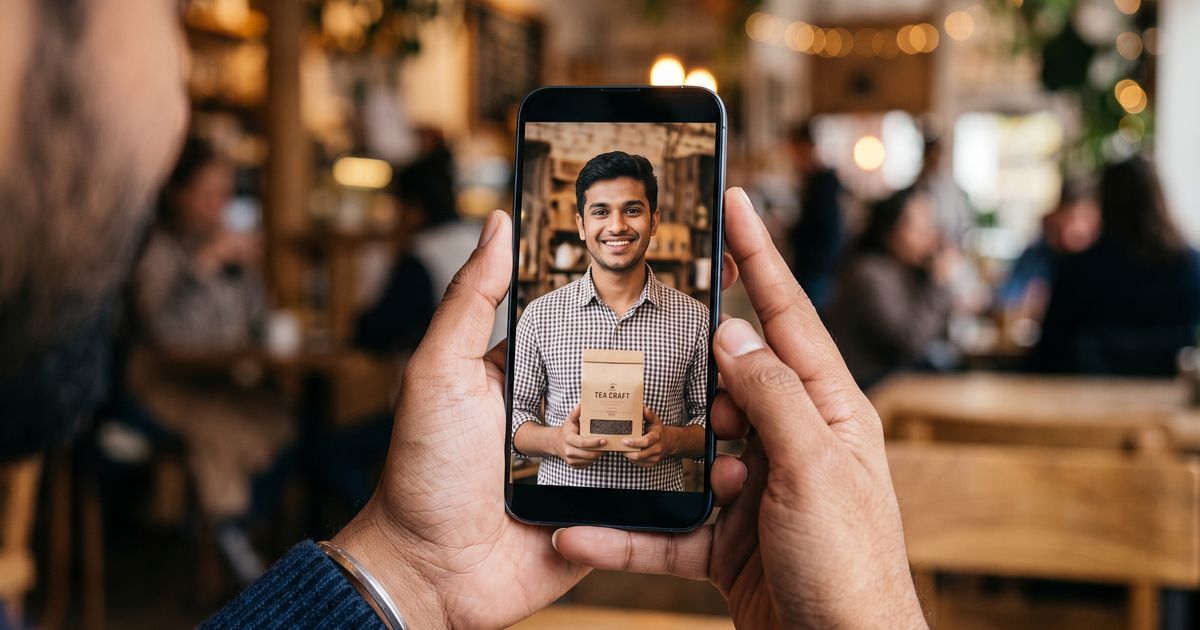
WhatsApp Status has a 24-hour lifespan, a mute button, and no algorithm deciding who sees what, and yet it consistently drives some of the highest-intent traffic we see from creator-led campaigns for Indian D2C brands. The reason is structural: when a creator's contact opens their Status, they have already opted into that relationship. There is no cold discovery happening. That intimacy is the entire strategic asset, and most brands using UGC are not exploiting it deliberately.
This playbook is for teams that have already shipped a few UGC campaigns on Instagram Reels or YouTube Shorts and want to extend the model into WhatsApp Status, with a proper briefing framework, compliance guardrails, and measurement that doesn't rely on guesswork.
Why Status Is Different From Every Other UGC Surface
Most UGC formats are built for scale: a Reel can reach people who have never heard of a creator. Status flips this. A creator posting on WhatsApp Status reaches only their saved contacts, people who have their number, which in the Indian context usually means family, colleagues, locality friends, and close social circles. The average Indian user's contact list skews far more trusted than their Instagram follower list.
- No public engagement metrics. There are no likes or comments. The only data visible to the creator is the "Seen by" list. Brands need to design for this, you cannot measure virality the same way.
- No algorithm amplification. A Status does not get pushed to non-contacts regardless of how engaging it is. This limits reach but increases conversion relevance, the people who see it already trust the sender.
- Reply is a direct DM. When someone responds to a Status, it opens a private chat. This is the closest thing to a word-of-mouth referral in digital form. A creator saying "I got this serum delivered to my door in Chennai, reply if you want the link" will get replies that convert at a rate your paid ads cannot match.
- Disappears in 24 hours. This creates urgency mechanics that are genuinely useful for flash sales, limited-stock drops, or limited-time offers, without the artificiality of a countdown timer on a landing page.
Building a Creator Brief for Status: What Changes vs. Reels
A UGC brief written for Instagram Reels will produce a Status that feels like a recycled ad. The format demands a different register entirely.
When we brief creators for WhatsApp Status campaigns, we ask them to write the script as if they are sending a voice note to a friend who asked for a recommendation, not performing for an audience. The structural elements we specify:
- Duration: Keep each Status card to 15–20 seconds. Most people tap through Status fast. Three short cards outperform one 60-second video.
- Opening frame: No brand logo, no jingle. Start with the creator's face or a relatable visual (the product sitting on their actual kitchen counter in Pune, not a studio backdrop). The first half-second determines whether the viewer taps forward.
- Language: Brief creators in their native language. A Marathi-speaking creator posting in Hindi for a pan-India directive will sound unnatural to their contacts. Regional authenticity is the product here. We've seen Hindi-Bhojpuri mixed Status posts for a snack brand out of Patna outperform polished Hindi-only cuts because they matched the creator's actual speech pattern.
- The ask: One clear call-to-action. "Link in my bio" does not exist on WhatsApp. The CTA is always either "reply to this Status" or "click the link I'll send you." Brief the creator to follow up on replies within two hours, delayed response kills conversion.
- Disclosure: ASCI's guidelines on influencer advertising apply to WhatsApp Status content. A creator posting branded content must add a #Ad or #Sponsored label. Because Status does not have a caption field, this needs to be text-overlaid on the video card itself. We build this into the brief as a non-negotiable, non-disclosed paid promotions on WhatsApp have started showing up in ASCI's monitoring database, and the reputational risk for a creator is real.
Creator Tier Strategy: Nano and Micro Are the Right Fit
A macro-influencer with 500K Instagram followers may have only 200 highly engaged contacts on WhatsApp. The platform collapses follower-count advantage. This is why Status campaigns should be almost entirely built on nano (under 5,000 contacts) and micro (5,000–25,000 contacts) creators, priced accordingly.
Typical Status-specific creator fees in the Indian market as of mid-2026:
- Nano creator (verified contact list, tier-2/3 city): Rs. 800 – Rs. 2,500 per Status post
- Micro creator (strong community presence, metro): Rs. 3,000 – Rs. 8,000 per Status post
- Bundled deal (3 Status cards + follow-up DM blast to respondents): Rs. 10,000 – Rs. 20,000
For a campaign targeting, say, working women in tier-cities across India for a skincare brand, Nashik, Coimbatore, Bhopal, Raipur, 40 nano creators posting Status content simultaneously is more effective than 2 macro creators posting Reels. The aggregate "seen by" count will be smaller, but the intent density is higher and the CPL will typically be lower.
The distribution logic for Status is closer to field sales than to broadcast advertising. You want density in the right pockets, not maximum reach.
Measurement Without Native Analytics
WhatsApp provides no brand-side analytics for Status. The creator sees their own "Seen by" count; you see nothing unless you build a tracking layer. Here is how to instrument a Status campaign properly:
- UTM-tagged short links: Every creator gets a unique short link (via Bitly, Rebrandly, or your own link shortener). The UTM source should include the creator ID. This is the only reliable way to attribute website sessions to a specific creator's Status.
- WhatsApp Business API response tracking: If the CTA is "reply to this Status," set up a keyword trigger in your WhatsApp Business API flow (via providers like Interakt, Wati, or AiSensy, all have Indian pricing plans starting around Rs. 2,500/month). When a contact replies with a keyword like "WANT" or "LINK," the API sends the tracked link automatically and logs the conversation.
- Creator self-reporting: Build a simple Google Form into your creator dashboard. After 24 hours, each creator fills in their "Seen by" count and number of direct replies received. Not scientific, but it gives you reach and reply-rate benchmarks across your creator pool over time.
- Coupon codes: Assign each creator a unique discount code (e.g., DIVYA15, PRIYA10). Track redemptions in Shopify or your payment gateway. This is the cleanest conversion attribution method for D2C brands and works well even without API infrastructure.
Over a campaign of creators, you will start to see which creator profiles, cities, and language styles drive the highest reply rate and conversion rate. That data becomes your casting brief for the next round.
Advanced Mechanics: Status Sequences and Retargeting
Brands running Status campaigns at scale can layer in mechanics that are invisible to casual observers but significantly lift performance.
Status sequences (3-card arc): Instead of one standalone Status post, brief the creator to post a three-card narrative over 48 hours. Card 1: problem or curiosity hook ("My skin has been embarrassingly dry since the AC season started"). Card 2 (next day): discovery and honest review. Card 3: limited-time link with explicit deadline. This mirrors the way people actually share products in real life, organically and over time, and generates multiple touchpoints with the same contact.
Warm DM blast: After the Status goes live, ask the creator to send a WhatsApp broadcast message to a curated segment of their contacts, people who have recently engaged with them. WhatsApp Business allows broadcast lists up to 256 contacts per list. This is separate from Status but drives a second wave of engagement. Note: broadcast messages are one-way; recipients do not see each other, which preserves privacy and increases personal feel.
Creator-to-creator handoff: For hyperlocal campaigns, pair creators from overlapping social circles (a gym trainer and a nutritionist in the same city, for example). Each creator tags the other in their Status at the end of the campaign window. This creates a referral loop within a trusted network, something no paid placement can replicate.
Compliance and Platform Boundary Cases
A few hard limits worth knowing before you scale:
- WhatsApp Terms of Service prohibit bulk messaging software that mimics human behavior. If you are asking creators to use third-party auto-broadcast tools not built on the official Business API, you are in violation territory. Stick to native broadcast lists or API-based solutions.
- ASCI disclosure is not optional. The ASCI Influencer Guidelines (updated 2021, enforcement stepped up through 2024–25) cover all social media including private-facing formats. "My followers won't see the disclosure because it's a Status" is not a defense. The obligation is on the creator; your brief should make non-disclosure a contract breach.
- Health and financial product claims carry extra scrutiny. For nutraceuticals, cosmetics with active ingredients, or fintech products, brief creators to stick to personal experience ("I noticed my skin felt less tight after 2 weeks") rather than efficacy claims. FSSAI-regulated products and SEBI-regulated financial products have their own overlapping compliance layers.
If your brand is already running UGC campaigns and wants to test WhatsApp Status as a conversion channel, with a creator roster, brief templates, and measurement infrastructure built in, book a consultation and we can map out a pilot that fits your category and budget.