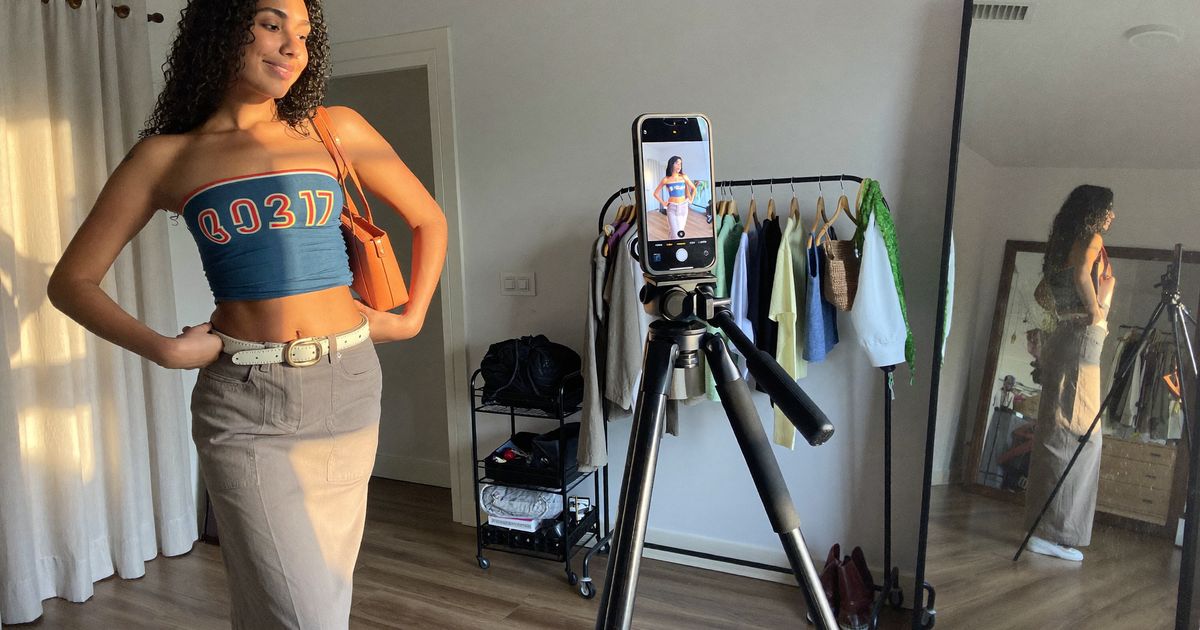
Fashion UGC in India stopped being about pretty hauls the moment Myntra's affiliate creator program crossed 10,000 active creators and Nykaa Fashion began sourcing Reels directly into their product pages. If your brand is already running UGC campaigns, briefing creators, tracking CTR, iterating creatives, you are not here for a primer. You are here for what comes next.
This playbook covers the formats, feedback loops, and production decisions that separate brands generating consistent pipeline from fashion UGC from those stuck recycling the same unboxing template every quarter. All of it is grounded in how Indian fashion audiences actually behave on Instagram, YouTube Shorts, and Meesho Live, not in global benchmarks that don't account for price sensitivity in Tier cities across India or the code-switching that happens when a creator shifts from Hindi to English mid-reel.
The Format Stack That Is Actually Converting in 2025–26
Most fashion brands running UGC have figured out the unboxing and try-on. The gap is in building a layered format stack, using different content types to serve different funnel stages simultaneously rather than pushing every creator toward the same output.
- Outfit-of-the-day Reels with price anchoring: Creators showing a full look and verbally mentioning the total cost of the outfit, "this entire look cost me under Rs.2,800 from [brand]", outperform pure aesthetic content in mid-funnel click-throughs, particularly for brands in the Rs.600–Rs.3,500 per-item range targeting women 22–35 in metros and Tier cities across India.
- Comparison content (vs. fast fashion): A creator comparing your brand's kurta set to a Shein-equivalent or a generic Meesho listing, on stitching, fabric feel, packaging, builds trust signals that product copy cannot. Brief creators to hold the fabric close to the camera and speak specifically about texture, not vaguely about "quality".
- Occasion-specific use-case content: "What I wore for Diwali gifting visits", "office-to-dinner transition looks", "shaadi shopping under Rs.5,000". Indian fashion buying is heavily occasion-driven. Creators who name the occasion in the first two seconds of a Reel see significantly stronger saves and shares, saves being the metric that predicts purchase intent most reliably on Instagram.
- YouTube Shorts honest reviews (90–120 seconds): Longer than a Reel, but YouTube's recommendation engine surfaces these to users actively searching for the brand name or product category. These function as SEO-adjacent assets. A creator with 8,000 YouTube subscribers can deliver higher-converting traffic than an influencer with 200,000 Instagram followers if the content ranks on "Libas kurta review" or "W brand jeans honest opinion".
Advanced Briefing: Moving Beyond the Mood Board
Brands that have been running UGC for a year or more often hit a creative plateau, creators are technically executing the brief but the content feels templated. The fix is not more detailed briefs; it is more behaviorally specific briefs.
Rather than telling a creator to "show the product naturally", brief them on the exact micro-moment to capture: "Show opening the package while sitting on your bed, react specifically to the packaging insert if you notice it, then put on the top and walk toward your balcony with natural light." That level of specificity does not constrain the creator's personality, it grounds the scene so the creator isn't improvising logistics and forgetting the product benefit.
- Include a one-sentence audience truth in every brief: "Our buyer is a woman in Hyderabad who spends Rs.1,200–Rs.2,500 per item and compares at least three listings before buying." Creators who know the buyer behave differently on camera than creators who only know the product.
- Specify the ASCI disclosure placement upfront. Under ASCI's influencer guidelines (updated 2023), material connections, gifted product, paid partnership, must be disclosed prominently, not buried. Brief creators to use the platform's built-in "Paid partnership" tag on Instagram and open the caption with #Ad or #Gifted, not drop it at the end after ten other hashtags. This is not optional; non-compliant posts create liability for the brand.
- Build a hook menu into the brief: give creators three alternative opening lines and let them choose, rather than writing one prescribed hook. Creators adapt tone instinctively to their audience; pre-approved variation reduces revision cycles while improving authenticity.
Multi-Language Production Without Losing Brand Consistency
A fashion brand targeting genuinely pan-India reach needs UGC in at least Hindi, Tamil, Telugu, and Bengali to move past the Instagram metro bubble. This is operationally harder than it looks, because brand consistency breaks at translation, a brand tagline that works in English often sounds stilted when directly translated into Telugu.
The more effective approach is to brief creators on the message intent, not the exact line. "The idea is that this ethnic wear looks premium but is priced accessibly, communicate that in whatever way feels natural in your language and for your audience." A creator from Chennai will frame "affordable premium" differently for a Tamil-speaking audience than a creator from Kolkata will for a Bengali-speaking one, and both framings will outperform a translated script from a central team.
- Use a visual consistency anchor instead of a verbal one: same unboxing backdrop, same brand-coloured tissue paper, same logo placement on packaging. Even if the spoken content varies across languages, the visual continuity creates brand recognition across markets.
- For ethnic wear categories (sarees, lehengas, kurta sets), regional creators carry category authority that general fashion influencers do not. A Kanjeevaram silk brand that works with creators in Chennai, Coimbatore, and Madurai, even micro-creators with 12,000–30,000 followers, generates more credible UGC than the same brand working with a single large Hindi-speaking creator who has never worn a Kanjeevaram before.
Using Dark Posts and Paid Amplification to Extend UGC Reach
Organic UGC reach has a natural ceiling. Brands at an intermediate stage of UGC maturity often underuse whitelisting and dark post amplification, running creator content as paid ads from the creator's handle (with their permission), which outperforms branded ads in fashion categories because it preserves the social proof context.
- When briefing creators for potential amplification, secure whitelisting rights upfront in the contract, not as an afterthought once a piece of content performs. Retroactively negotiating whitelisting is slow and often leads to creators raising their rate.
- Dark posts (ads run from a creator handle that do not appear on their public feed) work well for SKU-level promotions, a specific season launch, an end-of-stock push, where you want campaign control without it looking like a creator has been posting paid content every week.
- A reasonable amplification budget for a fashion UGC dark post targeting metro women aged 22–38 on Instagram and Facebook starts around Rs.15,000–Rs.25,000 per creative for a 7–10 day test window. Run two or three creator variants per campaign rather than one, and let the algorithm surface the winner before scaling spend.
- Track cost-per-link-click and cost-per-add-to-cart separately. Fashion UGC often drives high link click volume at low CPCs (Rs.3–Rs.8 range is achievable in non-peak windows) but the quality metric is add-to-cart rate on the landing page, which tells you whether the creator's audience matched your buyer profile.
Reading Signals and Retiring Creatives Before They Decay
A common mistake at the intermediate UGC stage is running winning creatives too long. Fashion content ages faster than most categories because trend cycles move quickly and audiences in Tier cities across India especially register when they have seen the same video multiple times.
We brief clients to set a frequency cap of 3–4 impressions per user per week on any single UGC creative running in paid amplification. Once frequency consistently exceeds 4, CTR drop-off is typically steep regardless of how strong the original performance was.
- The organic signal to watch on Reels is the save rate relative to like rate. A Reel with 400 saves and 1,200 likes is a stronger purchase-intent signal than one with 4,000 likes and 80 saves. Save-heavy content is worth amplifying even if its raw like count looks modest.
- Retire and replace creatives on a rolling 6-week schedule for paid campaigns, not reactively after performance tanks. Build your creator roster and production pipeline to support this cadence, a minimum of 3–4 new UGC assets per month keeps fashion campaigns fresh without requiring large per-asset budgets.
- Archive retired creatives with performance notes. A format that decayed in October (post-festive fatigue) may be worth re-testing in January (fresh browsing cycle). Fashion UGC that was shot in natural daylight for summer may perform again in spring. Catalogue your library; do not discard it.
What the Next 12 Months Look Like for Fashion UGC
Several shifts in Indian fashion UGC are worth building toward now, before they become table stakes:
- Creator-led livestream commerce on Meesho and Flipkart: Both platforms are actively building creator-selling infrastructure. Fashion brands that onboard creators to their live seller programs in the next 6–12 months will have a head start in a channel that is likely to replicate the scale live commerce achieved in China, with the added advantage of India's regional language diversity making live selling more culturally elastic than static ad formats.
- AI-assisted creative iteration: Using AI tools to generate alternate hooks, test caption variants, or swap background music across creator clips is already in use by some larger fashion advertisers. The constraint is that fashion UGC's core value is human authenticity, AI should be used to reduce post-production friction, not to generate synthetic creator personas, which Indian audiences have shown they can identify and distrust quickly.
- Nano-creator networks in Tier cities across India: Jaipur, Surat, Indore, and Coimbatore, cities with dense ethnic-wear manufacturing bases, are producing a cohort of highly credible fashion creators with audiences of 5,000–25,000 that convert at rates no metro macro-influencer can match for the same categories. The cost to brief and produce with these creators is substantially lower; the authenticity ceiling is higher.
If your brand is ready to move from ad-hoc UGC campaigns to a structured production system, consistent formats, briefing frameworks, paid amplification discipline, and a creator roster built for scale, we can map that out together. See how other fashion and D2C brands have built this at our work page, or book a consultation to scope what the right UGC architecture looks like for your category and budget.