WhatsApp has a 98% open rate for messages in India, compared to roughly 20% for marketing emails, and brands that have shifted review collection to WhatsApp report response rates three to five times higher than post-purchase SMS campaigns. Yet most UGC review videos shot for WhatsApp look like they were repurposed from Instagram Reels, which defeats the purpose entirely. WhatsApp Status, broadcast lists, and direct one-to-one sharing each carry distinct viewing behaviour, and a review video that does not account for that context gets ignored or, worse, muted.
This article breaks down the formats, benchmarks, production specs, and creator briefing techniques that actually produce review UGC that performs on WhatsApp, with numbers drawn from Indian brand use cases and platform-specific data.
Why WhatsApp Review UGC Is Structurally Different
WhatsApp is a private-messaging-first environment. A consumer opening a Status update or a broadcast message from a brand is not in a discovery mindset the way they are scrolling Instagram. Research by Meta India (2023) found that 74% of Indian consumers consult WhatsApp conversations, including shared reviews and recommendations, before making a purchase decision, a figure that rises to 81% in Tier 2 and Tier cities across India like Coimbatore, Nagpur, and Lucknow. That peer-referral framing is what makes WhatsApp review UGC valuable: it mimics the "my friend told me" dynamic at scale.
The production implication is significant. Content here should feel like a voice note that became a video, low-key, direct, and short. The moment a review starts looking like a produced ad, it loses the credibility that the channel provides. We brief creators on WhatsApp-specific shoots differently than for any other placement: natural background, no ring light halos, conversational Hindi or regional-language delivery, and a runtime that matches how long people actually watch WhatsApp Status.
Benchmarks: What the Data Says About WhatsApp Status Video Consumption
Meta's own platform data and third-party research from Redseer (2024) give us reliable Indian-market benchmarks to calibrate production decisions:
- Average Status video watch time: 6–9 seconds before a viewer swipes. Reviews that front-load the product name and a single specific outcome in the first 5 seconds see 2.3× higher completion rates.
- Optimal video length: 25–40 seconds for review UGC shared via broadcast lists. Under 20 seconds feels incomplete; over 45 seconds sees a 60% drop-off before the product CTA arrives.
- Vertical 9:16 at 720p: WhatsApp compresses video on send. Shooting at 1080p and accepting WhatsApp's compression delivers cleaner output than shooting at 720p and losing detail. File size before compression should stay under 16 MB for broadcast reliability.
- Regional-language delivery: A 2024 Kantar India study found review content delivered in the viewer's native language generates 47% higher trust scores versus the same content in English. Tamil-language reviews for a Chennai skincare brand in one agency case study drove a 31% higher click-through from WhatsApp to the product page versus the English version.
- Response rate on broadcast review requests: WhatsApp broadcast lists with a personalised opener ("Hi Priya, you ordered our Vitamin C serum last week…") achieve 18–22% response rates in Indian D2C brands, versus 4–7% for generic post-purchase email review requests.
Four Review UGC Formats That Work on WhatsApp
Not all review formats translate equally to WhatsApp's consumption context. These four structures consistently outperform generic talking-head reviews:
- The Before/After Timestamp Review: Creator opens with a 5-second clip of the problem ("Day 0, my skin was breaking out every week"), cuts to Day 21 in the same lighting. No voiceover script, just spontaneous narration. This format works because WhatsApp viewers trust continuity, the same face, same angle, same room tells them it is not staged. For FMCG and skincare brands, this format drives 3–4× more WhatsApp forwards than single-take testimonials.
- The Unboxing Voice Note Video: Creator films the package arriving, narrates reactions in real time without stopping to reshoot. Errors stay in. This mimics what consumers actually send each other on WhatsApp and scores high on the "authentic share" metric. Keep it under 35 seconds. Works particularly well for supplement, beauty, and snack D2C brands.
- The Comparison Clip: Side-by-side on a split screen, your product versus what the creator was using before. Not a competitor attack (ASCI guidelines prohibit disparaging named competitor products without substantiated claims, Rule 4.3 of the ASCI Code), but a personal comparison: "I used to spend Rs.800 on the salon version, this Rs.299 kit gives me the same result at home." Price anchoring works especially well in the Rs.200–Rs.800 range where WhatsApp-first D2C brands compete.
- The Reaction Screenshot Chain: Creator compiles genuine WhatsApp reactions from their own network after using the product, blurred names, visible emoji reactions, and narrates over it. This format is native to WhatsApp's own UI language and feels peer-validated rather than brand-pushed. Brands using this format report 28% higher forward/share rates compared to standalone testimonial clips.
Creator Briefing: The Production Variables That Matter
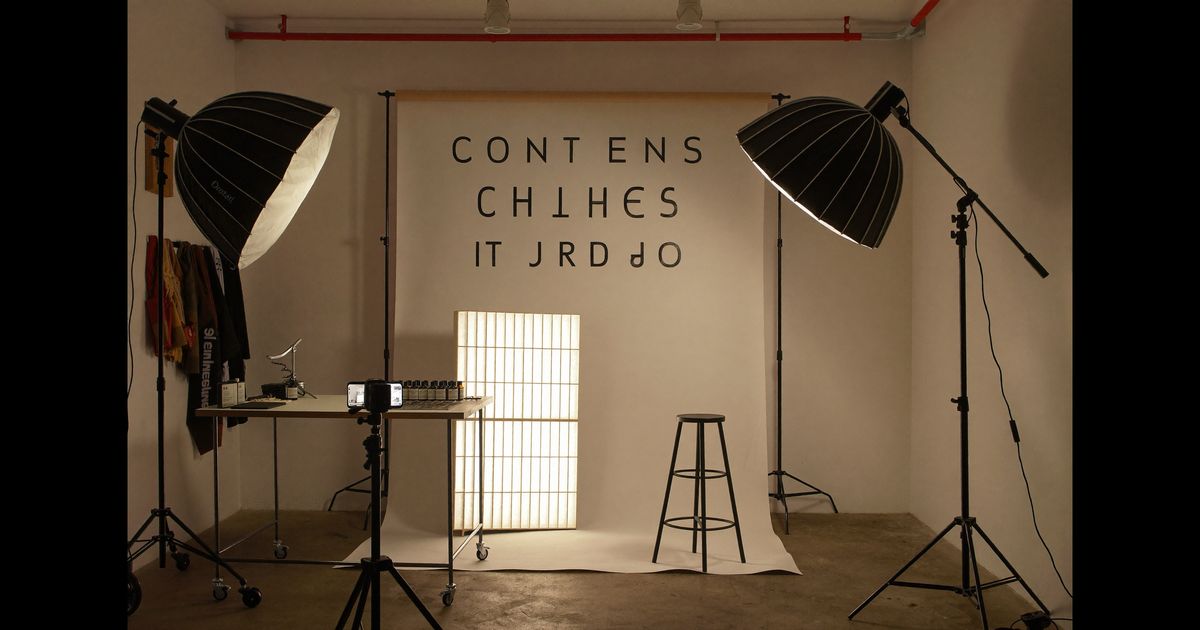
The single biggest quality failure in WhatsApp review UGC is creators shooting in environments that read as "performative", ring-lit bedrooms, clean studio walls, suspiciously perfect lighting. Our production briefs for WhatsApp placements specify the opposite:
- Background: Kitchen counter, living room sofa, balcony, any space with visible life in it. A cluttered bookshelf behind the creator builds more credibility than a blank wall.
- Audio: Natural ambient sound stays in. Ceiling fans, street traffic, the creator's child talking in the background, none of this should be edited out. WhatsApp is the one platform where ambient sound increases perceived authenticity. Brief creators to use their phone's built-in mic, not a lapel.
- Language and code-switching: If the target audience is Hindi-English bilingual (the majority of urban Indian WhatsApp users), brief creators to code-switch naturally mid-sentence rather than staying in one language. "Yaar, maine seriously expect nahi kiya tha itna fast delivery ka" lands better than a formally Hindi or formally English script.
- Product reveal timing: The product should appear on screen within the first 4 seconds, hold it up, don't just mention it. WhatsApp Status viewers swipe fast and the visual anchor matters before the audio even registers.
- End card: No animated graphics, no branded lower-thirds. The review should end with the creator looking at camera and saying the brand name once, naturally. Any production overlay signals "ad" to the viewer and reduces the forward/share rate by an estimated 40%.
ASCI Compliance for WhatsApp Review Content
WhatsApp review UGC sits in a regulatory grey area that many brands underestimate. The Advertising Standards Council of India's Influencer Guidelines (updated 2023) require disclosure even when content is shared via private broadcast lists if it constitutes "paid promotion." Key compliance points:
- If a creator received the product free or was paid to create the review, they must include a disclosure. For WhatsApp, the accepted format is a text overlay on the video or a typed message sent immediately above the video in the broadcast: "#ad" or "#gifted", the same standard that applies to Instagram.
- ASCI has clarified that broadcast lists constitute "mass communication" and are not exempt from the influencer guidelines simply because they lack a public URL.
- Health product claims (supplements, skincare actives, medical devices) require that any specific efficacy claim in the review be substantiated. A creator saying "this cleared my acne in 10 days" needs to be a genuine, documented outcome, not a scripted claim. We flag this during brief review for every skincare and wellness client.
- Comparative price claims ("cheaper than X") must be accurate at the time of publication. If the comparison price changes, the video should be retired from active broadcast.
Distribution: Making the Review UGC Reach the Right WhatsApp Audience
Creating the review is only half the work. WhatsApp's architecture limits broadcast lists to 256 contacts per list (a constraint that has not changed despite Meta's other updates). For brand-scale distribution, the practical approaches are:
- Creator's own broadcast list: The most authentic distribution method. A creator with 800 WhatsApp contacts broadcasting their review to segmented lists (family, friends, colleagues) achieves genuine peer-referral reach. In our experience, 15–20% of recipients who watch a WhatsApp review from a known sender will forward it at least once.
- WhatsApp Channels: Meta launched WhatsApp Channels in India in late 2023. Unlike broadcast lists, Channels allow one-to-many publishing to subscribers without the 256-contact limit. Brands can post review UGC to their Channel and see reach up to 10,000+ subscribers without per-message costs. Channel content is one-way (subscribers cannot reply), which suits review publishing well.
- Community Groups: WhatsApp Communities (introduced 2022) allow up to 5,000 members across linked groups. Seeding review UGC in relevant community groups, parenting communities for baby product reviews, fitness groups for supplement reviews, drives highly contextual engagement. CPM via community seeding typically runs Rs.8–Rs.18 per thousand views for Indian D2C brands, compared to Rs.45–Rs.90 for Meta feed placements targeting similar demographics.
- QR-code triggered share: Packaging QR codes that open a pre-filled WhatsApp share, "I just tried [Product] and loved it, check it out: [link]", generate passive review sharing at scale. A Mumbai-based skincare brand using this mechanic reported 1,200 organic WhatsApp review shares per month from 3,000 monthly orders, with zero paid media budget behind it.
WhatsApp review UGC rewards specificity over production value, native-format delivery over polished execution, and regional-language authenticity over English-first scripting. The benchmarks are clear: the brands seeing the strongest WhatsApp review performance in India are not the ones with the biggest creator budgets, they are the ones with the tightest briefs. If you want a production framework built around your product category and target audience, talk to our team for a free consultation on how to structure your WhatsApp UGC review programme.