Most brands treat WhatsApp behind-the-scenes content as an afterthought, a quick Status upload, a grainy warehouse clip, maybe a founder selfie before a big launch. Then they wonder why their WhatsApp broadcast list stays at 60% read rate while their competitors are seeing two-digit response spikes. The problem is almost never the content idea. It is the execution mistakes that most brand teams do not even know they are making.
WhatsApp as a content channel in India is genuinely unusual. You are not broadcasting into a feed where strangers scroll past you. You are inside a communication layer people reserve for family, close friends, and trusted businesses. That intimacy is either your biggest asset or the reason you get blocked, depending entirely on how you handle it. Here is where most brands and creators go wrong, and how to correct each mistake.
Mistake 1: Treating Status Like a Mini-Reel
WhatsApp Status exists as a private, 24-hour format, not a discovery engine. Brands consistently try to apply the same production logic they use for Instagram Reels, fast cuts, bold captions, trending audio, and then find that engagement is flat. The reason is context. Someone opening your Status has already opted in to your broadcast or saved your number. They are not in entertainment mode; they are in check-in mode.
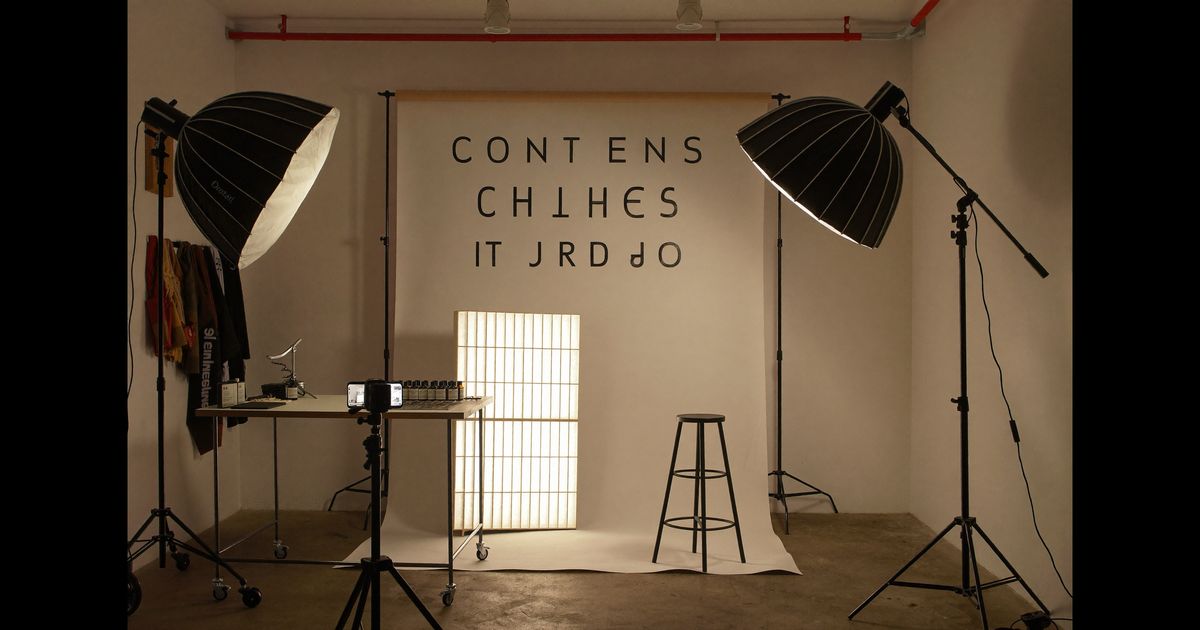
Behind-the-scenes content on Status works best when it feels genuinely exclusive and low-stakes. We brief creators to think of it as a voice note with visuals: conversational framing, visible background noise (a packing floor, a product assembly line in Surat, a shoot happening in a Bengaluru studio), and a natural hand-off, "swipe to see what happened next" or a direct reply prompt. What it should not look like: a 15-second edited montage with a royalty-free track that you also posted to Instagram.
- Wrong: A polished 3-clip Status showing a product shoot with colour grading and transitions.
- Right: A single vertical clip, phone in hand, creator walking through a set and saying "we nearly got this shot wrong, here's why", then inviting replies.
Mistake 2: Ignoring the Reply as the Primary Metric
On Instagram, views and saves are the signal. On WhatsApp, the reply is the only signal that matters. Brands obsess over how many people saw a Status, but WhatsApp does not even give you granular analytics beyond a viewer count. What it does give you is direct, one-to-one conversations, and most brands have no system in place to handle them.
If you post a behind-the-scenes clip from your Diwali packaging run and three people reply asking where they can order, that is a conversion event, not a support ticket. The mistake is either ignoring those replies for 12+ hours or routing them to a generic customer care flow. In our production work, the creators who generate the most downstream value on WhatsApp are the ones who treat every reply to a BTS post as a warm lead, they respond within 30 minutes, in the same conversational tone as the content, and naturally mention the product or the offer.
Build a simple reply queue before you ever post BTS content on WhatsApp. Assign someone to monitor it the day of posting. This is not optional infrastructure; it is what separates a broadcast from a conversation.
Mistake 3: Skipping Consent and ASCI Disclosure on Influencer-Driven BTS
This mistake is becoming more expensive as ASCI enforcement tightens. When a creator posts behind-the-scenes content on their personal WhatsApp broadcast list as part of a brand collaboration, even if it is "informal" footage from a shoot, it still qualifies as commercial communication under ASCI's influencer guidelines if it promotes a brand directly or indirectly. The informal format does not create a disclosure exemption.
Common errors we see:
- Creator posts "just hanging out at [Brand X]'s studio" with product clearly visible, no #Ad or #Collab disclosure.
- Brand team assumes WhatsApp is "private" and therefore outside ASCI's purview, it is not, if the content is being sent to a broadcast list of 100+ subscribers.
- Disclosure is buried in a second Status slide that most viewers never reach because they drop off after the first one.
The correct approach: if a creator is being paid or gifted product in exchange for BTS content on their broadcast list, the disclosure goes in the first Status frame, text overlay or spoken verbally in the first three seconds. Short, clear, non-defensive. "Hanging out at [Brand X] today (collab)" is enough.
Mistake 4: Overcomplicating the Brief for a Format That Rewards Rawness
We have seen 12-page content briefs for a 30-second WhatsApp Status. The irony is that the more you script behind-the-scenes content for WhatsApp, the less it performs. The format's entire value proposition is authenticity, a consumer watching BTS footage on WhatsApp is specifically looking for the unscripted, the unedited, the real. A clip that clearly came from a brief reads as advertising, not access.
The brief for WhatsApp BTS should cover three things and only three things:
- Context anchor: What is happening and why it is interesting (e.g., "first day of shoot for our monsoon campaign at a real dairy farm in Anand, Gujarat").
- Single story beat: One specific moment, challenge, or reveal, not an overview of the whole day.
- Reply hook: One question or prompt the creator ends with, so viewers have a reason to respond.
Anything beyond this overloads the creator and shows up in the footage as stiffness. Let the format do the work.
Mistake 5: Using BTS as a Filler Slot Rather Than a Narrative Asset
The most underrated mistake is treating behind-the-scenes content as what you post when you have nothing else ready. This produces erratic posting cadences, random subject matter, and zero brand memory on the channel. A subscriber who saw your packing floor in January and your team birthday in March and a product unboxing in May has no coherent picture of who you are, they have three random clips.
BTS on WhatsApp builds equity when it is part of a deliberate narrative arc. A Bengaluru D2C skincare brand, for example, might structure three months of BTS content around a single product development story: sourcing raw ingredients from farmers in Coorg, formulation testing, packaging design decisions, and finally the day the first batch ships. Each Status is standalone, but together they create a story that a subscriber actually follows. This is not a content calendar trick; it is how trust compounds on intimate channels.
The question is not "what BTS content do we have ready this week", it is "what chapter of our brand story does this clip belong to?"
To make this practical: map out the next 60 days of real activity in your business. Identify four to six genuine milestones, a shoot, a supplier visit, a product reformulation, a team expansion. Assign each one a Status moment. Now you have a BTS calendar that reflects actual business events rather than content slots to fill.
Mistake 6: Neglecting Language and Regional Context
India's WhatsApp broadcast landscape is deeply segmented by language. A creator with a primarily Tamil-speaking broadcast list in Chennai posting Hindi-language BTS content is not just ineffective, it signals that the brand does not understand the audience it is trying to reach. We consistently see brands deploy a single creator-produced asset across regions without any language adaptation, and then attribute low WhatsApp engagement to "the format not working."
Practical fixes for regional BTS:
- If the creator is speaking to camera, even 10 seconds of the local language, Tamil, Telugu, Kannada, Marathi, Bengali, before switching to Hindi or English dramatically improves reply rates in that audience.
- Text overlays on Status can be language-toggled at zero extra cost if you are capturing the footage in one session but distributing across multiple creator lists.
- Vernacular BTS does not have to be the entire clip. A brief regional language welcome before going into the main content is enough to signal belonging.
The INR reality here: a language-adapted BTS shoot for three regional markets adds roughly Rs.8,000–15,000 to a creator production budget (one additional briefing session, basic localisation review). The lift in engagement and replies in those markets typically justifies it within a single campaign cycle.
What Good WhatsApp BTS Actually Looks Like
To ground all of this in a concrete picture: a well-executed WhatsApp behind-the-scenes moment is a 30–45 second vertical video, shot in one take on a smartphone, in a real location relevant to the brand. The creator is visible and speaking naturally, not reading. There is ambient sound. The first frame has context (where we are, what is happening). The last sentence is a direct question or invitation. If it is a paid collaboration, the disclosure is in the first three seconds. It is posted at a time when the target audience is likely to be on their phone, typically 8–10 PM for consumer brands targeting urban India. And someone is ready to reply to responses within 30 minutes.
That is it. There is no production complexity hiding behind great WhatsApp BTS performance, only consistent execution of a format that most brands are still treating carelessly.
If your brand is ready to build WhatsApp BTS into a proper content asset rather than an afterthought, book a consultation with our team, we can map out a creator-led BTS strategy that fits your broadcast list size, regional markets, and campaign calendar.