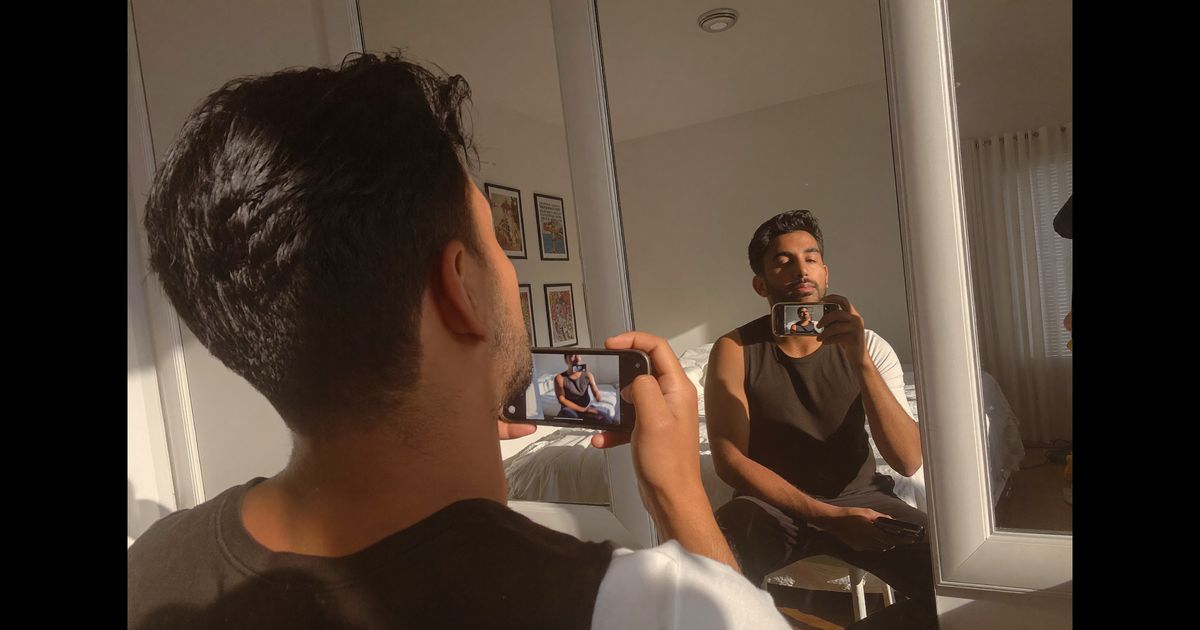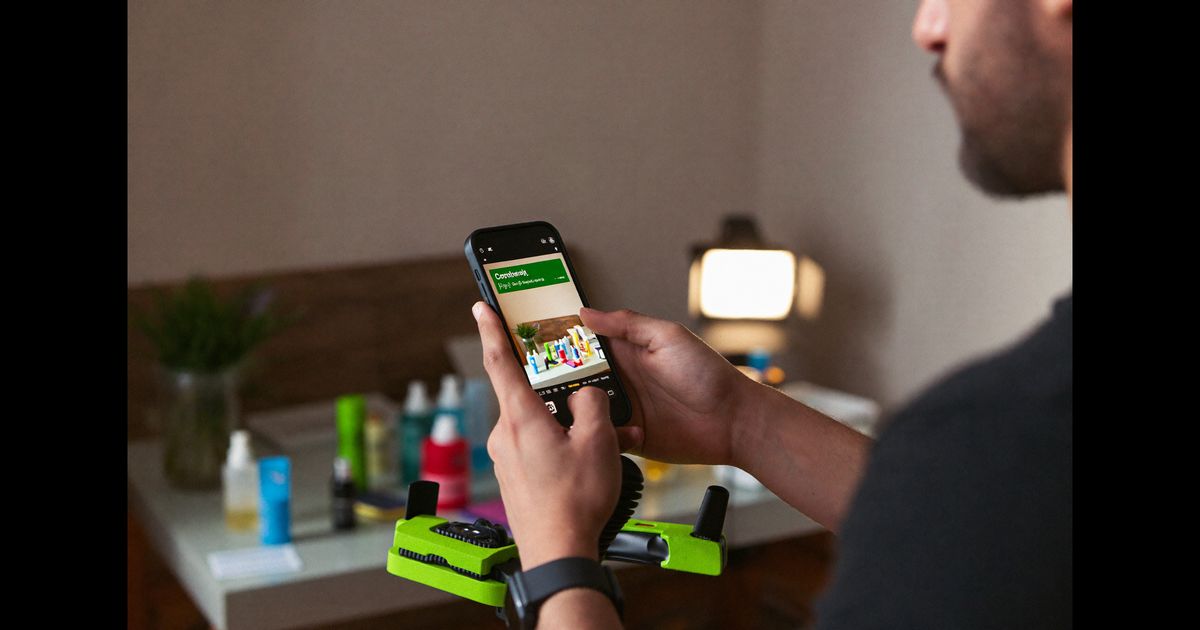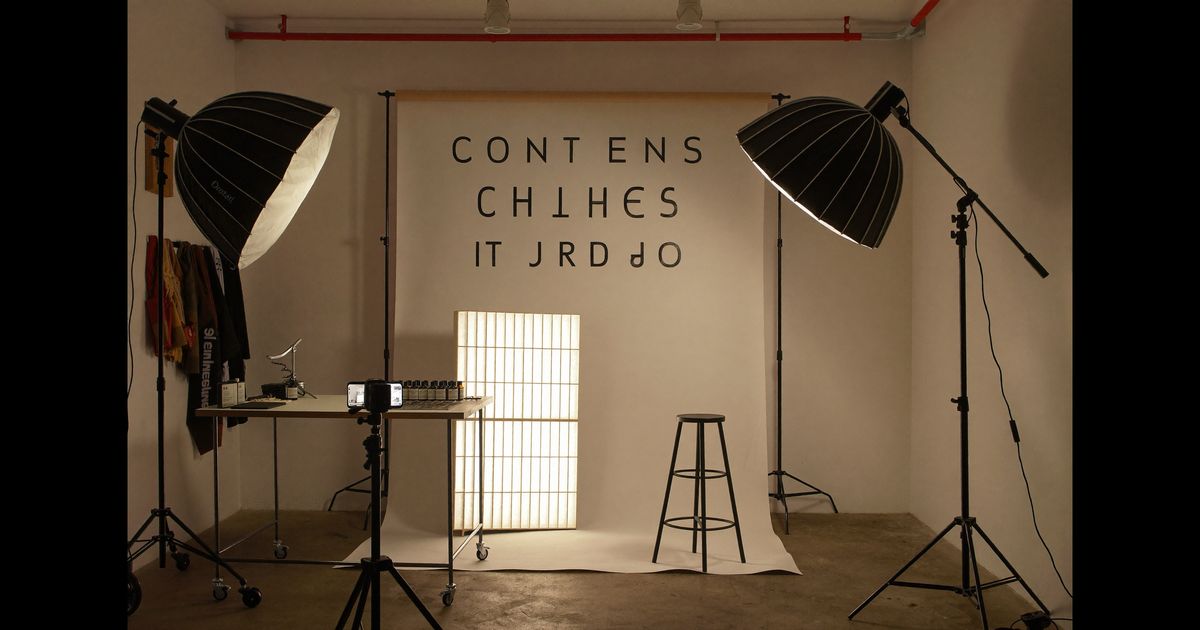
Snapchat's active user base in India sits at roughly 21 million monthly users as of early 2026, a fraction of Instagram's 360+ million or YouTube's 460+ million. That number matters before any creator or brand invests a rupee in platform-specific production. Yet within that smaller pool, Snapchat's demographic skews sharply toward Tier-1 city users aged 16–24, a cohort that over-indexes on impulse purchases, trend adoption, and peer-referral behaviour. For D2C brands targeting college students in Mumbai, Delhi, Bengaluru, and Pune, particularly in categories like streetwear, personal care, and gaming peripherals, the platform still justifies a focused behind-the-scenes (BTS) content strategy, provided it is built on accurate platform mechanics rather than repurposed Instagram logic.
This article breaks down what BTS content actually performs on Snapchat, with specific format benchmarks, realistic production budgets in INR, and the structural differences that determine whether a clip gets re-shared or disappears after one view.
Why BTS Specifically, and What the Completion Data Shows
Snapchat's internal benchmarks (published through its Partner Program) show that vertical video content with a narrative arc, setup, action, reveal, achieves 20–40% higher completion rates than static or loop-format Snaps. BTS content naturally maps to this arc: you show the raw state (product in-progress, creator getting ready, warehouse or kitchen scenario), the process, and the finished result. That three-beat structure is not accidental, it mirrors the storytelling format Snapchat's algorithm rewards with extended reach inside the Discover and Stories surfaces.
For UGC specifically, completion rate benchmarks on Snapchat Spotlight (the platform's short-video discovery feed, roughly equivalent to Reels Explore) average 18–22 seconds of watch time for organic creator content in the 30–60 second range. BTS clips consistently outperform product-demo or talking-head formats in this range, logging watch times 15–25% above platform average according to agency-side data compiled through the Snapchat Ads Manager in Q4 2025. The practical implication: if you are briefing a creator on a 45-second BTS clip, every second of dead air in the middle costs disproportionately, the drop-off curve on Snapchat is steeper than on Instagram Reels and more front-loaded than on YouTube Shorts.
Format Benchmarks: What a Performant BTS Snap Looks Like in Numbers
- Duration sweet spot: 28–42 seconds. Clips under 20 seconds don't give enough time to establish context; clips over 50 seconds see a median 35% drop-off before the reveal moment on Snapchat Spotlight.
- Caption/text overlay: 3–5 text overlays per clip perform better than 0 or 6+. Snapchat's own Creative Best Practices guide (2025 edition) cites a 31% lift in share rate when text is used to label what's happening in real time rather than just as a caption at the end.
- First 2 seconds: The swipe-away decision window is tighter on Snapchat than on most platforms. Motion within the first 1.5 seconds, a hand reaching for a product, someone turning around with a reaction, a quick zoom-in, reduces early drop-off by an estimated 18% compared to a static opening frame.
- Audio-on assumption: Unlike Instagram Reels (where approximately 60% of views are silent), Snapchat users are significantly more likely to watch with sound on. Internal Snapchat data pegs the sound-on rate at approximately 64% for organic Spotlight content. This changes the BTS brief: ambient audio (packaging sound, kitchen sounds, fabric texture sounds for apparel) should be captured deliberately, not treated as background noise to be muted in post.
- Aspect ratio: 9:16 is non-negotiable. Cropped horizontal footage loses roughly 30% of interaction rate on Spotlight even when the content itself is strong.
Production Budgets That Make Sense for the Indian Market
A realistic single BTS Snap produced to the above standards, a 35-second vertical clip with natural audio, 4 text overlays, and a clear three-beat arc, should cost between Rs. 4,500 and Rs. 9,000 per deliverable when briefed to a mid-tier UGC creator in a metro city. That range assumes the creator shoots on a recent-generation smartphone (iPhone 13 or above, Pixel 7 or above, or comparable Android flagships) and handles basic CapCut or InShot editing themselves.
If the brand wants a BTS series, five to seven clips across a product launch cycle, the per-clip cost typically drops to Rs. 3,000–6,500 when bundled, because setup, wardrobe, and location time get amortised. At a five-clip bundle, total production spend runs Rs. 15,000–32,500. Compare that to the equivalent paid Spotlight campaign minimum: Snapchat's India auction floor for Spotlight Ads sits around Rs. 500–700 CPM for Tier-1 city targeting. An organic BTS series that achieves 80,000–1,20,000 impressions through creator sharing and algorithmic distribution would cost Rs. 40,000–84,000 in paid media to replicate, making the UGC production cost a reasonable 30–40% of that equivalent paid spend.
Structuring the BTS Brief for Snapchat's Native Logic
We brief creators to treat Snapchat BTS differently from Instagram BTS in three specific ways:
- No polished transitions: Jump cuts and natural handheld movement outperform smooth transitions on Snapchat. The platform's aesthetic leans into rawness, over-edited content with colour grading and cinematic cuts tends to read as an ad rather than a genuine moment, which suppresses organic reach.
- The reveal must be visual, not narrated: Instagram creators can narrate a product reveal ("so here's how it turned out..."). On Snapchat, the completion data rewards a visual reveal, the product in hand, the finished look in a mirror, the packaging opened to show the item, because the audience is less likely to wait through explanation. Brief the creator to show, not tell, in the final 8 seconds.
- Location specificity lifts engagement in India: A BTS clip shot in a recognisable Bengaluru café, a Delhi CR Park kitchen, or a Mumbai studio apartment corner performs measurably better among local audiences than a generic neutral-background setup. Snapchat's geo-tagging and location-based community features mean location context is surfaced algorithmically in ways Instagram doesn't replicate. We've seen engagement rates higher on clips where creators reference or visually establish a known local setting versus a blank room.
ASCI Compliance for BTS Content on Snapchat
Because BTS content can blur the line between organic creator content and paid brand promotion, ASCI's influencer disclosure guidelines apply even on Snapchat. The ASCI Influencer Guidelines (updated 2023) require that any creator paid to feature a brand, including in BTS formats, must display the disclosure label "Ad" or "Paid Partnership" prominently and at the start of the content, not buried in the caption or tagged in small text at the frame edge. For a 35-second Snap, this means the disclosure text overlay must be visible in the first 3–5 seconds, not just at the 30-second mark.
Brands that brief creators to present paid BTS content as organic discovery content are violating ASCI guidelines regardless of platform. The penalty exposure is reputational rather than financial at the moment, but ASCI has been increasingly active in issuing public notices in the FMCG and personal care categories specifically, both high-volume categories for Snapchat India creators. Building the disclosure into the brief template costs nothing and removes the compliance risk entirely.
Cross-Platform Repurposing: Making Snapchat BTS Work Harder
Given Snapchat's smaller India audience relative to Instagram or YouTube Shorts, a content strategy that produces BTS clips only for Snapchat rarely makes economic sense. The more defensible approach is to produce the clip to Snapchat-native specs, 9:16, 28–42 seconds, natural audio, jump-cut aesthetic, and treat Snapchat as the first-window platform where the rawness fits best, then repurpose to Instagram Reels and YouTube Shorts with minor adaptations.
The key adaptation for Instagram: add captions for silent viewing (auto-captions work fine) and optionally smooth one or two transitions for the slightly more polished aesthetic Reels rewards. For YouTube Shorts: the same clip typically works without modification given Shorts' growing tolerance for raw UGC formats. This three-platform repurposing strategy means a Rs. 6,000 BTS clip produced to Snapchat-native standards can generate impressions across three surfaces without a proportional increase in spend, effectively reducing the per-impression cost to under Rs. 0.10 for a well-performing piece at combined 60,000–1,00,000 total views.
The metric that ties this together is cost per genuine watch, not reach, not impressions. A BTS clip on Snapchat with a 65% completion rate at 25,000 Spotlight views gives you ~16,250 genuine watches at roughly Rs. 6,000 production cost: Rs. 0.37 per completed watch. That compares favourably to most paid video formats in the Rs. 1.20–2.50 CPV range on comparable Tier-1 India audiences.
Common Mistakes That Tank BTS Performance on Snapchat
- Shooting in landscape and cropping: The frame compression kills product detail and the visual reveal loses impact. Always shoot native vertical.
- Over-scripting the creator: Snapchat's audience is particularly sensitive to scripted delivery. BTS content where the creator clearly memorised lines drops completion rates sharply. Give the creator a beat sheet (three moments to hit), not a script.
- Ignoring the Spotlight content policy: Snapchat's community guidelines for Spotlight prohibit certain health claims, before/after comparisons, and unsubstantiated superlatives, rules that align with but are separate from ASCI. A BTS clip showing a skin-care product transformation framed as guaranteed improvement can get the content removed from Spotlight algorithmic distribution even if ASCI-compliant labelling is present.
- Not capturing ambient sound on set: Creators often mute ambient noise as an Instagram habit. For Snapchat, those packaging crinkles, product sounds, and environment audio are part of what makes BTS feel authentic. Brief the creator explicitly to capture a clean ambient audio take if possible.
If you are planning a product launch that targets 18–24 year-old urban buyers and want BTS content structured for Snapchat, Instagram, and Shorts from a single production day, the pricing page outlines how The UGC Agency bundles multi-platform briefs to control per-deliverable cost without sacrificing platform-native quality.