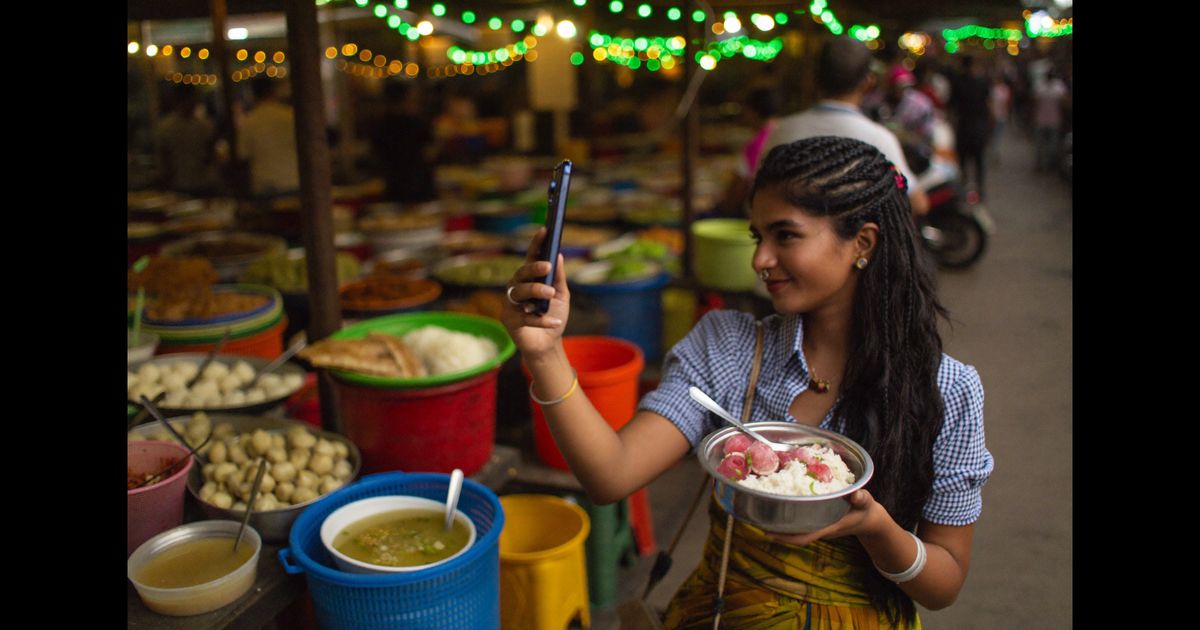
A creator in Patna shooting a 60-second skincare review used to send us a 200MB file over WhatsApp at 2AM, hoping it would upload before she fell asleep. By the time it landed, compression artefacts had eaten half the texture detail our client paid for. That workflow headache is disappearing as 5G rolls out across Tier-2 and Tier-3 India, but the change is doing more than just speeding up file transfers. It is reshaping what formats actually work, which creators can compete, and how brands need to brief content.
India's 5G rollout, led by Jio and Airtel, now active in over 700 districts, has not produced uniform speed gains. What it has done is eliminate the buffering threshold that previously capped UGC video quality and length in cities outside Mumbai, Delhi, and Bengaluru. For agencies producing performance content at scale, the downstream effects are practical and immediate.
What Faster Upload Speeds Actually Change on the Creator Side
When a creator can upload a raw 1080p video in under 90 seconds rather than 12 minutes, several things shift in our production workflow:
- Same-day turnaround becomes realistic in non-metro cities. We routinely brief creators in Lucknow, Coimbatore, and Bhubaneswar for 24-hour delivery. Pre-5G, that was a gamble, the creator might finish filming by noon but the file wouldn't clear upload until after platform processing windows closed.
- Raw file delivery replaces WhatsApp-compressed sends. Creators can now share Google Drive or WeTransfer links for original footage rather than routing everything through WhatsApp's aggressive video compression (which caps at 16MB and degrades quality visibly). This matters enormously for beauty and food brands where colour accuracy is a brand requirement.
- Reshoots happen in the same session. When we do a live brief over a video call and the creator films, reviews, and reshoots within an hour, the feedback loop tightens from two days to two hours. We've started running these "hot brief" sessions specifically for performance ad content where we need the first-cut version tested within 48 hours.
How Consumption Patterns Are Shifting, and Where Brands Must Respond
Better upload is only half the picture. 5G's download speeds have changed how Indian audiences consume video on Instagram Reels, YouTube Shorts, and Moj. Specifically:
- Auto-play at higher resolution is now the default. Instagram on a 5G connection auto-plays Reels at 1080p rather than dropping to 480p, which means the visual quality of a creator's background, product close-up, and caption legibility all matter more than they did in 2022. Brands that were briefing creators to "just make it authentic, don't worry about production" are now seeing that low-resolution UGC underperforms in the feed against better-shot competition.
- Longer short-form is viable. The sweet spot on Reels was relentlessly sub-30 seconds when buffer anxiety was high. Now 45–90 second formats hold attention, which opens space for demo-style UGC, unboxing with a voiceover explanation, a "before and after" with genuine context, rather than just hook-and-cut edits.
- Live commerce is reaching smaller cities. Instagram Live and YouTube Live with product links are seeing meaningful traction in cities like Nagpur, Jaipur, and Surat. A creator going live to demonstrate a Rs. 499 haircare product to 800 followers in her own language converts better than a national brand running a Hindi-only ad. We are actively scouting creators in these cities for clients with Tier-2 distribution.
The Language Dividend: Vernacular UGC Finally Has Infrastructure
One development that gets underreported: 5G is making vernacular-language UGC commercially viable at scale. Previously, a Tamil or Odia creator producing high-quality video faced a compounded disadvantage, slower upload in smaller cities meant quality loss, plus smaller audience clusters meant platforms served their content less. As upload speeds equalise, content quality equalises, and platforms begin recommending vernacular content to wider audiences.
We now brief creators in Tamil, Telugu, Kannada, Bengali, and Marathi for campaigns where we would previously have defaulted to Hindi or English. A skincare brand targeting South India gets three Tamil-language creator videos, each filmed in a real home setting in Chennai or Madurai, rather than a dubbed version of a Hindi shoot. The ASCI guidelines on substantiation and disclosure (#ad and #sponsored) apply identically regardless of language, a point we build into every brief explicitly, since some vernacular creators are less familiar with these rules than metro creators.
When we brief a creator in Coimbatore for a D2C FMCG campaign, the brief document now specifies: mandatory ASCI-compliant disclosure in the first three seconds, claim language that matches what the brand can substantiate, and a minimum upload resolution of 1080p/30fps, something we could not enforce reliably before consistent 5G coverage made original-file delivery standard.
Format Changes We Are Building Into Production Briefs Right Now
Operationally, the 5G shift has pushed us to revise our standard brief templates in three specific ways:
- Minimum resolution is now non-negotiable. We used to write "shoot in the best quality your phone allows." The brief now states 1080p minimum, with a note that footage shot in 4K is acceptable and welcome, because 5G upload handles it. For brands spending Rs. 60,000–1,50,000 on a UGC package, the difference between crisp 1080p and compressed 720p is visible in ad performance data.
- B-roll is back on the menu. Short additional clips, a product on a shelf, hands unscrewing a lid, a reaction shot, were impractical to request when creators were managing their data carefully. Now we routinely ask for 3–5 supplementary B-roll clips in addition to the main piece-to-camera. This gives our edit team more to work with when creating platform-specific cuts from a single brief.
- Platform-native upload is the primary delivery method. Instead of having creators email or message files, we've moved to a simple shared folder protocol where creators upload originals directly. Turnaround time on our end has dropped because we're no longer re-encoding files that arrived already compressed.
- Live-format testing is budgeted in for relevant categories. For food, beauty, and household products where live demonstration adds credibility, we now include at least one creator with a live commerce history in our shortlists for clients with that distribution capability.
What This Means for Brand Budgets and Content Strategy
The practical budget implication for brands is this: the cost of producing genuinely high-quality UGC from Tier-cities across India is now close to parity with metro production costs, but the audience trust signal from a creator speaking in a local language, from a recognisable home context, in clear 1080p, is often stronger than a polished studio-adjacent shoot. A D2C brand in the Rs. 80,000–1,20,000 monthly content budget range can now deploy 12–16 creator videos across three languages without compromising visual quality, which was not practically achievable two years ago.
The constraint is no longer infrastructure. It is finding and briefing the right creators, those who understand what the brand actually needs, can deliver consistently at the new quality bar, and know how to stay on the right side of ASCI guidelines without constant hand-holding. That is where a structured agency process, rather than ad-hoc creator sourcing, continues to matter.
What We Are Watching Over the Next 12 Months
A few trends we are tracking closely in our production planning:
- Short-form live commerce, Instagram's product-tagging in Live and the growing use of YouTube Live for product launches are both gaining traction. Creators in Tier-cities across India with 5K–50K followers in a specific niche (kitchen products, baby care, herbal wellness) will be the primary vehicle for this.
- Creator-shot 4K for product catalogues, Some FMCG clients are beginning to ask whether creator-shot 4K footage can supplement or replace formal product photography for certain digital placements. With consistent 5G upload, this is no longer logistically absurd.
- Multi-language A/B testing at the campaign level, Platforms now give advertisers the ability to serve language-specific creative to language-specific audiences with reasonable targeting precision. A three-language UGC set (Hindi, Tamil, Bengali) run as separate ad sets and evaluated on individual CPAs is something we are building into campaign structures for clients with pan-India reach goals.
If your brand is ready to run UGC campaigns that take full advantage of the current distribution landscape, higher quality, vernacular-first, and built for the formats that actually perform in 2025, we can walk you through how we structure this in a single consultation. See our recent work to understand the kind of output this process produces, or review our pricing to see what a structured campaign looks like at different scales.