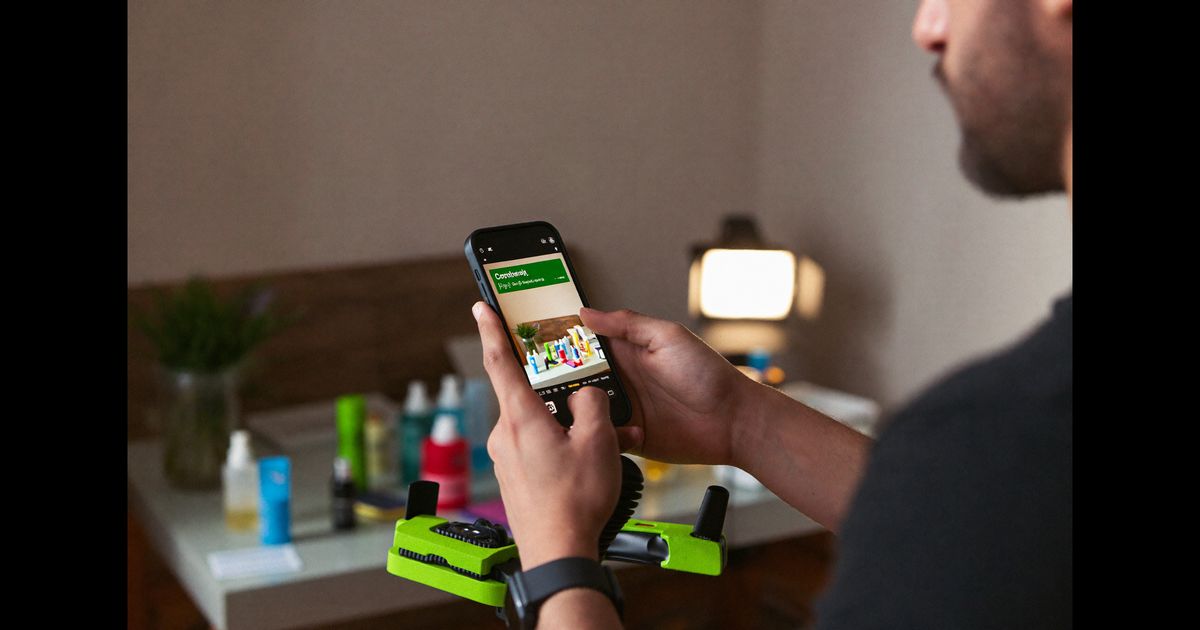
Every rupee in a D2C brand's marketing budget needs to earn its place. When leadership asks why you want to shift spend toward user-generated content, you need more than "it feels authentic" — you need a business case grounded in how buyers actually behave and how unit economics actually work. This piece walks through that case clearly.
Why Traditional Creative Has a Cost Problem
Studio production for a single ad film in India — location, crew, lighting, talent, post-production — can easily run into several lakhs. That cost is fixed regardless of whether the ad performs. When it doesn't, the brand absorbs the loss with nothing to iterate from. UGC production works on a fundamentally different model: multiple creative variations are produced simultaneously, costs are lower per unit, and you can test what resonates before committing more budget behind a single concept.
The real business case for UGC starts here — not in sentiment, but in risk distribution.
Trust Is a Conversion Variable, Not a Branding Abstraction
Indian online shoppers are sophisticated and skeptical. On platforms like Meesho, Nykaa, or a brand's own Shopify store, the difference between a bounce and a purchase often comes down to whether the buyer can picture a real person using the product. Polished brand creative answers the question "what does this product look like?" UGC answers the question "will this work for someone like me?" — which is the question that actually precedes the add-to-cart action.
This trust function has direct conversion implications. When UGC is placed at key decision points — product pages, retargeting ads, WhatsApp catalogue messages — it shortens the consideration cycle. That compression shows up in cost-per-acquisition figures, not just engagement metrics.
UGC Scales Creative Output Without Scaling Costs Proportionally
Ad fatigue is a structural problem for performance marketers. Meta's algorithm rewards fresh creative, but producing fresh creative at studio rates isn't sustainable. UGC breaks this constraint. A single production cycle with two or three creators can yield 18 videos — varied hooks, formats, product angles — giving the media buyer genuine creative diversity to test and rotate. The cost-per-creative drops sharply as volume increases, while studio costs tend to be relatively fixed per deliverable.
For brands running always-on performance campaigns, this isn't a marginal benefit. It's the difference between being able to sustain a campaign cadence and exhausting creative inventory within weeks.
The Compounding Value of a UGC Library
Unlike a paid ad whose performance decays over time, a well-produced UGC video has multiple lives. It can run as a paid Meta or YouTube ad, be embedded on a product landing page, shared in email sequences, repurposed for organic Instagram Reels, or used in pitch decks to retail partners. The asset doesn't expire when the campaign ends. Over time, a brand building a consistent UGC library accumulates a content moat — a volume and variety of authentic content that competitors without the same system cannot quickly replicate.
How to Present This Internally
When making the internal business case, anchor the argument in three numbers: current cost-per-acquisition on your paid channels, current creative refresh frequency, and the average lifespan of a performing creative before fatigue sets in. Compare those figures against what a structured UGC programme costs and how many assets it delivers. The math tends to be straightforward. The harder conversation is usually about creative control — which is why it's worth clarifying upfront that UGC produced through a structured agency workflow includes briefing, script approval, and quality review at every stage.
Takeaway
The business case for UGC content creation rests on three pillars: lower creative risk, better conversion trust signals, and sustainable content volume at a unit economics level that studio production cannot match. For Indian D2C brands managing performance budgets carefully, it's one of the highest-leverage investments available. Book a strategy call to see how this model maps to your specific category and budget.