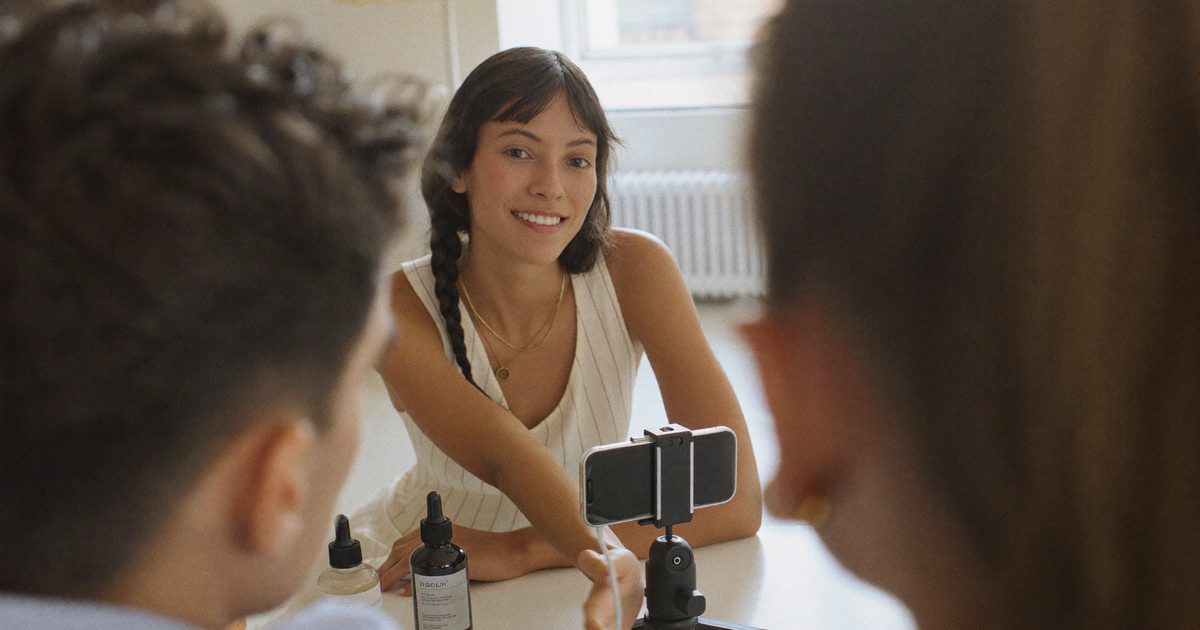
A skincare brand from Bangalore recently ran a 45-minute Instagram Live where three creators-one with combination skin, one acne-prone, one in her 40s-demonstrated the same serum in real time. Viewers asked questions, creators answered on camera, and a checkout link appeared in the bio. That session drove more product page visits in one evening than four months of static imagery had managed. This is not a coincidence; it is a structural shift in how Indian consumers want to discover and evaluate products before they buy.
Brands already producing UGC at scale-monthly creator briefs, multi-SKU shoots, rotating ad creative-are best positioned to operationalise live stream shopping. But "going live" without a production playbook produces exactly the kind of chaotic, low-conversion streams that give the format a bad name. This piece is for brands past the UGC basics: here is how to build a live demo engine that replaces static product pages as your primary conversion surface.
Why Static PDPs Are Losing Ground in India's D2C Ecosystem
Traditional product detail pages were designed for desktop search-and-compare behaviour. Indian mobile buyers increasingly arrive via Instagram Reels, YouTube Shorts, or referral links in WhatsApp groups-they are already in a lean-back, social-watching mode. By the time they hit a static PDP, the momentum is gone. They need to see the product in motion: texture, pour, spray radius, size against a hand, colour in daylight versus tubelight.
Live stream shopping solves this better than any pre-produced video because it answers the question the buyer has right now. For categories like skincare, supplements, home appliances, fashion, and regional food products-all strong performers for Indian D2C brands-the live demo format matches the high-consideration purchase behaviour exactly. The question is not whether to do it; it is how to make it repeatable and brand-safe.
The Platform Stack That Actually Works in India (2025)
Before building a playbook, be precise about where the audience lives:
- Instagram Live + Shopping Tags: The most mature live-commerce stack available to Indian brands. You can tag products during the stream; viewers tap to checkout within the app or get pushed to your site. Works at any follower count if you boost the recording as a Reel after.
- YouTube Live: Stronger for longer-form demos (10–30 minutes), tutorial-heavy SKUs (appliances, grooming tools, DSLR accessories), and Tamil/Telugu/Bengali language audiences who index heavily on YouTube. Super Chat and product shelves add a monetisation and discovery layer.
- Meesho Live and Jiomart Live: Underrated for Tier 2/3 Hindi-speaking audiences. If your distribution touches these platforms, creator-led live demos inside the marketplace dramatically reduce the gap between awareness and purchase.
- Amazon Live India: Still nascent but gaining traction in electronics and personal care. Relevant if you are an Amazon-first brand; the affiliate structure incentivises creators to drive real conversions rather than just views.
- WhatsApp Channels + Broadcast: Not live-stream, but an important last-mile nudge. We brief creator-clients to post the live replay link into their WhatsApp broadcast the morning after; for regional audiences this drives a second wave of traffic that can match the live session itself.
TikTok remains banned in India, so any playbook that references it is theoretical for Indian brands. Build your muscle on Instagram and YouTube; they are durable.
Structuring the Live Demo: A Brief That Converts
The biggest mistake brands make is treating a live demo brief the same way they treat a Reels brief. A Reels creator reads a script, films, edits. A live demo creator needs to think on their feet for 20–45 minutes while managing the chat. The brief has to be fundamentally different.
A conversion-optimised live demo brief contains five sections:
- The anchor moment (0–3 min): The creator opens with one specific problem statement relevant to their audience. "My oily scalp makes every dry shampoo fail by noon-I am testing whether this one actually lasts." This anchors the session in a real use case, not a promotional tagline. Viewers who have the same problem stay.
- Three demo checkpoints: Pre-agreed product interactions at minutes 8, 18, and 30. Each checkpoint has a question the creator must answer on camera (texture, application method, before/after visual). This prevents the session from wandering and ensures the product gets three distinct close-up moments.
- Live FAQ ownership: The creator is briefed on the top 10 questions your support team receives about this SKU. They answer these during the session unprompted if the chat does not ask them. This eliminates post-purchase confusion and builds trust.
- ASCI compliance notes: Per ASCI's Influencer Advertising on Digital Media Guidelines, any paid/gifted promotion must be disclosed. The creator must say "Ad" or "#sponsored" verbally at the start and at each return from a break-not just in the caption. For health/wellness products, no therapeutic claims without supporting evidence. Brief this explicitly; do not assume creators know the rules.
- The checkout prompt cadence: At minutes 10, 20, 35, and 44, the creator verbally directs viewers to the link. Give them a specific script line-"If you want to grab this now, the link is live in our bio, there's a discount code [X] for the next 30 minutes"-because ad-libbed CTAs are consistently weaker than scripted ones.
Production Economics: What to Budget Per Live Session
For brands operating at scale, a single live session should not be treated as a one-time event. Build it as a monthly programme. Here is a realistic cost structure for a mid-size D2C brand:
- Creator fee (macro-micro tier, 80K–300K followers): Rs. 15,000–40,000 per live session. For niche creators (e.g., a regional language beauty creator in Tamil Nadu with 90K highly engaged followers), negotiated rates can be lower because their ROI is stronger per-rupee than a generic mega-creator.
- Pre-session coordination: Ship product 7–10 days in advance. Budget Rs. 800–2,000 for express courier and packaging. The creator needs time to actually use the product before demoing it live-viewers detect inexperience instantly.
- Post-session content extraction: Budget 2–4 hours of editor time (Rs. 1,500–3,000 outsourced) to clip the best 3–5 moments from the live replay into Reels and Shorts. This extends the session's value window from a one-night event to a 4-week content asset.
- Paid amplification: Boosting the replay Reel with Rs. 5,000–10,000 in Meta spend typically delivers 3–5x the organic reach of the live session itself. Run it as a video view or traffic objective depending on where in the funnel you are.
A monthly programme of two live sessions therefore costs approximately Rs. 60,000–1,10,000 all-in, producing six to ten derivative content assets alongside the sessions themselves. Compare that to the cost of a static photoshoot producing equivalent assets.
Measuring Live Demo Performance Beyond View Count
Brands that graduate from "did people watch?" to "did the session move product?" operate a fundamentally different analytics model:
- Discount code redemption rate: Session-specific codes (e.g., LIVE20) let you attribute revenue directly to the stream, bypassing attribution ambiguity in Meta's pixel. This is the cleanest signal you have.
- PDP scroll depth during and after the session: Use Hotjar or Microsoft Clarity on your product page. If the live session is working, you will see scroll depth increase on your PDP during the live window-viewers who want more detail visit the page while watching. A flat scroll-depth curve suggests the session is not building enough curiosity.
- Session-to-cart rate for new visitors: Segment GA4 to isolate users who landed from the creator's Instagram profile or bio link during the live window. Their add-to-cart rate benchmarks the session quality independently of your existing funnel metrics.
- Comment sentiment analysis: Export the live comments (Instagram allows this via Creator Studio; YouTube via the Data API). Scan for intent signals: "where to buy", "link?", "price?", the product name paired with an emoji. High-intent comment density at minutes 15–25 correlates with strong conversion sessions in our production data.
Advanced Format: The Multi-Creator Comparison Live
Once you have run three to five standard demo sessions, the next level is the multi-creator comparison format. Two or three creators-ideally with different skin types, age brackets, or regional contexts-demo the same product simultaneously in a co-live or in rapid succession during a scheduled series. This format:
- Addresses the Indian consumer's deep need for social proof across contexts ("will this work for my skin type, not just hers")
- Generates organic debate and commentary in the chat, increasing session duration
- Produces multiple raw clips with different face-and-product combinations that can be cut into regional-language ad variants
In one production we coordinated for a haircare brand, three creators across Mumbai, Hyderabad, and Bhopal demonstrated the same hair oil on different hair textures-straight, wavy, and thick coily. The session ran 38 minutes; 61% of discount code redemptions came from viewers outside the metro cities, specifically from the creator in Bhopal's audience. The static PDP, optimised for metro English-speaking buyers, had never reached that segment effectively.
Turning Live Sessions into an Always-On Product Discovery Layer
The final step for brands with mature UGC programmes is embedding live demo content into the PDP itself. Pin the most recent live session replay (trimmed to 8–12 minutes) as the primary video on your product page. This replaces or supplements the static hero image carousel with a face-to-camera demo that answers real questions in a real voice. Shopify's native video block, Gokwik's checkout integrations, and Instamojo store builders all support embedded video without performance penalties if you host on YouTube and embed rather than self-host.
Brands that treat live stream shopping as a monthly programme-rather than an occasional experiment-consistently report that their PDPs become stickier, their customer support load drops (questions get answered in the session), and their UGC library compounds faster because each live session produces 6–10 reusable clips. The static product page does not disappear; it becomes the destination that live demos drive people toward, loaded with the video evidence those demos created.
If you are ready to build a structured live demo programme-from creator briefing to post-session content extraction-the team at The UGC Agency has the production infrastructure to run it end-to-end. See our pricing plans for monthly programmes starting at Rs. 60,000.