A new credit card arrives in a plain white envelope. A mutual fund app sends a welcome kit in a kraft box. A neo-bank couriers a sleek metal debit card with a brief letter and stickers. None of these are physical products in the traditional sense, there is no unboxing a serum or tearing open a pair of sneakers. Yet the moment of reveal is just as real, just as charged, and for a FinTech brand trying to earn trust from a skeptical Indian audience, possibly even more important. The unboxing format, borrowed from consumer electronics and beauty, translates to FinTech better than most creators realise, because what you are actually unboxing is not plastic: it is proof that a financial product is real, human, and worth trying.
This guide is for creators who have never filmed a FinTech unboxing before and want to do it properly. We will walk through every stage, from setting up your shot to saying the right things on camera, with the specific constraints and opportunities of the Indian market in mind.
Why FinTech Brands Need This Format at All
Financial products suffer from a trust deficit that consumer goods do not. When you show someone a shampoo, they can see the bottle, smell it through the screen (almost), and relate to hair. When you show someone a credit card or an insurance plan, the abstract nature of the product, invisible interest rates, digital wallets, SIP allocations, makes the skeptical part of the brain louder. Unboxing-style UGC solves this by anchoring the abstract in the physical and the familiar.
The brands that use this format well in India include HDFC Bank (premium card welcome kits), Slice (bold packaging), Fi Money (minimal lifestyle kits), and OneCard (the metal card reveal). Each of them has used creator-filmed unboxings on Instagram Reels and YouTube Shorts to drive app downloads and card applications. The format works because:
- Physical proof builds credibility. Seeing the actual card, letter, or kit in a real person's hand removes the "is this legit?" hesitation that haunts FinTech marketing.
- The reveal moment creates native suspense, exactly the kind of hook that keeps viewers from swiping away in the first three seconds.
- It is relatable across Tier 1 and Tier cities across India. Someone in Coimbatore or Nagpur watching a creator in Bengaluru open a neo-bank welcome kit understands what is happening without any financial literacy prerequisite.
What Counts as an "Unboxing" for FinTech
Before picking up your phone, clarify what you are filming. FinTech unboxings fall into three categories:
- Physical welcome kits: Neo-banks like Jupiter or Fi, premium credit card issuers like HDFC Infinia or Axis Magnus, and a few BNPL brands send physical kits. This is the closest to a traditional unboxing, envelope, box, card, inserts.
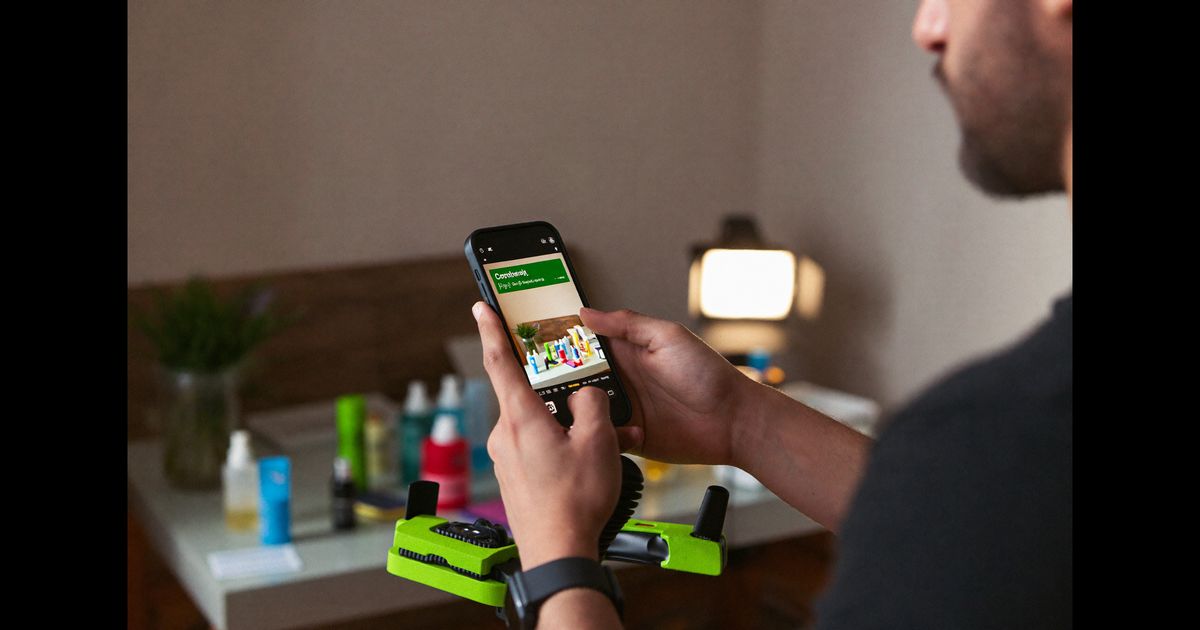
- App onboarding reveals: For fully digital products (mutual fund apps, UPI credit products, stock brokers like Groww or Zerodha), the "unboxing" is a screen-capture-led walkthrough of the first login, KYC completion, or dashboard reveal. Film your phone screen with a stabiliser or overhead rig while narrating what you are seeing.
- Hybrid formats: Some brands send a card (physical) but the real value is in the app. Film both: the physical unboxing first, then cut to a screen recording of the first transaction or the rewards dashboard lighting up.
Identify which category your FinTech brief falls into before you plan your shot list. The setup and pacing differ significantly.
Equipment, Lighting, and Space: Keeping It Simple
You do not need a studio. In our production work, we consistently brief creators to shoot FinTech unboxings in natural settings, a clean desk, a café table, a well-lit kitchen counter. The goal is aspirational but reachable, not sterile corporate.
Phone setup: Any smartphone from the last three years with a decent rear camera will do. Shoot in 1080p at 30fps minimum; 4K is better if your phone handles it without overheating. Use a small tripod or a ring light stand with a phone mount, available on Meesho or Amazon India for under Rs. 600, so your hands are free for the unboxing.
Lighting: Shoot near a window in the morning or afternoon for diffused natural light. If you are shooting indoors at night, a small LED panel (Rs. 800–1,500 on Amazon) pointed at a white wall creates soft bounced light that makes cards and packaging look premium rather than washed out. Avoid overhead tube lights, they cast harsh shadows on the table and make the card surface look dull.
Background and surface: A matte white or neutral surface (a plain notebook, a linen placemat) works better than a busy table. FinTech audiences are detail-oriented; a cluttered background signals carelessness. If you have a marble-effect vinyl sheet (widely available in stationery stores for Rs. 200–400), it adds a premium feel without looking fake on camera.
Audio: Use the wired earphones that came with your phone as a lapel mic substitute, plug in, tuck the wire behind your collar, and speak clearly. Directional noise from traffic, fans, or street vendors in Indian cities will ruin an otherwise good take. Close windows and switch off the ceiling fan if you can.
Structuring the Video: The Three-Act Unboxing
A good FinTech unboxing video, whether it runs 45 seconds as a Reel or 3 minutes as a YouTube Short, follows the same underlying structure:
- Act 1, The Hook (0–5 seconds): Do not introduce yourself. Open on the envelope, box, or phone screen. Say something specific: "My OneCard metal card just arrived and I've been waiting three weeks for this" or "This is what Fi Money sends when you get off the waitlist." The hook should make a viewer stop mid-scroll.
- Act 2, The Reveal and Reaction (5 seconds – 80% of runtime): Open slowly, narrate what you see, touch the card, tilt it for the light reflection, read out the welcome letter naturally (not robotically). For app-based products, narrate each screen as if you are a friend showing another friend something cool: "Look, the KYC took literally two minutes, and the dashboard is clean, no noise." Authentic reaction matters more than polished commentary. A small "oh, that's nice" or "I didn't expect this" moment is worth more than a scripted monologue.
- Act 3, The Payoff (last 10–15 seconds): State one clear, honest benefit. Not five. One. Then your call to action. For FinTech, a soft CTA works better than a hard sell: "The link to apply is in my bio, took me less than five minutes" lands better than a frantic discount code countdown.
ASCI Rules and What You Must Disclose
This is the part most creator guides skip, but FinTech is a regulated category in India and getting it wrong can get the brand's content taken down or, in serious cases, attract SEBI attention.
The Advertising Standards Council of India (ASCI) guidelines, updated in 2023, require clear and prominent disclosure whenever a creator is being paid or given free product/service in exchange for content. For FinTech specifically:
- Use #Ad or #Sponsored (not buried in a string of fifteen hashtags) prominently at the beginning of the caption or as an on-screen overlay in the first few seconds.
- SEBI's 2023 influencer guidelines add that creators promoting investment products (mutual funds, stock brokers, algo-trading tools) must not guarantee returns or imply that any financial outcome is certain. Phrases like "I made 40% returns using this app" without a proper disclaimer are a compliance violation, the brand will flag this in the brief, and you should follow it exactly.
- For credit card and BNPL unboxings, do not state specific interest rates or credit limits unless you are quoting the brand's own published numbers verbatim. Rates vary by applicant and quoting a wrong figure creates liability.
We brief creators to put the #Ad label as the first word in the caption AND as a text overlay in the video's first three seconds. On Instagram Reels, captions are collapsed by default, relying only on the caption for disclosure is not enough for FinTech.
Language, Tone, and the Hindi-English Balance
India's FinTech audience is not monolithic. A Groww user in Jaipur and a Fi Money user in Hyderabad are different people with different financial anxieties and aspirations. When a brand brief does not specify language, default to Hinglish (conversational Hindi-English mix) for maximum reach on Instagram Reels and YouTube Shorts. If the brief asks for regional language execution, shoot in Tamil, Telugu, Bengali, or Marathi with English text overlays for key product terms, this is standard practice for pan-India FinTech campaigns running creator content in multiple languages simultaneously.
Tone should be curious and honest, not salesy. Indian audiences, particularly for financial products, are highly attuned to inauthenticity. A creator who says "I'm honestly a bit nervous to use a metal credit card for the first time" is more persuasive than one who performs excitement. Frame the product around everyday Indian financial scenarios: paying for a Swiggy order and earning cashback, using the card at a petrol bunk, investing a Rs. 500 SIP for the first time.
Common Mistakes Beginners Make (and How to Avoid Them)
- Filming the card number or CVV. Never. Even briefly. Blur, cover with tape, or keep it face-down until after editing. This is an immediate rejection from any brand review process.
- Shaky hands during the reveal. The moment you pull the card out of the envelope is the visual centrepiece of the video. Use the tripod, not handheld, for this shot. If you must go handheld, brace your elbow on the table.
- Reading the welcome letter like a script. Glance at it, pick out one interesting line, react to it naturally. Viewers do not need you to read every word; they need your genuine response to the brand's communication style.
- Ignoring the packaging. The box, envelope, tissue paper, card holder, these are intentional brand touchpoints. Spend 5–8 seconds showing them properly. A brand that ships a plain envelope versus one that ships a textured kraft box with a wax seal is telling you two different stories about who it is for.
- Not testing the CTA link before publishing. FinTech brands change their landing page URLs frequently. Always test the referral or UTM link before your video goes live, a broken link wastes the entire effort of the video.
If you are a FinTech brand looking to commission unboxing-style creator content at scale, from brief writing and creator matching to compliance review, book a free consultation with The UGC Agency to see how we structure shoots for regulated categories.