EdTech products are invisible, you cannot open a box and pull out "spoken English fluency" or "JEE rank improvement." That makes unboxing-style UGC genuinely tricky for this category, and most EdTech brands either skip it entirely or default to lifeless screen-recordings. But the format is not off-limits; it just requires a different interpretation of what "unboxing" means when the product is access to knowledge.
The opportunity is real: apps like BYJU's, Vedantu, Unacademy, upGrad, and PhysicsWallah each compete for attention on Instagram Reels, YouTube Shorts, and Moj, where unboxing and reveal content consistently outperforms static review posts. In our production work, we have found that the EdTech category rewards creators who treat the first session of using a product the same way a gadget creator treats opening shrink-wrap, as a moment of genuine discovery, captured live.
Reframe What "Unboxing" Means for EdTech
Physical unboxings work because of anticipation and sensory reveal. For EdTech, your equivalent moments are:
- The first login reveal: creator opens the app for the first time on camera, navigates to the dashboard, and reacts to what they see, course library, personalised learning path, live class schedule.
- The welcome kit unboxing: Many EdTech programs, upGrad's offline UG programmes, NIIT courses, some Coursera India bundles, ship physical welcome kits with ID cards, notebooks, and hardware dongles. These are genuinely unboxable.
- The result reveal: Creator opens their score report, certificate, or ranking notification on screen while reacting live. Treat it like the climax of an unboxing, the "is it good?" moment.
- The feature discovery walk: Scrolling through a newly purchased course library, live class room, or AI tutor interface on a phone screen while narrating reactions.
Pick the format that fits the brand's actual product. Not every EdTech has a physical kit, but every one has a first-session experience worth capturing.
Gear and Setup: Keep It Believable, Not Studio-Perfect
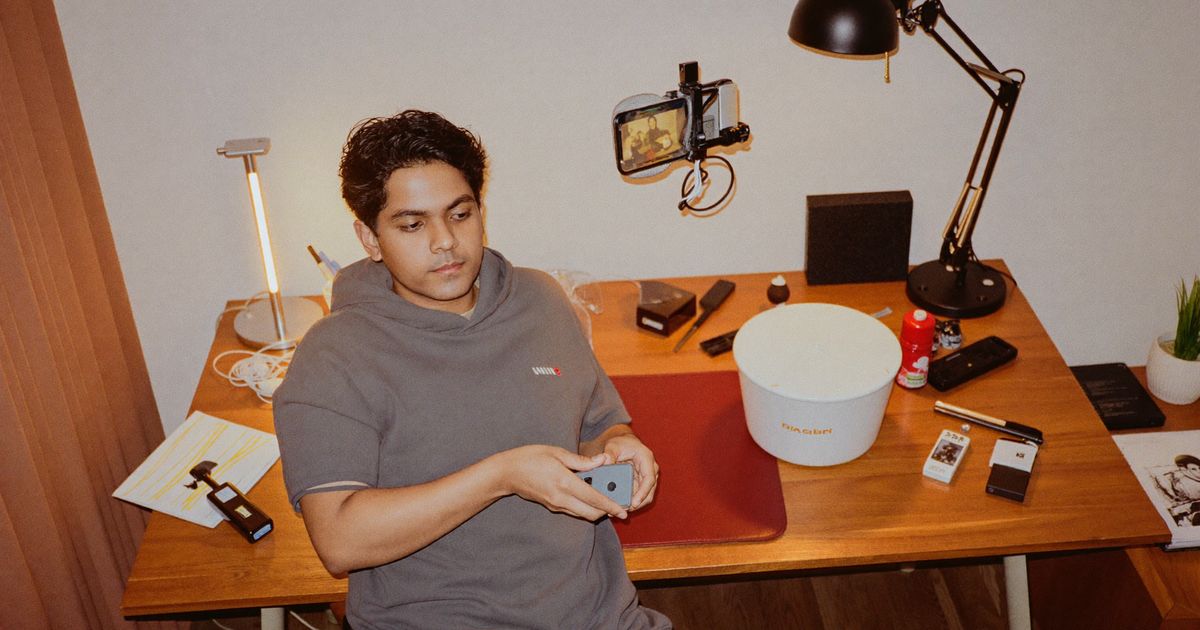
The power of this format is authenticity. A creator filming on a Redmi Note 13 or iPhone 14 in their Pune hostel room is more believable than a polished studio setup. Here is what actually matters:
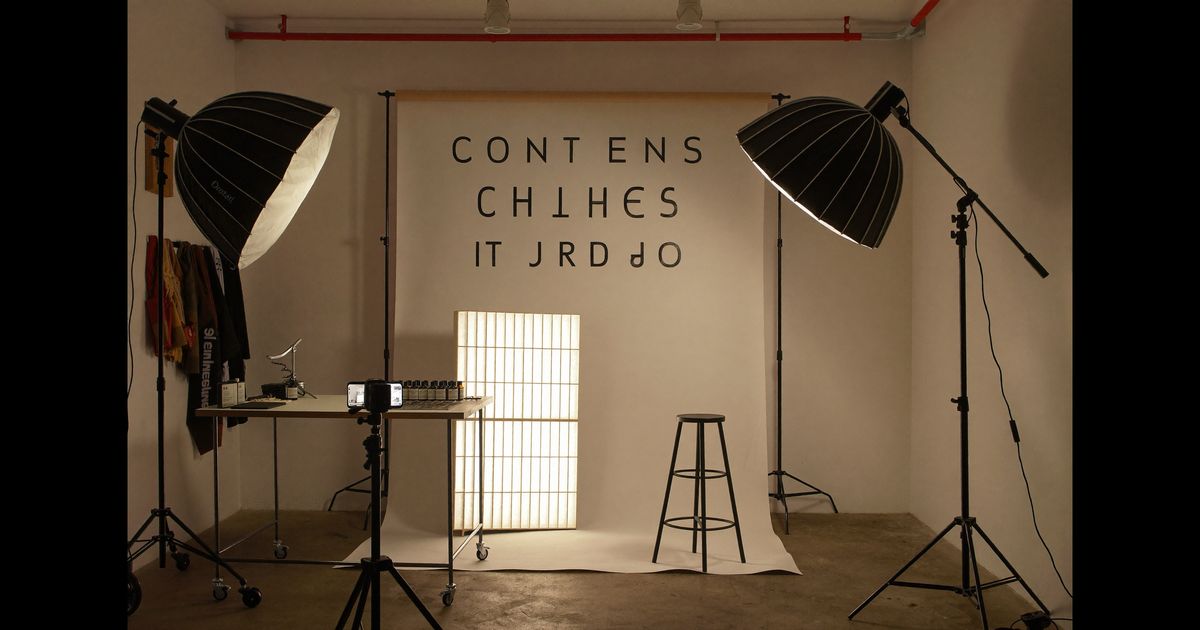
- Camera angle for physical kits: Mount your phone overhead (a cheap Rs. 400 octopus tripod works) pointing straight down at a clean desk surface, white chart paper or a plain bedsheet as backdrop. This is the classic flat-lay unboxing angle used by every tech creator from Mumbai to Jaipur, and viewers immediately understand the format.
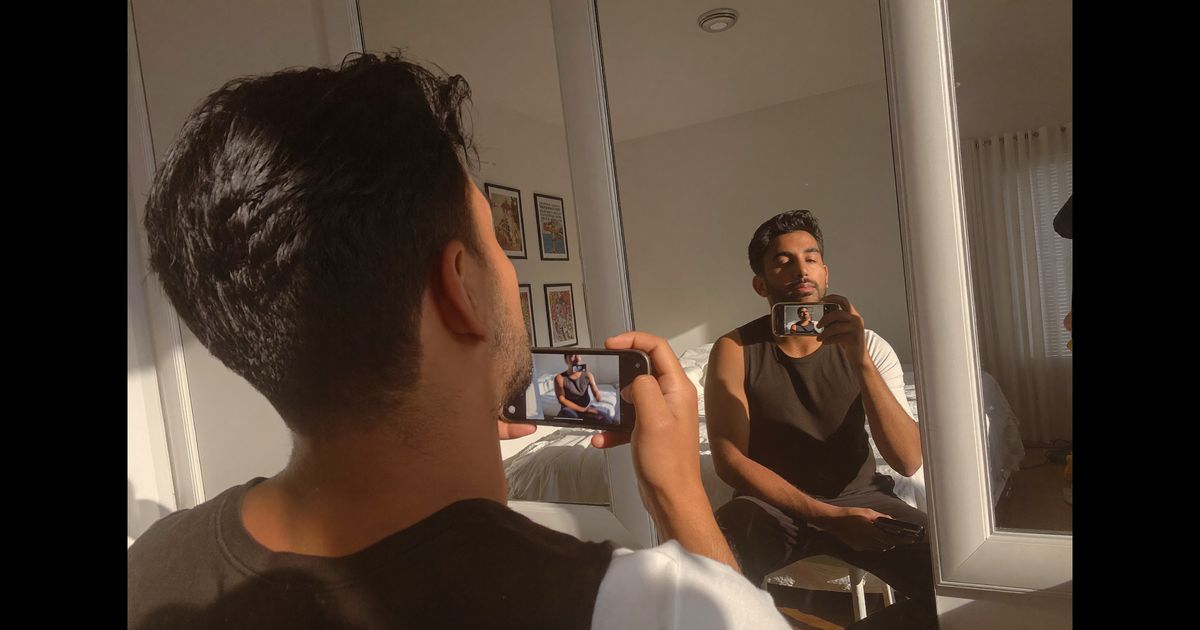
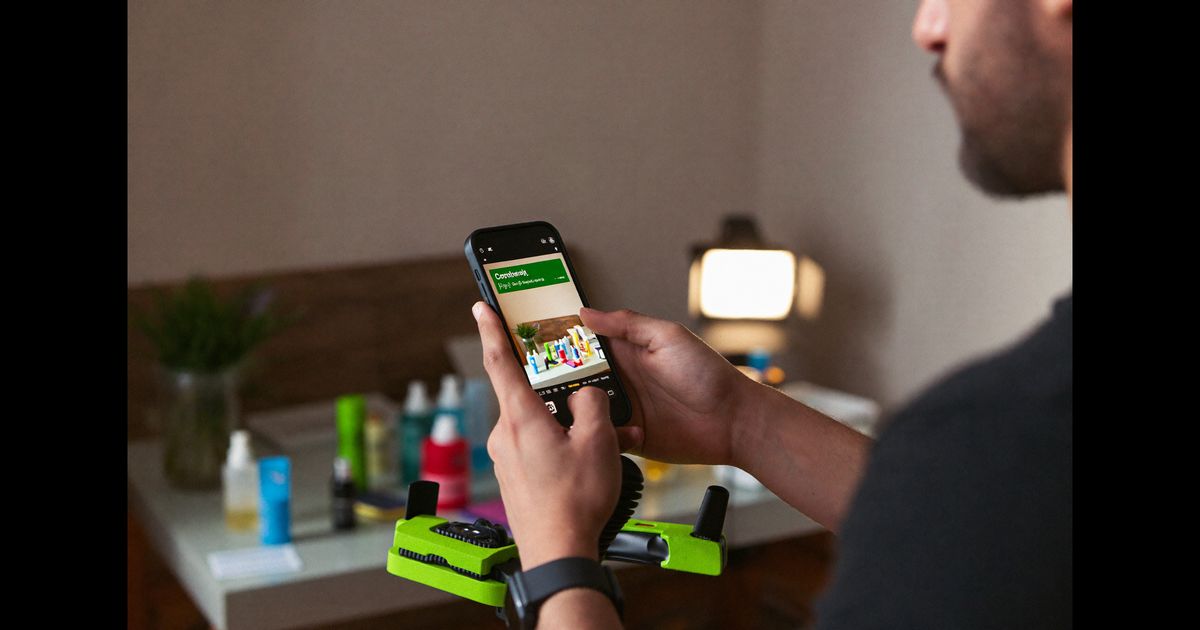
- Camera angle for app/screen content: Use a second device or screen-mirror. Film yourself holding the phone while reacting, with the screen visible. Avoid screen recordings alone, they remove the human reaction that drives retention. Tools like DU Recorder (free, popular in India) can capture screen plus front camera simultaneously on most Android devices.
- Lighting: Natural window light is sufficient for 90% of these shoots. If filming indoors at night, a single Rs. 800 ring light from Flipkart eliminates the harsh shadows that make low-light footage look untrustworthy.
- Audio: The creator's live reactions are the narrative spine. Use the clip-on lapel mic if available (Boya BY-M1 at Rs. 1,200 is the standard budget choice) or simply film closer to the phone mic. Do not over-dub, the spontaneous response is what viewers trust.
The Shot Structure: A Five-Beat Framework
We brief creators on a five-beat sequence that maps the unboxing tension arc to EdTech-specific content:
- Beat 1, The Context Hook (0–3 seconds): Creator states the problem or goal, not the product. "I have been trying to crack CAT while working full-time, I finally paid for a structured course." No brand name yet. This is the scroll-stopper.
- Beat 2, The Reveal (3–15 seconds): Unbox the kit, open the app, or navigate to the dashboard for the first time. Keep reactions genuine, "oh this has live doubt sessions?" or "the interface is actually clean" lands better than scripted enthusiasm.
- Beat 3, Feature Walk (15–35 seconds): Quickly show two or three specific features that solve the problem stated in Beat 1. Name them. "The adaptive mock test adjusts difficulty based on your weak areas, I tested it and it actually picked up my DI struggle." Specificity builds credibility.
- Beat 4, The Human Moment (35–45 seconds): A brief, honest note about price, learning curve, or one thing they wish was different. ASCI guidelines require honest endorsement, material connections must be disclosed (use #Ad or #Sponsored in-caption if paid), and exaggerated efficacy claims ("guaranteed top rank") are non-compliant. A small honest caveat actually improves conversion trust.
- Beat 5, The CTA (45–60 seconds): One clear action. "Link in bio to try 7 days free" or "DM me the course name and I'll send you my referral code." Make it low-friction and personal.
The best EdTech UGC we have seen on Instagram Reels runs 47–58 seconds. Long enough to show the product working, short enough to avoid drop-off. Every second beyond 60 costs you reach on the algorithm.
Language and Regional Targeting
India's EdTech audience is not monolithic. A creator filming in Hindi with English code-switching, the natural register of Delhi or Lucknow students, will outperform pure English in Tier-cities across India like Gorakhpur, Kanpur, and Agra. Tamil Nadu has a substantial upGrad and BYJU's user base; Tamil-language UGC for EdTech programs runs on YouTube Tamil channels with strong organic reach. Bengali-medium UGC performs well for school-prep brands targeting the Kolkata market (Class 10/12 boards, competitive exam prep).
Practically, this means the same five-beat script should be adapted, not just translated, for each language market. A creator in Bengaluru filming for a data science course might lean more technical in Kannada or English; a creator in Patna making JEE prep content should keep the register familiar and aspirational in Hindi. We typically produce three language variants from one shoot brief, using different local creators for each rather than dubbing a single video.
Platform-Specific Delivery Tweaks
The same core footage needs platform-aware edits before posting:
- Instagram Reels: 9:16 vertical, captions baked in (70% of Indian Reels viewers watch without sound on mobile), trending audio layered under the creator's voice at 15–20% volume. Post between 7–9 PM IST when EdTech's core demographic (students, working professionals studying) is most active.
- YouTube Shorts: The algorithm here rewards watch completion over shares, so a tighter 30–40 second cut performs better. Title the Short with a question: "Is this EdTech course worth Rs. 15,000?" drives click-through from people already in the consideration phase.
- Moj and Josh: Underused by EdTech brands but valuable for Tier-2 and Tier-3 reach. Shorter clips (20–30 seconds), Hindi-heavy, with the brand name shown visually early. These platforms have lower ad competition, meaning organic UGC gets more native distribution.
- WhatsApp Status: Increasingly used by creator affiliates to push referral codes to their own networks. A 30-second status-friendly clip with the referral code displayed as text overlay can drive direct enrollment, particularly effective for courses in the Rs. 5,000–20,000 price bracket where peer recommendation is decisive.
What Not to Do: Common Mistakes in EdTech UGC Production
- Scripting the reaction: Creators reading from a sheet while pretending to be surprised register as fake immediately. Brief them on the product, let them explore it genuinely on camera for a practice run, then film the second run, it retains spontaneity with less fumbling.
- Showing only the highlight reel of the product: If the interface has a dated UI or the content library has gaps, a creator who acknowledges this and explains why it still works for their goal ("the video quality isn't great but the doubt-clearing live sessions are worth it") builds far more purchase intent than a creator who praises everything.
- Ignoring ASCI disclosure: Paid partnerships without #Ad or #Sponsored disclosure are a compliance risk, ASCI has actively pursued EdTech brands on influencer guideline violations post-2021. Add the disclosure in caption, not buried in five hashtags at the bottom.
- Filming only the app, not the outcome: The most persuasive EdTech UGC shows a human result. A screenshot of a mock test score, a certificate PDF, a WhatsApp message from a teacher, one outcome visual elevates the entire piece from "product demo" to "proof."
Production Cost Benchmarks (India, 2025)
For brands budgeting these campaigns, realistic per-creator production rates for a polished 45–60 second EdTech unboxing-style reel in India currently range from Rs. 8,000–25,000 for micro-creators (50K–300K followers) depending on niche authority (ed-focused creators command a premium over general lifestyle). Nano-creators (10K–50K) in targeted academic niches, JEE prep, MBA aspirants, coding bootcamp audiences, often deliver higher purchase-intent audiences at Rs. 3,500–8,000 per video. A four-creator regional campaign covering Hindi, Tamil, Bengali, and English markets can be structured in the Rs. 60,000–1,20,000 range for content rights plus creator fees, before paid amplification.
If you are building your first EdTech UGC campaign and want a production brief that handles creator matching, language variants, and platform delivery in one workflow, our team at The UGC Agency puts this together regularly, book a free consultation to walk through what a four-week campaign would look like for your product.