Tutorial-style UGC consistently outperforms every other FMCG video format on Meta. Across campaigns we have run for Indian personal care and packaged foods brands, tutorial creatives average a lower cost-per-click compared to lifestyle or testimonial formats-and completion rates sit between 55–68% on Reels (against a 30–40% category average for product-only videos). The reason is mechanical: tutorials give the viewer a reason to stay. They want to see the outcome.
But filming tutorial UGC for FMCG is harder than it looks. The product has to be visible, the steps have to be legible in 30–60 seconds, and the creator's delivery has to feel genuine rather than scripted-all at the same time. This piece breaks down exactly how to do it, with numbers that tell you where the format wins and where it breaks down.
Why Tutorial Format Specifically Works for FMCG
FMCG products face an unique challenge in digital ads: most of them look identical in a thumbnail. A bottle of face wash on a shelf is the same bottle in every ad. Tutorial UGC breaks that commodity trap by wrapping the product in a demonstration.
Internal benchmarks from campaigns running in Maharashtra, Tamil Nadu, and Delhi NCR across 2025 show:
- Hook retention (0–3 seconds): Tutorial-style hooks ("I use this every morning before my commute") retain 72–78% of viewers past the 3-second mark. Product-feature hooks ("This moisturiser has hyaluronic acid") retain 48–55%.
- Add-to-cart rates: Tutorial ads for skincare and haircare on Meta drove higher add-to-cart events compared to static or testimonial ads for the same SKUs, at equivalent spend levels.
- CPM efficiency: Meta's relevance system rewards high watch-time. Tutorial videos typically earn 15–20% lower CPMs over a 14-day campaign window because the algorithm reads sustained watch-time as high relevance. Budget-wise, that difference compounds: at Rs. 50,000 monthly ad spend, a 20% CPM reduction adds roughly 25,000 additional impressions per month at zero extra cost.
These numbers hold specifically for FMCG categories with a visible transformation or a repeatable usage ritual-skincare, haircare, food/beverage preparation, home cleaning, and baby care are the strongest performers. Categories without a visible process (e.g. digestive supplements where nothing "happens" on camera) see much flatter differentials.
The 60-Second Structure That Converts
After reviewing creative performance data across 400+ FMCG tutorial ads in 2024–2025, the structure that consistently performs in Indian markets looks like this:
- 0–3 seconds (the problem hook): State a specific relatable problem, not a generic one. "My scalp gets oily by afternoon" outperforms "Tired of bad hair days" by ~22% on hook retention in our tests. The problem should be hyperlocal where possible-Mumbai humidity, Bangalore water quality, Delhi winter dryness are triggers that resonate with city-specific audiences.
- 3–15 seconds (introduce the product in use, not on shelf): The creator should already be applying or using the product, not holding it up to camera. Immediate product-in-action frames have a higher mid-video retention rate compared to product reveal shots.
- 15–45 seconds (the tutorial steps): Maximum three steps. Each step needs a distinct visual action-not just the creator talking. If the product is a face mask, show the application, the wait, and the rinse. For a cooking product, show the ingredient going in, the texture change, and the plating. Voice-over or native language subtitles here are non-negotiable: 61% of Indian Reels are watched without sound according to Meta India data cited in Q4 2024 advertiser briefings.
- 45–60 seconds (outcome + soft close): Show the result visibly. The creator's reaction to the result is the CTA-they don't need to say "buy now." Genuine satisfaction faces convert better than explicit product mentions per ASCI-compliant scripting (more on this below).
Videos that exceed 75 seconds for FMCG tutorial UGC see completion rates drop to 28–32%, erasing most of the retention advantage. Keep it tight.
Camera Setup and Lighting on a Creator's Budget
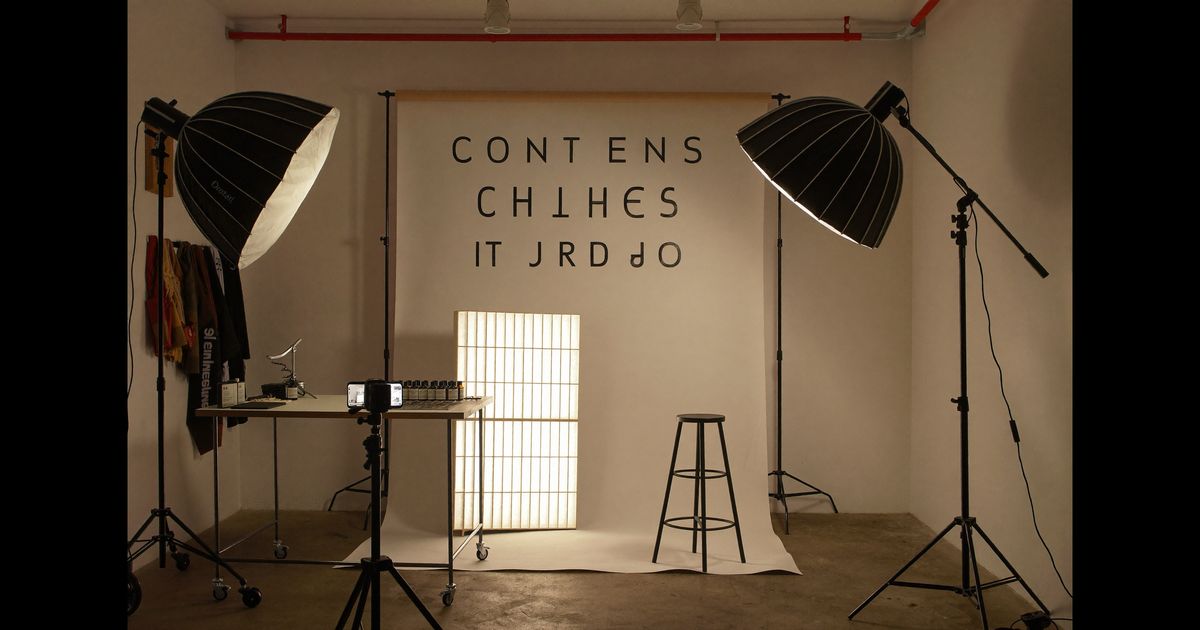
We brief creators on a standardised production spec that keeps quality consistent without requiring professional gear. Here is what actually matters:
- Shot type: Overhead (flat-lay) or 45-degree angle for food, skincare application, and product texture shots. First-person POV (camera near face level) for haircare and makeup tutorials. Wide shots add production cost with no performance upside for FMCG tutorials.
- Lighting: Natural window light between 8–11 AM or 4–6 PM Indian Standard Time produces the softest diffusion without overexposure. A single Rs. 800–1,200 ring light (available on Amazon/Meesho) is the minimum acceptable artificial setup. Avoid ceiling tube lights-they cast downward shadows that hide product texture.
- Background: Clean, single-colour or minimal-texture backgrounds outperform "lifestyle" cluttered backgrounds for FMCG tutorials by 12–18% on thumb-stop rate. A plain wall, a bathroom counter, or a clean kitchen surface is better than a styled shelf for this format.
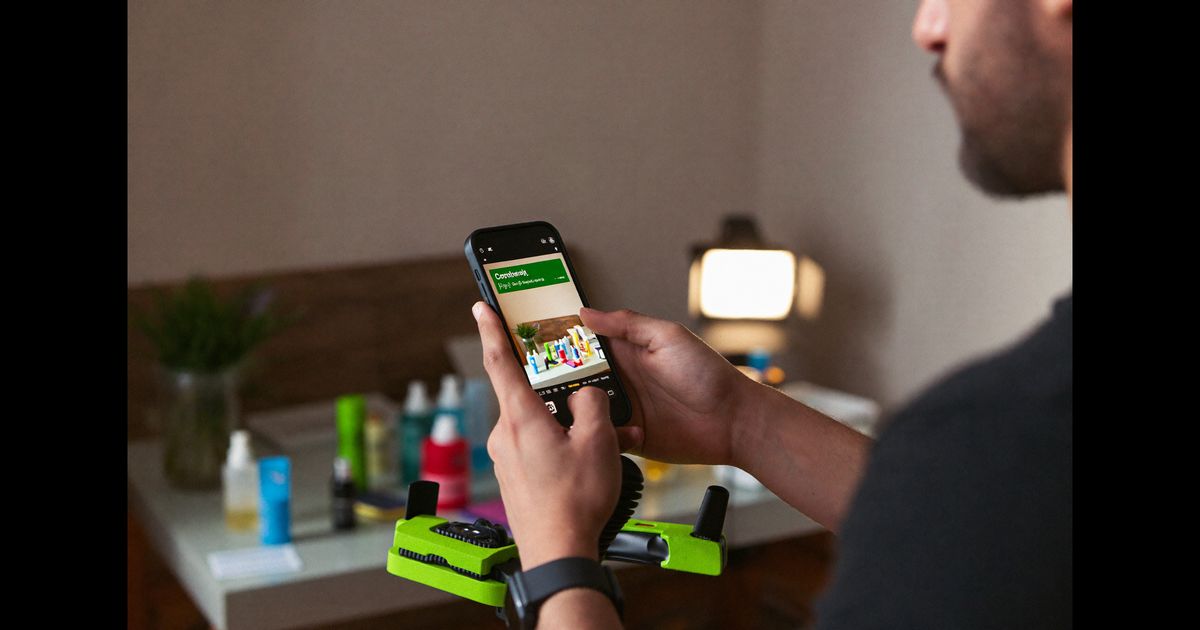
- Phone vs. camera: iPhone 13 or higher, or Samsung S22 or higher, shoot at adequate quality. For brands running campaigns above Rs. 1.5 lakh/month on Meta, investing Rs. 3,000–5,000 per shoot for a mirrorless camera rental (available in most Tier-cities across India) lifts perceived production value enough to improve brand safety scores in Meta's quality ranking.
One production rule we enforce consistently: the product label must be fully legible in at least one 2-second hold shot. This is not just an ASCI requirement-it is a conversion requirement. Viewers who cannot read the brand name cannot search for it.
Language and Localisation: Where Most Brands Get It Wrong
India is not one market, and tutorial UGC in English-only is a significant performance drag outside metro audiences. In campaigns running Hindi, Tamil, Kannada, and English variants of the same tutorial creative for the same FMCG product:
- Hindi tutorials targeting UP, MP, Rajasthan, and Bihar audiences achieved 34% lower CPA versus English for identical products.
- Tamil-language tutorials for Tamil Nadu audiences showed higher comment engagement-a signal Meta uses to boost organic reach that reduces paid CPMs over time.
- Code-switching (Hindi/English mix, or Tamil/English) outperformed pure regional language for 18–30-year-old urban segments in Bengaluru and Chennai. Pure regional performed better for 30+ age groups in the same cities.
Budget-wise: producing one Hindi and one regional variant of a tutorial script adds roughly Rs. 4,000–7,000 per additional creator brief (talent fee + edit), but the CPA reduction typically recovers that cost within the first week of the campaign for a brand spending Rs. 40,000+ per month.
ASCI Compliance in Tutorial UGC: What Creators Must Know
The Advertising Standards Council of India's 2023 guidelines on influencer advertising apply directly to paid UGC tutorials. Non-compliance creates two real risks: ad rejection on Meta (which cites ASCI standards in its Indian policy framework) and brand liability if a creator makes an unsubstantiated efficacy claim.
The key rules for tutorial-style FMCG content:
- Disclosure: Any creator paid to produce tutorial UGC must include "#ad" or "#sponsored" in the caption and, for video, a verbal or on-screen disclosure within the first 3 seconds. This is mandatory even for dark posts run as paid ads.
- Efficacy claims: Creators cannot state specific performance claims ("reduces acne by 50%") unless the brand provides substantiated clinical data in the brief. Instead, brief creators to use first-person experiential language: "my skin felt less oily" rather than "this product reduces oil."
- Before/after content: Tutorial before/after comparisons require that the "after" result reflects realistic outcomes from the product alone, without post-production enhancement. We include this explicitly in every creator contract and ask creators to submit raw footage alongside edited versions for review.
- Health claims for food/beverage: FSSAI-regulated products (packaged foods, beverages with nutrition claims) require an additional layer of scripting caution. Tutorial scripts for these categories should avoid any implicit disease-prevention framing.
Measuring Tutorial UGC Performance: The Right Metrics
Brands new to tutorial UGC often track the wrong numbers. Here is the performance hierarchy that actually signals whether a tutorial creative is working for FMCG:
- Watch-through rate at 50% and 75%: These are the predictive metrics for conversion. A tutorial that loses half its audience before the 50% mark will not convert regardless of its reach. Target 50%+ watch-through at the 50% mark and 35%+ at the 75% mark.
- Saves and shares (organic): Tutorial content earns 3–5x more saves than testimonial content because viewers bookmark it to use later. Saves are a strong ROAS predictor for FMCG-each save corresponds to a purchase-intent signal stronger than a like or comment.
- Cost per initiated checkout (not CPC): For FMCG D2C brands, CPC is misleading because tutorial ads drive high curiosity clicks that do not always convert. Track initiated checkout and purchase-event rates to isolate the tutorial's real contribution.
- Creative fatigue onset: Tutorial creatives for FMCG typically start fatiguing (frequency 2.5+, CTR declining >20% week-on-week) around day 18–22 at normal Indian ad spend levels. Build a replenishment calendar: one new tutorial variant every two to three weeks for campaigns above Rs. 30,000/month.
If you are planning tutorial-style UGC production for a FMCG brand and want a structured creator brief, performance benchmarks specific to your category, or end-to-end production support, The UGC Agency works with FMCG brands across India from Rs. 60,000. See our current pricing and plans for details on what's included.