Most SaaS brands brief UGC creators the same way they'd brief a product reviewer: show the dashboard, explain the features, talk about outcomes. It produces content that looks polished, sits well in a feed, and dies silently on Stories placements. Stories is a different medium. It is vertical, tappable, built for continuous motion, and watched by people who are actively skipping. Getting a 15-second Stories slot to carry a SaaS message takes a different production discipline altogether, and it is one we have had to build from scratch through trial and error on Indian SaaS client briefs.
This is how we actually approach Stories-style UGC production for SaaS brands, from the brief structure we give creators, to the specific shooting constraints we enforce, to the platform differences that change our edit decisions in 2026.
Why Stories Demands a Different Brief for SaaS
A typical SaaS UGC brief asks the creator to "talk about what problem the product solved." On a feed video, you have up to 60 seconds and a viewer who chose to watch. On a Stories placement, whether it is an Instagram Stories ad, a Meta Advantage+ creative running in Stories, or organic WhatsApp Status content, you are working inside 15 seconds and the viewer's thumb is already hovering.
The mistake is treating Stories as a shortened version of a feed video. It is not. A feed video can build context. A Stories video must arrive in context. That means:
- The problem must appear in the first 1.5 seconds, not after a setup. "Managing client invoices across three tools was destroying my evenings" works. "Hey, I'm Priya and today I want to talk about a product I've been using" does not.
- The product name or logo must be visible by second 4. ASCI's digital ad guidelines require that paid Stories content be clearly identifiable as an ad, we always brief creators to include a "Paid partnership" disclosure sticker and name the brand early, which also serves our creative goal of anchoring the viewer.
- The demo, if any, must be a screen-record insert, not a camera pan onto a laptop. A camera pointed at a laptop screen in vertical format produces unreadable text, moiré patterns, and wasted real estate.
The Brief Structure We Actually Send Creators
Our Stories brief for SaaS clients has four fixed components and one variable component. The fixed components do not change regardless of the product:
- Hook line (0–2 sec): One spoken sentence in the creator's natural language. For creators operating in Hindi, Bengali, Tamil, or Hinglish, we ask them to open in that language even if the rest of the video is in English. "Yaar, mera poora week ek tool ne bachaya" lands harder than the English equivalent in Instagram Stories for Tier 2 city audiences.
- Pain acknowledgement (2–5 sec): One more sentence. Not a list of features, a single, specific pain point. We pick this from the brand's customer support tickets or Trustpilot reviews, not from their marketing copy.
- Product moment (5–12 sec): The creator either shows their face reacting to a screen-record, or does a direct-to-camera "here's what changed." If it is a screen-record, we send the brand-approved recording. Creators do not capture their own screens, the risk of exposing beta features, wrong pricing, or test data is too high.
- CTA (12–15 sec): One action. "Link in bio," "tap to try free," or the swipe-up equivalent on an ad. We have tested two-CTA endings ("follow for more OR try the free trial") and they reliably underperform single CTAs on Stories by 20–30% in our own tracked campaigns.
The variable component is tone: some SaaS brands (project management, HR tools, accounting software) want a professional-but-real tone; others (productivity tools, creative platforms, no-code builders) want casual and slightly chaotic. We match this to the creator's existing audience content style, not to the brand's website tone.
Shooting Constraints We Enforce Without Compromise
When we onboard creators for a Stories-first SaaS brief, we send a one-page shoot guide alongside the creative brief. These are the non-negotiables:
- 9:16 native frame, no crop from horizontal. Cropped landscape video has a specific visual signature, the subject is slightly off-centre, the headroom is wrong, and the background is often a room corner. Viewers register this subconsciously as low-effort, which undermines the authenticity the format is supposed to deliver.
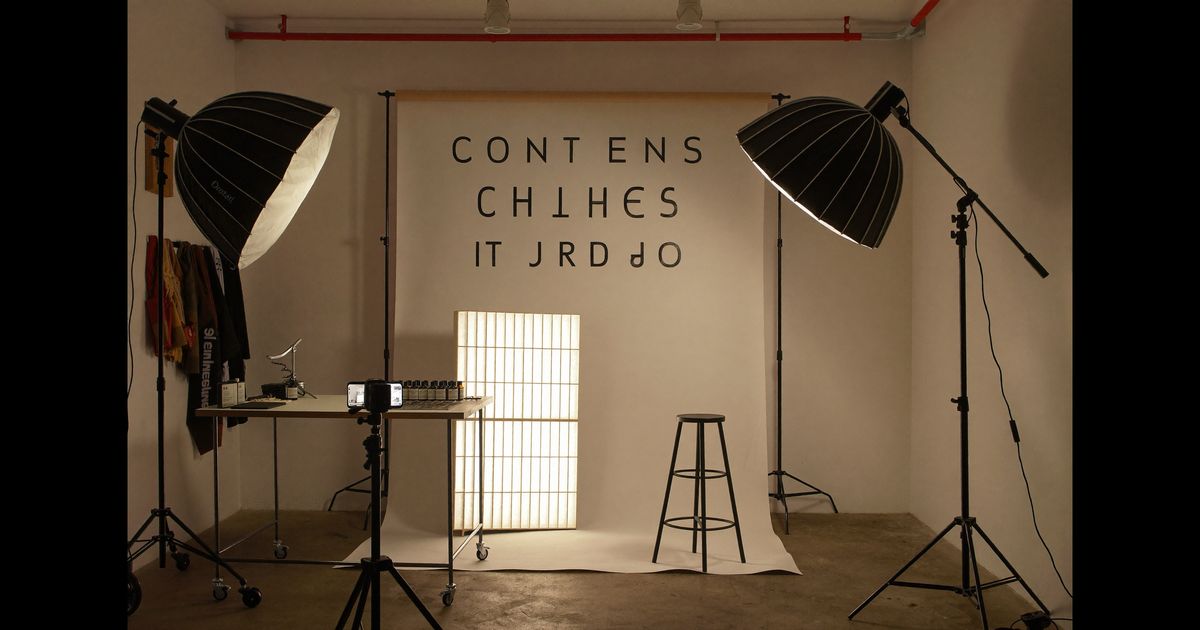
- No ring lights visible in the lens reflection. It is a minor tell, but for SaaS audiences (typically working professionals aged 24–38 in metro India) the ring-light reflection signals a "creator doing a paid post" rather than a genuine recommendation. Softbox diffusion or a well-positioned window works better.
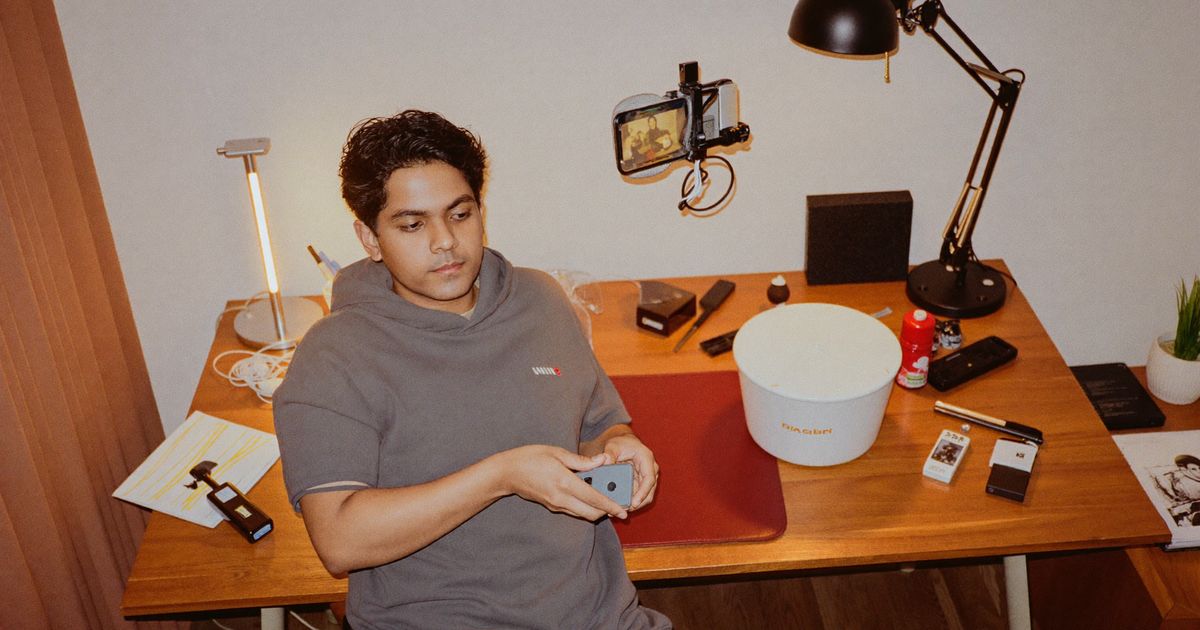
- Record in a real workspace, not a lifestyle set. SaaS UGC is more credible when the background is a messy home office in Bengaluru or a co-working space in Pune than when it is a pristine white wall. The clutter is evidence of an actual work life. We ask creators to keep Post-it notes, cables, and a second monitor visible if possible.
- Audio via a lapel mic or AirPods, not the phone's built-in mic. Stories auto-plays with sound on in-feed but many viewers have their phones on silent. Our captions are always on-screen (burned in, not relying on platform auto-caption), but clean audio still matters for the viewers who do have sound on, and for Meta's AI creative quality scoring.
- Capture two versions of every Stories asset: one with 250px safe zone at top and bottom, one without. Instagram Stories ads show UI elements at the top (time, account name) and bottom (CTA button). The version with safe zones is for paid placements; the clean version is for organic WhatsApp Status or Instagram organic Story shares by the brand.
Screen-Record Inserts: The Hardest Part to Get Right
For SaaS products, the screen-record insert is often the make-or-break element. A 4–5 second screen recording of the product in use is more convincing than 15 seconds of a creator talking about it. But getting it right at 9:16 requires specific work.
We ask the brand's product team to record a mobile-app version of the workflow wherever one exists. For web-only SaaS products, we record the workflow on a laptop browser at 1080p and then composite it into a phone-screen mockup using a vertical 9:16 canvas, this is a two-hour edit task but produces a result that reads as "this works on mobile too," which matters for Indian audiences who are primarily mobile-first.
The single edit decision that most improved our SaaS Stories performance: replacing the creator's voiceover with a creator-to-camera reaction alongside a screen-record, split-screen, face on the left third, screen on the right two-thirds. Viewers process both simultaneously without feeling talked at.
For the screen-record itself, we zoom into the key moment rather than showing the full dashboard. A 400% zoom on the "Invoice sent, Rs.12,450 received" notification for an invoicing SaaS is far more legible and emotionally resonant than showing the entire billing module. This is standard practice in performance creative, but SaaS clients often resist it because they want the product's full feature surface visible. We push back: Stories is not a product tour, it is a trust trigger.
Platform Nuances in 2026: Where These Assets Actually Run
Instagram Stories is still the primary placement for this format in India, it reaches working professionals in Mumbai, Delhi, Bengaluru, Hyderabad, and Chennai at competitive CPMs, typically between Rs.80–Rs.180 per thousand impressions for SaaS audience targets as of early 2026. WhatsApp Status, accessible through Meta Ads Manager as a placement, is increasingly valuable for Tier 2 reach, cities like Jaipur, Lucknow, Surat, and Coimbatore where Instagram penetration is lower but WhatsApp usage is near-total.
We separate our Stories creative into two buckets based on platform:
- Instagram Stories: Creator face-forward, slightly more polished, Hindi/English/Hinglish, assumes the viewer is already familiar with SaaS products in general. Stronger visual design in the text overlays.
- WhatsApp Status ads: More direct, plainer aesthetic, regional language often more effective than English, CTA is almost always "message us" or a WhatsApp deep-link rather than a website URL. We have seen conversion rate differences of 2–3x between a Hindi WhatsApp Status ad and its English Instagram Stories equivalent for SaaS tools targeting SMB founders in non-metro India.
We do not produce Snapchat Spotlight content for Indian SaaS clients, the platform's Indian SaaS audience is too thin to justify separate production. YouTube Shorts can take Stories-format assets, but the algorithm on Shorts rewards content that does not look like a vertical ad, so we only repurpose Stories assets there after stripping the CTA overlay and softening the branded elements.
Quality Control Before Handoff
Every Stories-format SaaS asset goes through a three-point check before we deliver to the client:
- ASCI compliance check: Paid partnership disclosure is visible, no false performance claims (e.g. "saved 10 hours a week" without a qualifier like "in my experience"), no before/after comparisons that imply guaranteed outcomes. The ASCI Guidelines for Influencer Advertising in Digital Media are specific about these points, and Meta's ad review will often catch undisclosed paid partnerships on repeat offenders.
- Sound-off watchthrough: We play the asset on mute and confirm that the story still makes sense. If the narrative depends entirely on the creator's voice with no text overlays to anchor meaning, it fails this check. For SaaS, we always burn in at least the product name and the core benefit as text.
- Safe-zone preview: We use Meta's Creative Hub preview to confirm that the Stories ad version has no critical text or faces cropped by the UI chrome. This catches approximately one in five first-draft edits.
Stories-format UGC for SaaS is more production-intensive than it looks, the 15-second runtime disguises the craft required to compress a B2B value proposition into a format built for lifestyle content. If you are a SaaS brand trying to build this capability, or an FMCG brand considering whether this format applies to you, we are happy to walk through what a production brief would look like for your specific product. Book a free consultation and we can scope a Stories-first UGC package from there.